
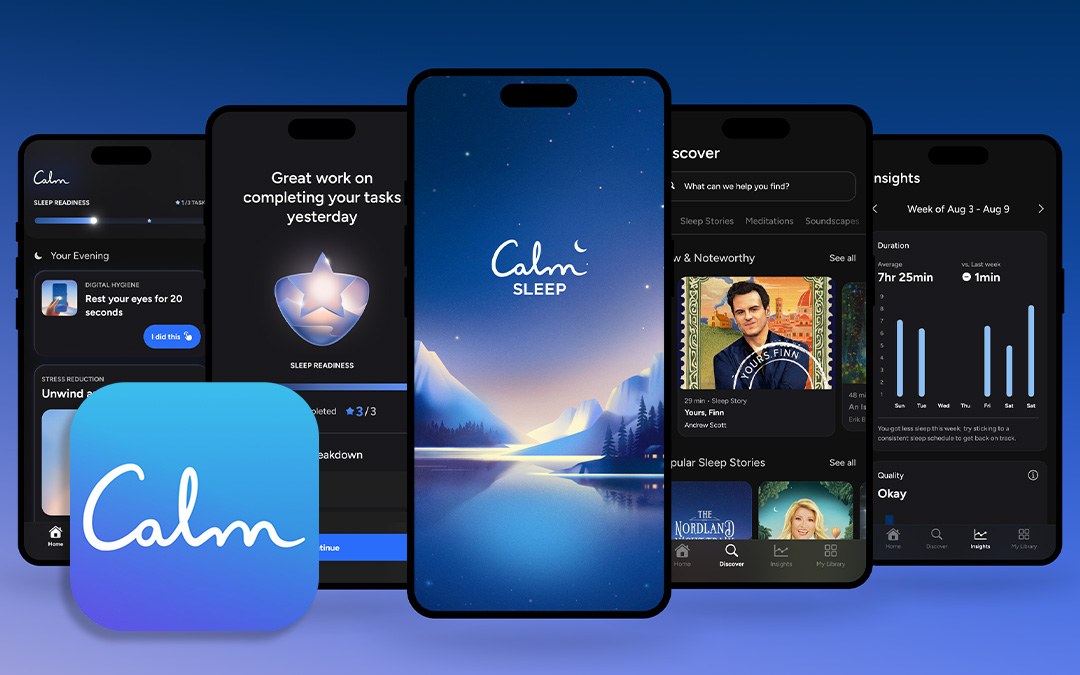
Calm.com’s Sleep Stories are very popular.

Stephen Fry was one of Calm.com’s first ‘Sleep Stories’ narrators. His wonderfully smooth voice was perfect.
Calm.com is one of the two apps that basically invented this category, and it’s still built the way it always was: broad rather than structured, and leaning hard on its Sleep Stories as the reason people actually stick around.
What it’s built around
Where Headspace is closer to a taught course with a beginning and an end, Calm.com is built more like a library you browse.
The content spans guided meditations, breathing exercises, gentle movement, focus music, and Masterclasses from well-known names – but the flagship feature, and the reason most people mention the app at all, is Sleep Stories.
These soothing bedtime narrations are read by voices like Matthew McConaughey and Harry Styles.
The Daily Calm – a fresh ten-minute guided meditation each morning – gives the app a reliable daily anchor without asking you to choose from a menu every time, which suits beginners who don’t want the decision fatigue of a huge library.
What it costs
Calm runs on a freemium model: a limited free tier that functions more as a trailer than something to actually use long-term, and a paid tier that unlocks everything else.
As of August 2026, that’s roughly £14-17/month, or an annual plan working out significantly cheaper per month – most subscribers land on the annual plan rather than paying monthly.
A family plan and a one-off lifetime purchase are both available too.
All paid tiers unlock the identical content library – there’s no further paywall once you’re subscribed, which is one genuine point in its favour compared with apps that keep some content behind extra charges even for paying users.
Worth knowing before you subscribe…
- The free tier is very thin. It’s enough to get a feel for the interface, not enough to build a real practice on.
- It’s stronger on content than structure. If you want a guided course that builds week to week, several reviewers and Calm’s own positioning suggest Headspace does that better – Calm is closer to an on-demand library.
- Billing and cancellation are the most consistent complaint. Across independent review sites, a recurring theme is difficulty cancelling, subscriptions renewing without clear warning, and slow or unhelpful customer support when people try to get a refund. This shows up often enough, across enough independent sources, that it’s worth taking seriously rather than dismissing as isolated bad luck – set a calendar reminder before any free trial ends.
- Independent research on Calm specifically is limited. The underlying techniques it draws on (elements of MBSR and MBCT) have solid independent evidence behind them; research on the app itself is thinner, and some of what exists has been funded by Calm.
Where it fits
Good fit if you want breadth, a strong sleep-focused feature, and a genuinely polished, calming interface, and you don’t mind not always knowing exactly what to pick.
Less good fit if you want a structured course to work through in order, or if you’re currently on a tight budget – Insight Timer’s much larger free library is worth trying first in that case.
Researched using Calm’s own app store listings and pricing pages, alongside published reviews from Sleep Foundation, Simply Psychology and Selfpause, and aggregate customer feedback from Trustpilot and PissedConsumer. Checked August 2026 – pricing and features change; check Calm’s own site before subscribing.