

Nothing about a cold shower is relaxing while it’s happening. That’s rather the point – it’s one of the few entries on this site that works by being unpleasant on purpose, rather than despite the intention behind it.
The idea is old: deliberately chosen discomfort as training, on the theory that a person who’s voluntarily uncomfortable sometimes finds the involuntary kind easier to bear.
None of this means more suffering is automatically better, or that discomfort is virtuous for its own sake.
The claim is narrower and more specific: a nervous system practised at tolerating chosen discomfort seems to widen its threshold for the unchosen kind too.
How to do it
Starting small matters more than starting dramatically. A short list of ways in.
- End a warm shower with thirty seconds of cold. Rather than starting with a full cold plunge.
- Notice the urge to escape discomfort immediately. Let it sit a few seconds longer than feels natural.
- Treat the discomfort as information rather than an emergency. Uncomfortable and dangerous are not the same thing.
- Choose the discomfort deliberately, rather than stumbling into it by accident. The intentionality seems to be doing real work.
- Notice how ordinary annoyances feel afterward, by comparison. That shift in perspective is often the most immediate benefit.
None of it needs to become extreme to be worth doing. A consistently mild practice appears to do more for this than an occasional dramatic one, in much the same way regular exercise beats an annual ordeal.
It’s the voluntary nature of the discomfort, more than its intensity, that seems to matter – which is why the same cold water feels entirely different when it’s chosen than when it simply happens to you.
Where it comes from
Stoic writers described deliberate hardship – cold, hunger, physical discomfort, what they called premeditatio malorum, rehearsing a loss before it happens – as training for the mind, millennia before modern science had anything to say about it.
The modern revival owes a lot to Wim Hof, a Dutch extreme athlete who built a public career on tolerating extreme cold, and to a landmark 2011 study at Radboud University in the Netherlands.
This found that people trained in his method could voluntarily influence functions of the nervous system long assumed to be automatic and beyond conscious control. That finding is what turned a fringe practice into something worth taking seriously in a lab.
Worth knowing
Deliberate cold exposure produces a measurable, replicable stress response – raised heart rate, a surge of adrenaline – that closely mirrors what happens during ordinary anxiety, except this time it’s been chosen and controlled.
Practising that response repeatedly, in a setting where it’s known to be safe, appears to shift the nervous system’s baseline threshold for what counts as a genuine threat.
Something similar seems to happen with voluntary hardship more broadly – deliberately choosing difficulty in a controlled way appears to build a kind of tolerance that carries over into situations that weren’t chosen at all.
Cold exposure has picked up an almost miraculous reputation in some corners of popular culture, credited with everything from dramatically boosted metabolism to cured anxiety to full immune system transformation.
Most of the most dramatic claims outrun the evidence considerably – the metabolic and immune effects that do show up in research are real but modest, nothing like the transformation implied by some of the marketing built around cold exposure culture.
What survives that correction is still worth having: a controlled, voluntary stress response, practised regularly, does appear to build a genuine and useful tolerance for discomfort generally. It just isn’t the near-magical intervention some of its most enthusiastic advocates suggest.
Recommended reading
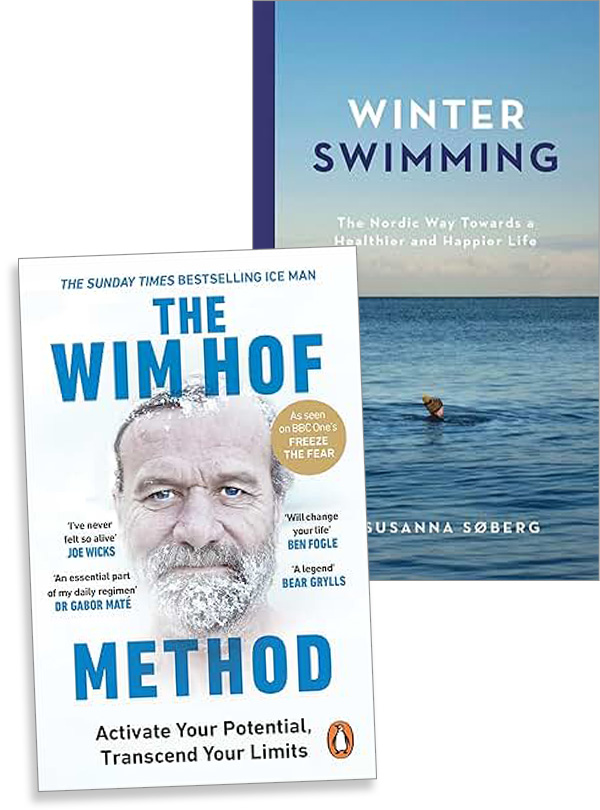
Wim Hof’s own The Wim Hof Method is the natural starting point – the method described above, from the man who popularised it.
For something more contemporary and research-grounded, Susanna Søberg’s Winter Swimming comes from a metabolic scientist who has led some of the field’s most cited studies.