

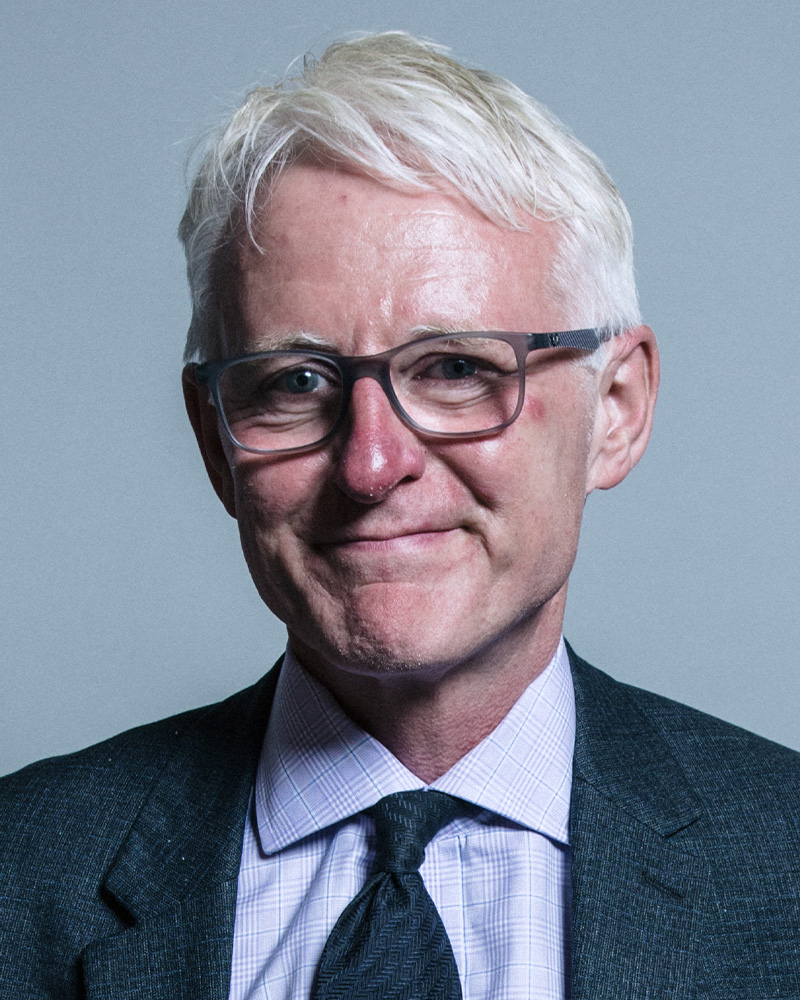
Sir Norman Lamb: “We owe it to all of them to change.”
Photo: UK Parliament (CC BY 3.0)
Sir Norman Lamb was the minister in charge of England’s mental health policy. But it wasn’t a briefing paper that shaped his thinking most — it was his sister Catherine, and the decade he later spent watching the system from inside a psychiatric trust’s boardroom.
His account raises an uncomfortable question: what happens when the person who helped design a policy no longer believes the system built on it works?
What happened
Catherine developed severe depression after their mother died in 2014. She was eventually admitted to a mental health ward, where she stayed for ten weeks before going home on leave.
A few months later, during what had seemed like a period of recovery, she took her own life. She was 66.
Lamb has spent years since asking what the ten weeks on the ward actually achieved. It kept Catherine safe, he says, but did nothing to rebuild her life or address what had led her there in the first place.
Now chairman until last year of South London and the Maudsley — one of the country’s biggest psychiatric trusts — he’s watched the same pattern repeat across thousands of other patients: admitted, stabilised, discharged, and often readmitted once life outside proves too much.
He points to Valdo Calocane, discharged from mental health services in 2022 after repeatedly missing appointments, who went on to fatally stab two students and a school caretaker in Nottingham the following year. Disengaging from services, Lamb argues, should be treated as a warning sign rather than grounds to close a file.
Here’s how his argument actually breaks down:
Worth knowing…
- He isn’t arguing for more locked wards. Pouring money into inpatient beds after a tragedy like Calocane’s would be counterproductive, he says — it draws funding away from the community support that could stop a crisis developing in the first place.
- His concern is what happens after stabilisation, not admission itself. Medication and a locked door keep someone safe short-term; neither addresses why they got there.
- Restraint hasn’t gone away. A 2022 law added oversight of force used on wards but didn’t ban it — face-down restraint and seclusion, he says, remain routine in ways no one would accept for a physical illness.
- He’s found alternatives that appear to work. Unlocked walk-in centres modelled on the Italian city of Trieste, and a Norwegian unit that avoids medication where possible, report far lower rates of harm than the model most of the UK still runs.
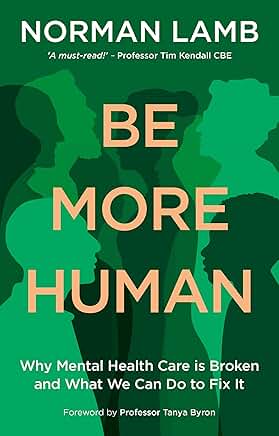
Be More Human by Sir Norman Lamb — see the full entry on our reading list.
The wider argument
Lamb’s case isn’t that psychiatric wards should be abolished, or that no one should ever be admitted to hospital. It’s that admission has become the default response to a crisis, when prevention rarely gets the same investment.
His argument: half of mental health problems are established by the age of 14, yet the system spends most of its money at the point of collapse rather than in the years before it — GPs prescribing time in nature or an art class over a pad of pills, schools catching problems early, community teams that don’t shuffle people from pillar to post.
He traces his own instinct on this back further than Catherine — to his son Archie, whose severe OCD as a teenager came with a six-month NHS wait the family could only skip by paying privately. “Most families can’t pay,” he says. “They’re just left waiting.”
Archie is now a successful music producer with a family of his own. Catherine’s death, Lamb writes, is what he thinks of when he argues this generation could be the one that finally changes how mental illness is treated — not because a law changed, but because enough people who lived through the old system said, in public, that it wasn’t good enough.
Sources: Damian Whitworth, “This generation could revolutionise mental health care,” The Times, 21st August 2026 – interview with Sir Norman Lamb ahead of the publication of his book, Be More Human: Why Mental Health Care is Broken — and What We Can Do to Fix It (Jessica Kingsley Publishers, £14.99), 27 August 2026.