

Menopause is usually pictured as hot flushes and an end date. For a lot of people, what’s actually hardest to live with are the mood swings, irritability, and an emotional unpredictability that can feel completely unfamiliar.
Mood symptoms often arrive years before periods change enough to explain them – a tendency to snap, a flatness that wasn’t there before, a sense of being at the mercy of a mood that shifts without warning. Without an obvious physical cue, it’s easy to file this under stress, or a bad patch, rather than recognise it for what it is.
The mechanism is real, not imagined. Fluctuating hormone levels genuinely destabilise mood regulation during the transition – research following women with no prior history of depression found new depressive episodes tracked directly with the pattern of hormonal change, not with age or circumstances alone.
It also tends to land in the middle of a decade already carrying other pressures – ageing parents, changing family roles, a demanding stretch of work – which makes the mood symptoms harder to separate from “just having a lot on.” They’re not the same thing, even when they arrive together.
Worth knowing
A few things about menopause and mood rarely make it into the popular version of the story:
- Mood swings have a real, measurable hormonal basis. A study following women with no history of depression found new depressive symptoms tracked directly with fluctuating hormone levels during the transition – not simply stress, or “just getting older.”
- Irritability and anxiety genuinely spike, not just low mood. Long-running research found significantly higher odds of frequent irritability and nervousness during early perimenopause specifically, compared with the years before it.
- The risk of a first depressive episode goes up sharply. Women with no previous history of depression face a notably higher risk of a first clinically significant depressive episode during the transition and in the years just after – a pattern worth naming, not brushing off as a “bad patch.”
- Treatment can target mood specifically, not just hot flushes. A randomised trial found hormone therapy reduced the likelihood of depressive symptoms independently of its effect on physical symptoms – the mood benefit wasn’t just a side effect of feeling more comfortable.
- It’s still routinely dismissed as “just hormones” or “just stress.” Both are true and neither is the whole story – naming it specifically, rather than downplaying it, tends to be the first step toward actually getting help.
Why the mood shift is different
The common framing treats mood symptoms as a secondary inconvenience – something to manage alongside the “real” symptoms like hot flushes and disrupted sleep.
For a lot of people it’s the reverse: the physical symptoms are manageable, and it’s the volatility of mood that actually disrupts relationships, work, and their sense of who they are.
It’s also not simply “more of the same” irritability or low mood people might already know from stress or a difficult period. It has a specific hormonal driver, and it tends to arrive with a specific unpredictability – genuinely good days and genuinely difficult ones, without an obvious external trigger for either.
What actually helps
Naming the specific pattern – when it happens, how long it lasts, what it feels like – tends to help more than a general description of “not feeling like myself.”
It also gives a GP something concrete to work with, whether that’s a hormonal route, a talking-therapy route, or both.
Separating the mood symptoms from judgement about them matters too. A sudden burst of irritability or a flat, low patch is not a character failing – it has a real physiological driver, and treating it as one tends to reduce the guilt that often compounds the mood itself.
And where it tips into something that looks more like ongoing depression or anxiety, rather than passing volatility, it’s worth treating as its own thing deserving proper support – not something to wait out alongside the rest of the transition.
Not a character flaw
A sudden burst of irritability, or a flatness that arrives without warning, is not evidence of who you are underneath. It’s a hormonal weather system passing through – real, disruptive, and, for most people, temporary.
For most people, the sharpest mood volatility eases as hormone levels settle into a new baseline – though there’s no need to simply wait it out if it’s making daily life difficult now.
It’s real, and not something you’re imagining or manufacturing – naming the pattern specifically to a GP, including that it may have a hormonal component, is a reasonable first step alongside anything else that’s going on.
If this is disrupting sleep or everyday functioning, NHS Talking Therapies is worth looking at – free, evidence-based, and self-referral in most of England, no GP needed. If it feels more urgent than that, the Support directory has crisis contacts.
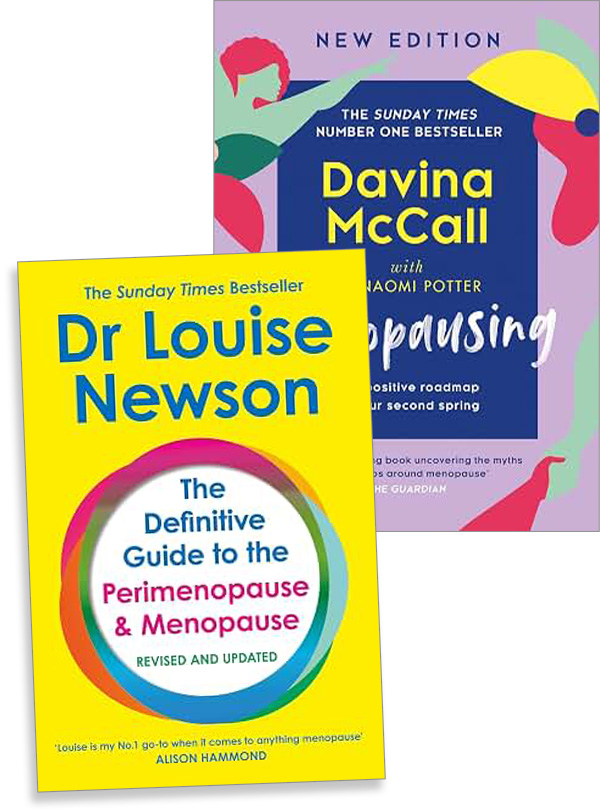
Recommended reading
Dr Louise Newson’s The Definitive Guide to the Perimenopause and Menopause comes from a UK GP and menopause specialist, with a dedicated section on the hormonal basis of mood and mental health during the transition, and the full range of treatment options for it.
Davina McCall and Dr Naomi Potter’s Menopausing takes a different, more personal route – part shared experience, part practical guide, co-written with a menopause specialist GP, with a particularly candid take on rage, anxiety and mood swings from someone who’s lived through them publicly.