
Most of what’s on this site works through the mind first – a thought reframed, a breath counted, a story retold. This one skips that step entirely.
A hand on an arm can lower a stress response before either person has said a word about why it’s needed.
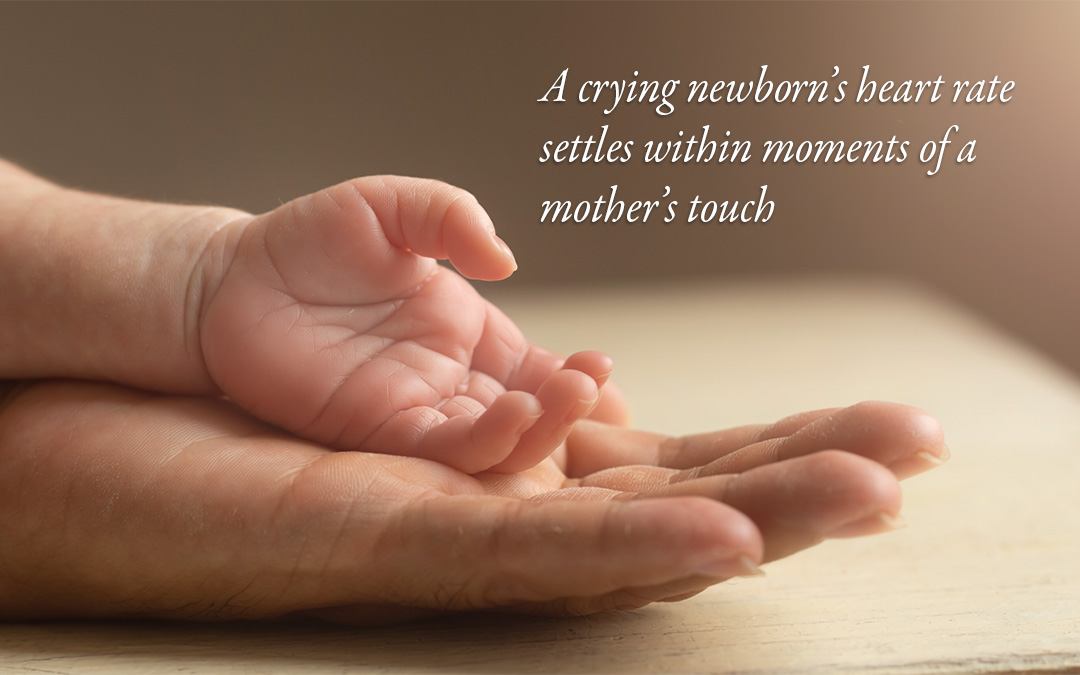
Babies figure this out before almost anything else – held against a chest, a crying newborn’s heart rate settles within moments, long before language gives them any other way to be reassured.
Adults never really grow out of the mechanism, even if the habit of using it thins out with age, distance, or a culture that treats a handshake as the outer limit of acceptable contact.
How to do it
Not every kind of touch does this job, and not every moment calls for it. A short set of ways to use it well.
- Offer a hand or an arm to someone mid-panic. Try that before attempting to talk them down.
- Notice the touch you already give on autopilot. A pat, a squeeze – let one of them last a little longer.
- Put a hand flat on your own chest or stomach. Even alone, the body responds to this too.
- Sit close enough for contact to happen naturally. Rather than announcing a hug in advance.
- Check in with an animal. A hand resting on fur does measurable work, with none of the social negotiation.
The dose that matters is smaller than people expect. A few seconds of contact shifts stress hormones measurably – it doesn’t need to turn into an event.
Consent does more work here than almost anywhere else on this site. The same gesture calms a stress response when it’s wanted and can sharpen one when it isn’t.
So a quick question first isn’t just politeness – it’s the difference between the technique working and backfiring.
Where it comes from
The clearest single piece of evidence is a 2006 study by the psychologist James Coan at the University of Virginia. Married women, awaiting the threat of a mild electric shock inside an fMRI scanner, showed markedly less activity in the brain’s threat-response regions while holding their husband’s hand.
Holding a stranger’s hand helped too, just less – and the effect was strongest of all in the happiest marriages. It’s since become one of the founding studies behind what’s known as social baseline theory: the idea that close relationships function as a kind of physiological support system, not just an emotional one.
Worth knowing
A supportive hand from a stranger, or contact with a trusted animal, triggers a version of the same response.
Massage research adds a second strand of evidence – lower blood pressure and reduced muscle tension that outlasts the session itself, sometimes by hours.
Oxytocin picked up a reputation in the 2000s and 2010s as something close to a trust chemical – spray it up someone’s nose, or share a hug, and warmth and generosity were supposed to follow almost automatically.
Later attempts to reproduce the boldest single-dose oxytocin findings at the scale originally claimed mostly came up short.
What survives that correction is narrower but still solid: wanted touch, from someone trusted, reliably calms the body in the short term.
That’s a real and useful effect – it just isn’t a shortcut to trust or closeness that wasn’t already there.
Recommended reading
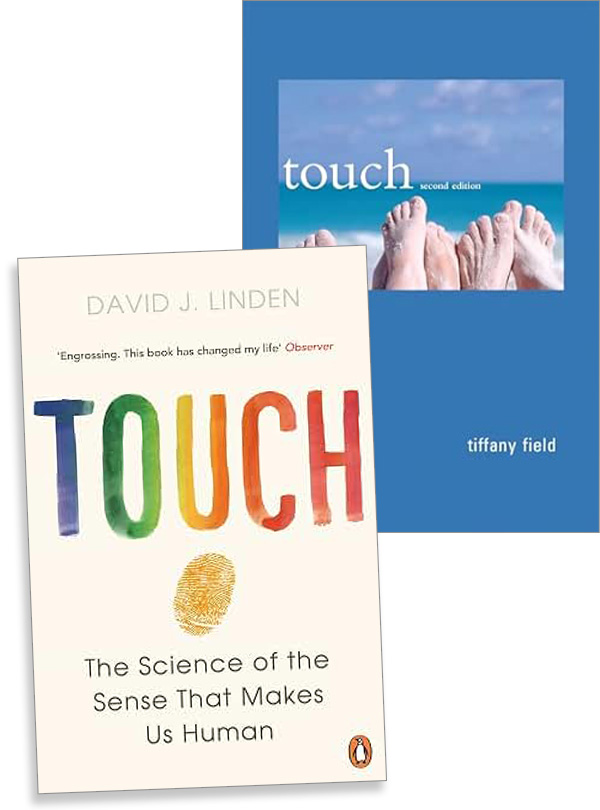
David J. Linden’s Touch: The Science of Hand, Heart, and Mind is the natural starting point – an accessible, well-regarded tour through the science of touch broadly.
For something more detailed, Tiffany Field’s Touch comes from the director of the Touch Research Institute, with a deeper focus on massage and therapeutic touch specifically.