
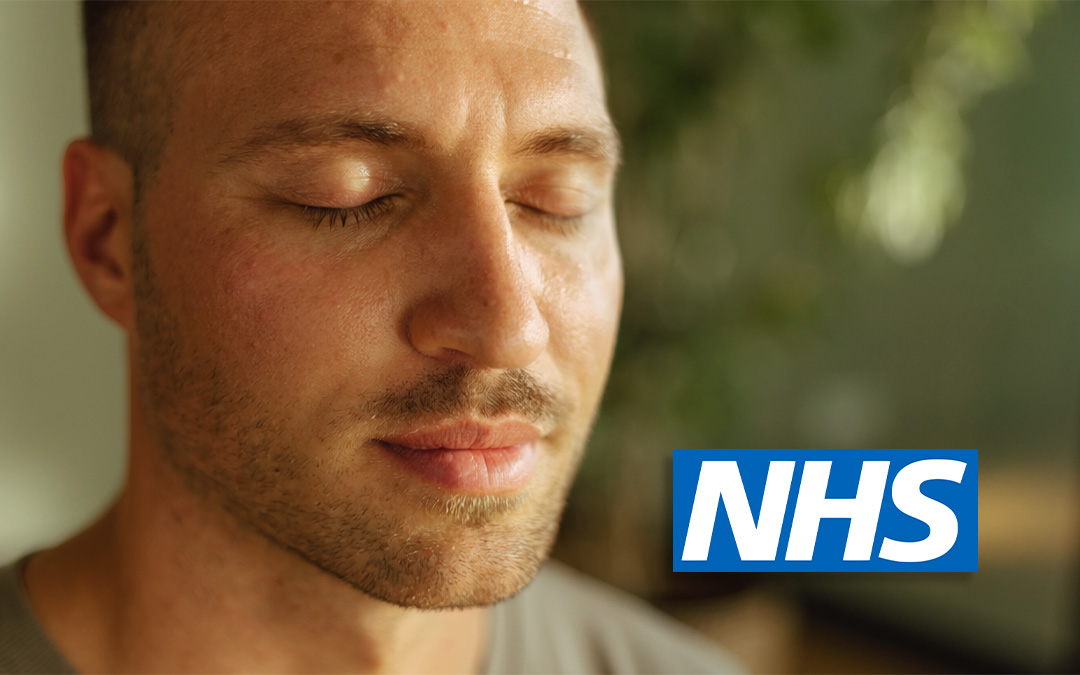

The NHS’s own mental health hub offers a free, no-login guide to meditation – a video, seven written steps, and two guided recordings. It’s one of the first things people find when they search for how to start.
That makes it worth a proper look on its own terms – not against an app with a subscription to sell, but simply as what it is: a single, official, unhurried introduction.
What it actually is
It’s a single guide rather than an app or a library: a short paragraph on the benefits, a video presented by a psychologist, seven written steps, and two audio-guided meditations – all free, with no account or download required.
The seven steps are a straightforward description of a real, well-established technique, not a watered-down version of one – set aside time, find a comfortable seated position, bring attention to the senses, then settle into a simple breath-in, breath-out focus.
Watch: how to meditate for beginners
The video referenced above, in full – Dr Becky Spelman walks through the same seven steps covered above.
Video: NHS Every Mind Matters, featuring Dr Becky Spelman.
One thing the video doesn’t change, though: there’s only one technique on offer.
Where a pathway page or an app might set out several approaches side by side, this guide teaches one method and stops there. It’s a fine method – but anyone who tries it and finds it isn’t for them has nowhere else to go on the same page.
Worth knowing…
- The seven steps are genuinely sound, not just simplified. The structure matches a real, well-established technique rather than a watered-down version aimed at beginners.
- There’s only one technique on offer. No alternatives are suggested for anyone who tries breath counting and finds it isn’t for them.
- The video leans on authority rather than depth. A named psychologist lends the page credibility, but the video covers much the same ground as the text above it.
- There’s no timer, and nothing to come back to. Once you’ve read the steps and listened to the two recordings, that’s the whole resource – no ongoing practice tool is built in.
- It carries the weight of being NHS-endorsed, and mostly earns it. No subscription pitch, no account, no notifications – and a tone that undersells meditation’s benefits if anything.
Where it earns its reputation
The honest standout is that it’s trustworthy without asking anything in return – no free trial that becomes a subscription, no data-hungry onboarding, no upsell at any point.
The seven-step structure is also genuinely well thought through. Its honesty about a wandering mind being normal rather than a failure is worth more than it might look – it’s the single biggest reason beginners give up on meditation, and the guide addresses it directly and kindly.
Where it falls short
The single-technique approach is the real limitation. Breath counting works well for many people, but not everyone, and this page gives no sense that other approaches exist, let alone how to find them.
The two guided audio meditations are a good start, but only a start – there’s no range of lengths, styles or voices to grow into once these two are familiar.
Who it’s actually for
If you’ve never meditated before and want a trustworthy, no-strings introduction before deciding whether to commit to an app, this is a genuinely good place to begin – it’s clear, it’s kind about the difficulty, and there’s nothing to sign up for or cancel later.
If you’ve already found your footing and want variety – different lengths, teachers, or techniques beyond breath counting – you’ll outgrow this page quickly. That’s not a criticism of what it sets out to do; it was never trying to be a library.
The guide is careful not to overclaim, describing meditation as something that can help lower stress and ease anxiety, rather than promising it will. A great deal of the wellness content reviewed on this site overstates what the evidence supports; this page, if anything, undersells it.
Source: How to meditate for beginners, NHS Every Mind Matters – accessed August 2026. Content on the NHS site may be updated over time.