
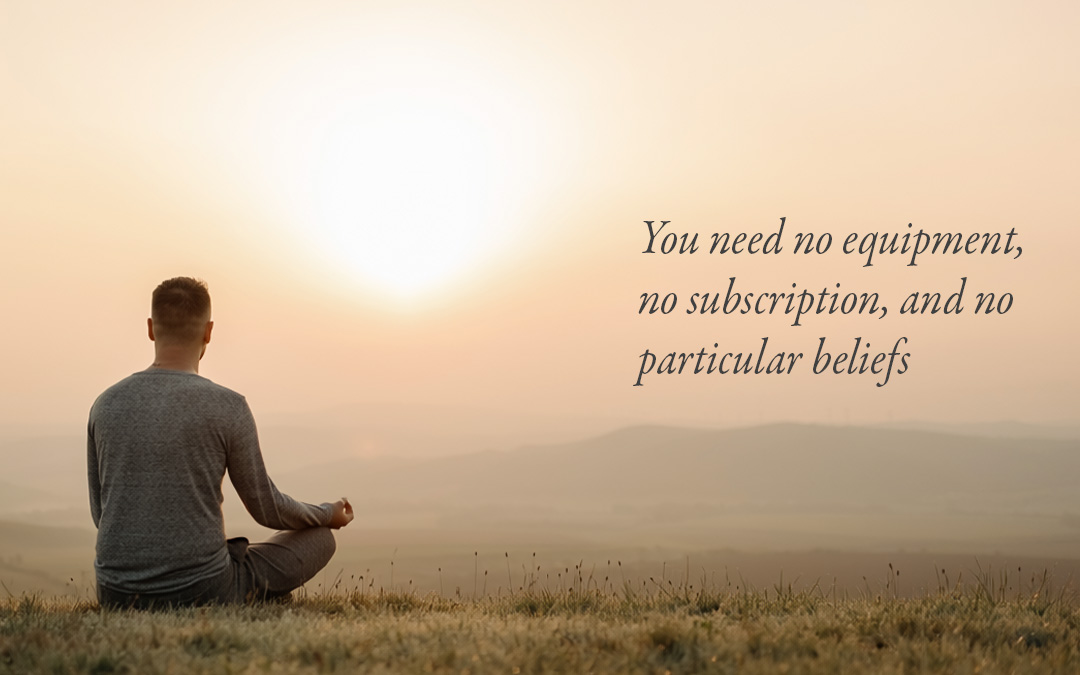
Meditation can be as simple as paying attention to your breathing or the sounds around you. When you notice your mind has wandered, gently return to what you were noticing.
Mindfulness-based meditation may help with anxiety, though the evidence varies. Much of the research involves structured courses, so it cannot tell us exactly what a few minutes of practice alone will do.
How to do it
Start with a minute or two in a comfortable position. You don’t need special equipment or particular beliefs, and you don’t have to stop your thoughts.
- Get comfortable. Sit in a chair with your back supported, or choose another position that suits your body. Rest your hands wherever feels comfortable. Keep your eyes open or close them if you prefer.
- Choose something to notice. Try the feeling of your breath at your nostrils or the movement of your belly. Let your breathing follow its usual rhythm. If focusing on your breath feels uncomfortable, try sounds around you or the contact between your feet and the floor.
- Pay attention for a few moments. Notice the sensations or sounds as they come and go. There’s no need to hold your attention perfectly or make yourself feel calm.
- Notice when your mind wanders. You may start planning, remembering or thinking about something else. When you notice, gently return to your chosen focus.
- Keep it short to begin with. Try a minute or two, then look around and finish when you’re ready. If you feel more anxious or distressed, stop and do something familiar, such as walking around or speaking to someone. You can choose a different practice.
Where it comes from
Meditation has been practised for thousands of years in religious and contemplative traditions. There are many forms, with different purposes; focusing on the breath is one approach.
In 1979, Jon Kabat-Zinn developed Mindfulness-Based Stress Reduction (MBSR) at the University of Massachusetts Medical Center. It brought meditation and gentle movement into a structured course for people dealing with stress, pain and illness, without requiring religious beliefs.
MBSR and other mindfulness-based programmes have since been studied in healthcare settings. These courses include teaching and support, so their findings don’t apply directly to every app or self-guided exercise.
Worth knowing
You can try meditation and see whether it suits you. A busy mind doesn’t mean you’re doing it wrong, but you don’t need to push through distress to keep practising.
If you want to continue, choose a manageable time, such as a minute or two after breakfast. A short guided recording may help if you’re unsure what to do. You can adjust the length and frequency to fit your day.
Meditation can sometimes bring up anxiety or difficult thoughts and feelings. If that happens, stop, look around and move about. If it happens repeatedly or leaves you distressed afterwards, speak to a qualified healthcare professional before continuing.
Meditation is not a replacement for care or treatment you need. If sitting meditation doesn’t suit you, you could try mindful walking or another form of gentle movement.
Recommended reading
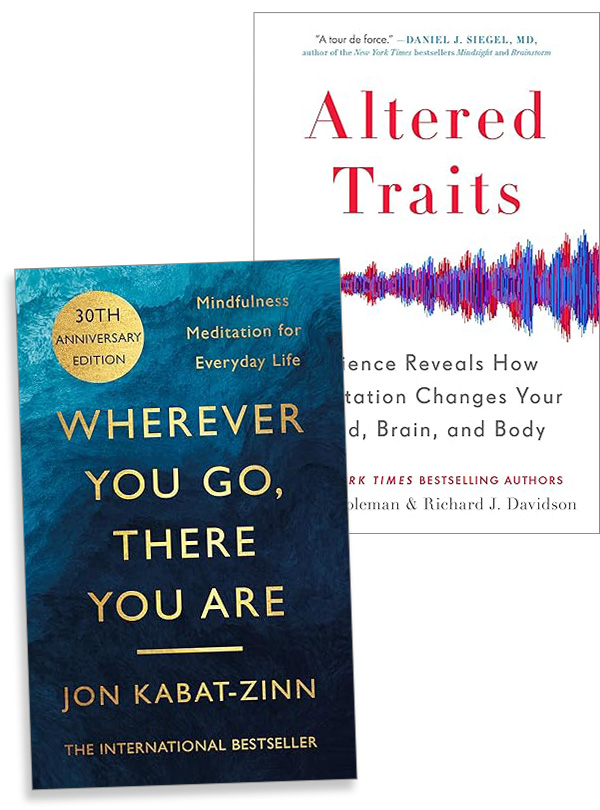
Jon Kabat-Zinn’s Wherever You Go, There You Are introduces mindfulness meditation and ways to bring it into everyday life. It offers suggestions for practice alongside reflections on paying attention to your experience.
Daniel Goleman and Richard Davidson’s Altered Traits examines research into meditation’s effects on the mind and brain. It explores the difference between temporary experiences during meditation and changes that may last beyond a session, while discussing weaknesses in the evidence. It may suit you if you want more detail about the research.