
Breathing practices involve paying attention to your breathing and gently adjusting its pace. A few minutes of comfortable, steady breathing may help with stress, though it won’t always change how you feel.
You don’t need equipment or a particular counting pattern. Start at a time when you can pause safely and try the exercise without rushing.
The aim is not to take the biggest breath possible or breathe as slowly as you can. Keep the breath gentle, without forcing it or holding it longer than feels comfortable.
If you prefer a visual prompt, try the breathing circle I’ve created. It offers several patterns and an adjustable pace. Many breathing apps offer similar prompts; choose a rhythm that feels comfortable rather than trying to keep up.
The circle starts with box breathing, which includes breath holds. You can choose a pattern without holds, such as its “resonance breathing” option, or practise without a timer.
How to do it
Start with gentle, regular breathing. If focusing on your breath makes you more anxious, stop and try grounding techniques that use your surroundings instead.
- Get comfortable. Sit with your back supported or choose another comfortable position. Loosen any clothing that restricts your breathing, if practical. Let your breath follow its usual rhythm for a few moments.
- Breathe in gently. Try breathing through your nose if comfortable. Let the breath move into your belly without pushing it or taking an unusually large breath. Keep your shoulders relaxed rather than forcing them to stay still.
- Let the breath flow out. Breathe out gently through your mouth or nose, whichever feels comfortable. There’s no need to empty your lungs completely or hold your breath before breathing in again.
- Use a count if it helps. Try counting from one to three or four as you breathe in, then use the same count as you breathe out. Shorten the count or leave it out if you feel you’re stretching or rushing the breath.
- Continue while it feels comfortable. Try a minute or two initially, building towards five minutes if it suits you. You can finish even if you don’t feel calmer. If you become dizzy, breathless or more anxious, stop adjusting your breathing and let it return to its usual rhythm.
You can keep the exercise simple. A longer out-breath is one option, but equal counts can also be used. There is no need to add breath holds or aim for a particular number of breaths per minute.
Where it comes from
Deliberate breathing practices have a long history in yoga and other contemplative traditions. In yoga, pranayama refers to practices involving the regulation of breathing.
Modern breathing exercises also appear in relaxation training and healthcare. Some use a steady rhythm; others include pauses, longer out-breaths or repeated deep breaths. These methods are not interchangeable.
Box breathing, for example, alternates breathing in, holding, breathing out and holding again. You do not need to use holds to try a gentle breathing exercise, especially if they make you feel short of air.
Worth knowing
Research suggests breathing exercises may help reduce stress and some symptoms of anxiety. The findings are promising, but studies vary in quality and do not establish one best pattern for everyone.
A 2023 review of randomised trials found small to moderate average improvements in reported stress. Many studies were small, and the researchers called for better research before making strong claims.
Breathing can affect heart rate and other bodily processes, but the explanation is more complex than “a long out-breath tells your body it is safe”. Attention, expectations and taking a quiet pause may also contribute.
Comfort matters more than reaching a target. Slower is not always better, and a breathing exercise should not leave you repeatedly gasping to catch up.
If you use the breathing circle or another app, adjust the pace or stop following it if the rhythm feels strained. You can return to ordinary breathing at any point.
Methods involving repeated rapid or deep breathing and long holds, including Wim Hof breathing, carry different risks from the gentle exercise above. They can cause dizziness or fainting and should never be practised in water, while driving or where losing consciousness could cause injury.
If you have a heart or lung condition, ask your healthcare professional whether a particular exercise is suitable. Breathing exercises should not replace prescribed treatment or be used to explain away new or worsening breathlessness.
Recommended reading
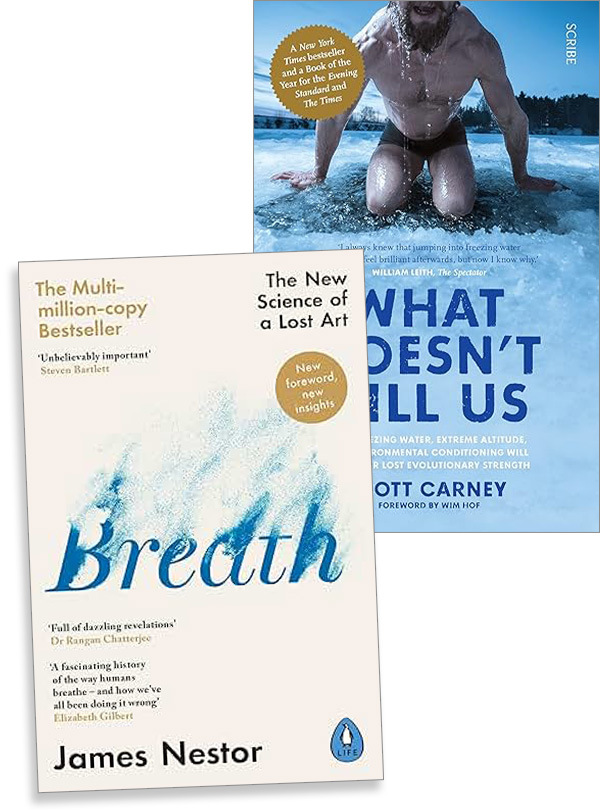
James Nestor’s Breath: The New Science of a Lost Art explores breathing through reporting, historical accounts and personal experiments.
It may interest you if you want to read more widely about breathing practices. It is popular science rather than clinical guidance; the techniques it describes vary in their evidence and suitability.
Scott Carney’s What Doesn’t Kill Us combines his experience of the Wim Hof method with reporting on cold exposure, breathing and physical endurance.
Its focus is more intensive than the gentle exercise on this page. Read it as an account of exploration, rather than a reason to copy challenging breathing exercises or cold exposure.