
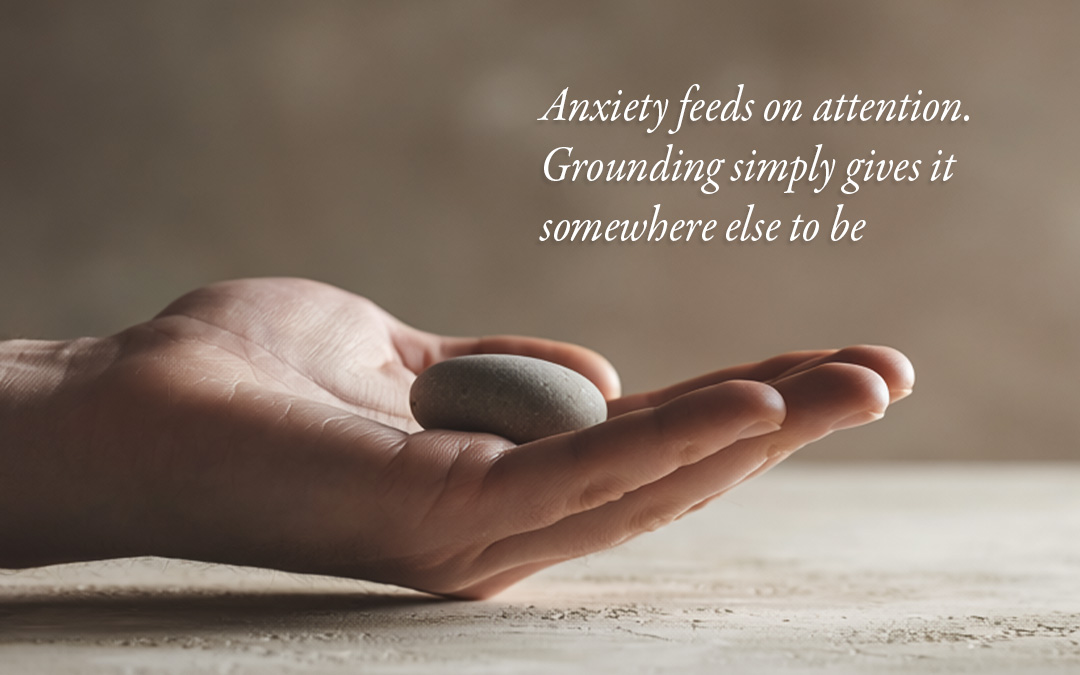
Grounding means directing your attention to what is around you now. It may help when you feel overwhelmed, caught up in worry or disconnected from your surroundings.
You might name objects in the room, listen to nearby sounds or notice the texture of something you are holding. These give you a concrete task to focus on without needing to change your breathing.
Grounding can be used during a difficult moment, and you can also try it when you feel settled so the steps are familiar. It may help you feel more present, though it does not work for everyone or remove the cause of distress.
Choose details that feel neutral or comfortable. If a sensation or sound makes things worse, leave it out. You can use one sense, name fewer things or stop the exercise.
Unlike some forms of meditation, this exercise focuses mainly on your surroundings. That may suit you if paying close attention to thoughts, breathing or body sensations feels uncomfortable.
Try the 5-4-3-2-1 exercise
This is one commonly taught approach. The numbers offer a structure, not a test: adapt them to the senses available to you and what feels manageable.
- Notice five things you can see. Look around and name a few objects, silently or aloud. You might notice a blue cup, a door handle or light on the wall. Describe a colour or shape if that helps. If sight is unavailable or uncomfortable, use another sense.
- Notice four things you can feel. Try the chair supporting you, your feet against the floor or the fabric of your sleeve. You can hold a familiar object and notice its texture or weight. Choose comfortable contact; leave out anything unpleasant.
- Notice three things you can hear. Listen for sounds such as voices, birds or a nearby appliance. You don’t need to search for distant sounds or identify their source. If hearing is unavailable or a sound feels distressing, return to something you can see or touch.
- Notice two things you can smell. If there is a familiar, comfortable scent nearby, notice it briefly. There may be only one scent or none at all. You can skip this step and name two more objects around you instead.
- Notice one thing you can taste. You might notice a taste already in your mouth or take a sip of water if you want to. If this feels uncomfortable or there is nothing to notice, finish by naming where you are and one thing you can see or feel.
When you finish, notice whether the exercise was useful. You can repeat part of it, choose one object to focus on or stop. If it increases distress or frustration, try something else or ask someone you trust for support.
How grounding is used
Grounding is used in mental health support, including work with people experiencing flashbacks or feeling disconnected from their surroundings. It offers ways to notice the present without having to discuss a difficult memory in detail.
The 5-4-3-2-1 exercise is one approach. Others include describing an object, reading a sign aloud or reminding yourself of the date and where you are.
Its inclusion in healthcare guidance does not mean it will work for everyone. The evidence does not justify promises that one exercise will reliably stop panic or distress within a few minutes.
Finding an approach that suits you
Keep grounding simple enough to use when thinking is difficult. You might choose one familiar object and describe its colour, shape or texture, rather than work through the whole sequence.
A sound, smell or sensation can sometimes bring up an upsetting memory. Leave it out if that happens. Strong sensations are not necessarily more helpful; choose something neutral or comfortable rather than painful or startling.
If you are in an unsafe situation, getting to safety or asking for help takes priority. Grounding should not be used to persuade yourself that a real threat is only anxiety.
If someone is helping you, ask for what you prefer: a quiet voice, a reminder of where you are or simply their company. They should not touch you or insist on an exercise without your agreement.
When more support is needed
Grounding is a coping option, not a treatment for the cause of recurring panic, flashbacks or disconnection. If these experiences are frequent or affect daily life, speak to your GP or a qualified mental health professional.
You can also explore NHS Talking Therapies for assessment and treatment options. It may help to explain what happens, when it happens and which exercises help or make things worse.
For urgent mental health support, the Support directory lists crisis contacts. You do not need to keep trying self-help exercises before asking for help.
Recommended reading
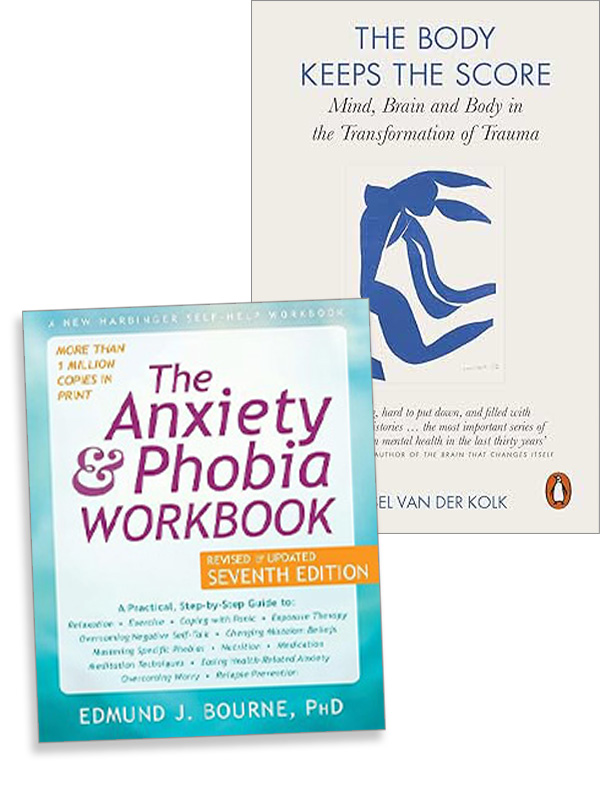
Edmund Bourne’s The Anxiety and Phobia Workbook offers practical exercises for understanding and managing anxiety, including relaxation and ways to approach feared situations.
It covers much more than grounding. You can use individual sections, though some exercises may be easier to work through with a therapist.
Bessel van der Kolk’s The Body Keeps the Score explores how trauma can affect the mind and body, drawing on clinical accounts and research into different treatments.
It offers wider background rather than instructions for grounding. Some accounts of traumatic experiences may be difficult to read, so choose it according to your interests and how comfortable you feel with the subject.