
Guided meditation means following spoken instructions from a recording or a teacher. The voice might invite you to notice your breathing, feel the contact of your feet with the floor or listen to sounds around you.
If you’re new to meditation, guidance can give you a clearer idea of what to try. It can also be useful when you’d rather follow instructions than decide what to do next.
Recordings vary. Some focus on physical sensations; others use imagined scenes or phrases of kindness. You can choose an approach that interests you and leave out instructions that feel uncomfortable.
The voice, pace and length matter too. You might prefer brief prompts with quiet pauses, or more continuous guidance. There’s no need to keep listening to a recording that feels irritating or rushed.
I’ve created a few short guided meditation samples, including a body scan and a breathing meditation. If you’d like to try one, each takes just a few minutes to listen to.
How to do it
Choose a short recording for your first attempt. You can pause, change position or stop whenever you need to. These steps can help you get started:
- Choose a short recording. Try two to five minutes to begin with. Read the description so you know whether it focuses on breathing, body sensations or imagined scenes. Choose something you feel comfortable exploring.
- Find a comfortable position. Sit with support or lie down if you prefer. Use speakers or headphones at a comfortable volume. Choose a time when you can safely give the recording your attention, away from driving or other tasks that need concentration.
- Try the instructions in a way that suits you. You can keep your eyes open, change position or skip a prompt. If focusing on your breath feels uncomfortable, notice sounds or the contact between your body and the chair instead.
- Return when you notice you’ve drifted. You may miss some instructions while thinking about something else. Pick up with the next prompt you hear; there’s no need to rewind or catch up.
- Finish and check how you feel. Take a moment to look around before getting up. You might feel calmer, unchanged or uncomfortable. If the recording increases anxiety or distress, stop and do something familiar. Use that experience to decide whether to try a different recording or another practice.
Where it comes from
Guided meditation is a way of teaching and practising, rather than a single tradition. The instructions depend on the approach: noticing physical sensations, repeating phrases or imagining a scene.
Modern mindfulness courses use spoken guidance to introduce practices. In Mindfulness-Based Stress Reduction (MBSR), teachers lead exercises during classes, and recordings support practice at home.
Apps, podcasts and websites make recordings easier to find. But a recording cannot respond to your questions or notice when an exercise needs adapting, as a teacher can.
Worth knowing
Guidance may make meditation easier to follow, but that does not establish that it works better than silent practice. Choose the format you find useful, rather than treating either one as a more advanced stage.
Research suggests that some mindfulness-based programmes can help with anxiety and other symptoms. Those findings do not tell us how effective any particular recording will be.
The content matters too. A breathing meditation, a body scan and an imagined scene ask you to do different things. The broad label “guided meditation” can cover all of them.
A recording is an invitation to try something, not an instruction you have to obey. You can leave out a prompt, keep your eyes open or stop listening.
If imagined scenes are hard to picture, you can simply consider the words or choose a practice based on sounds. If attention to your body brings up distress, shift your attention to the room around you.
Meditation sometimes increases anxiety or brings up difficult feelings. If this happens repeatedly or affects you afterwards, seek advice from a qualified healthcare professional before continuing. A recording cannot provide individual care.
Recommended reading
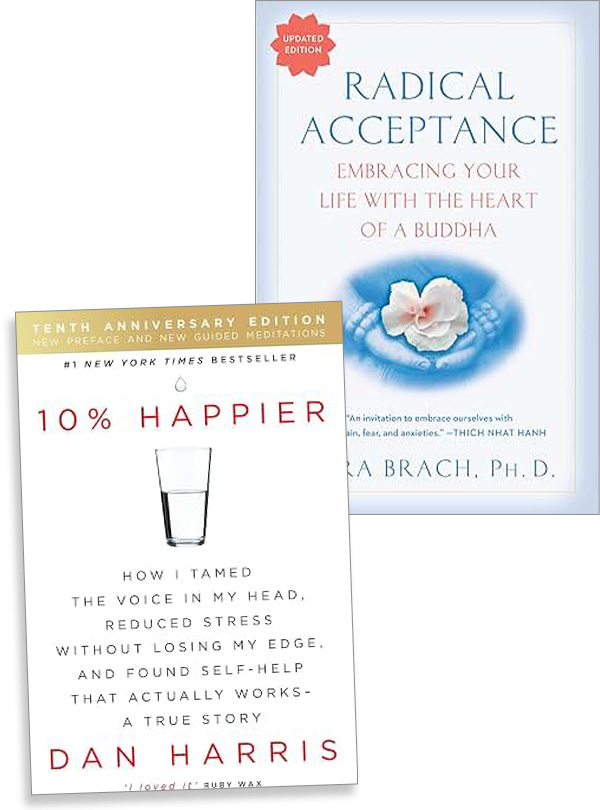
Tara Brach’s Radical Acceptance explores responding to difficult feelings and self-criticism with mindfulness and kindness. It combines Buddhist teachings, personal stories and guided meditation exercises.
It may interest you if you want to explore acceptance alongside practical exercises. Its approach includes spiritual language as well as psychological ideas.
Dan Harris’s 10% Happier recounts how a sceptical television journalist came to try meditation after a panic attack on air.
It is mainly a personal account, rather than a collection of guided practices. It may suit you if you’re curious about meditation but have doubts about the language and claims surrounding it.