
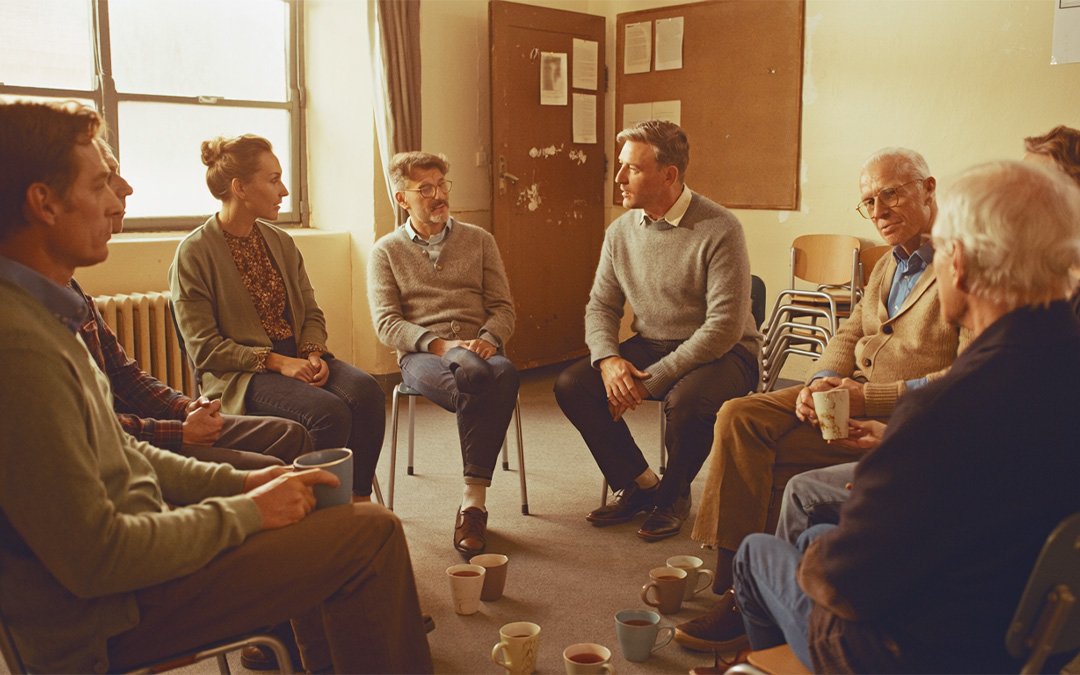
Mindfulness-Based Stress Reduction (MBSR) is an eight-week course with a teacher, a group and regular practice at home. It offers a structured way to learn mindfulness and explore how you respond to stress.
The course combines meditation, gentle movement and discussion. You practise noticing thoughts, feelings and physical sensations, then explore how to use that awareness in everyday situations.
Where it comes from
Jon Kabat-Zinn developed MBSR at the University of Massachusetts Medical Center in 1979 to support people living with stress, pain and illness. It draws on meditation traditions without requiring religious beliefs.
Its established curriculum has helped researchers study it across different settings. Courses generally share a core structure, though teaching, schedules and support can vary.
What the course involves
A standard MBSR course usually includes:
- Find a teacher trained in MBSR. Courses run in person and online. The British Association of Mindfulness-Based Approaches (BAMBA) has a teacher directory; check that the teacher’s training includes MBSR. Before booking, ask about fees, accessibility and whether the course suits your circumstances.
- Expect eight weekly group sessions. These usually last around two and a half hours and combine guided practice with discussion. An introductory session or conversation with the teacher gives you a chance to ask questions and understand the commitment.
- Learn the body scan. This involves moving your attention through different parts of your body, noticing sensations without needing to change them. It is often taught lying down, but you can sit or use another comfortable position. Tell the teacher if focusing on your body feels distressing.
- Explore different ways to practise. The course includes sitting meditation, mindful walking and gentle yoga or movement. Ask for adaptations where needed; you don’t need to force a stretch or stay in a painful position. You also try paying attention during everyday activities, such as eating or washing up.
- Allow time for home practice and a longer session. Standard courses commonly ask for around 45 minutes of practice on six days each week, plus an all-day practice session, much of it in silence. Check the schedule before enrolling. If the time commitment or exercises would be difficult, discuss this with the teacher and ask what adjustments are possible.
Worth knowing
MBSR has a substantial research base, but its benefits vary. Studies describe how groups of people responded; they cannot predict how useful the course will be for you.
A 2014 review found moderate evidence that mindfulness meditation programmes can reduce symptoms of anxiety, depression and pain. Improvements were generally modest, and the review covered several programmes rather than MBSR alone.
A trial reported in 2023 assigned 276 adults with anxiety disorders to MBSR or escitalopram, an antidepressant also used to treat anxiety.
After eight weeks, MBSR met the study’s criteria for being no less effective than the medication at reducing anxiety severity. That supports it as an option for some people, but does not show that it can replace medication for everyone.
The MBSR group reported fewer treatment-related adverse effects, though around one in ten reported increased anxiety. Feeling worse is something to discuss with the teacher, rather than a stage you need to endure.
You can shorten or stop an exercise and ask about alternatives. If distress continues outside sessions, seek advice from a healthcare professional.
Is the course right for you?
The time commitment matters. Classes, the longer practice day and home practice need space in your routine. Before enrolling, ask what is expected and what support is available if you struggle.
Tell the teacher about anything that may affect participation, such as pain, limited mobility or finding attention to your body distressing.
Ask how practices can be adapted and whether you can speak privately about difficulties. For an online course, consider whether you have a comfortable, reasonably private place to join.
A shorter exercise may be a more manageable starting point if a full course feels impractical. It can help you explore whether this way of practising suits you.
It won’t reproduce the course studied in research. If you already receive treatment, discuss any proposed changes to that treatment with your clinician.
MBSR and depression
A related course, Mindfulness-Based Cognitive Therapy (MBCT), combines mindfulness practices with elements of cognitive therapy.
NICE recommends it as one option for helping prevent depression returning in people at higher risk of relapse.
It has a different clinical focus from MBSR, so ask which course is being offered and why it may suit your needs.
Recommended reading
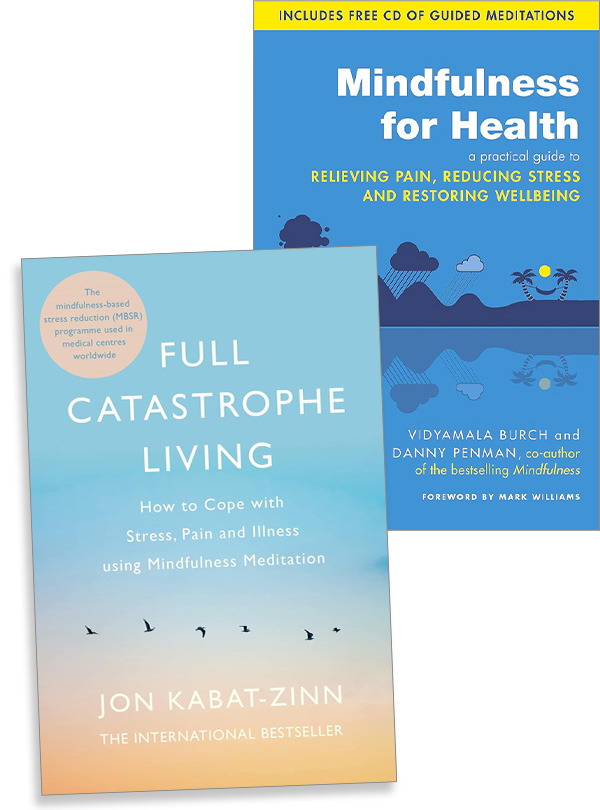
Jon Kabat-Zinn’s Full Catastrophe Living explains the MBSR approach, with meditation and movement practices for working with stress, pain and illness.
It offers a detailed introduction and can support what you learn on a course. Reading it on your own does not provide the same guidance and feedback as working with a teacher.
Vidyamala Burch and Danny Penman’s Mindfulness for Health offers an eight-week programme focused on living with pain and illness.
It follows the Breathworks approach, which is related to mindfulness-based programmes but is distinct from MBSR. Drawing on Burch’s experience of spinal injury, it includes short meditations and practical ways to bring mindfulness into daily life.