
Yoga has roots in Indian philosophy and includes movement, breathing and meditation. Here, the focus is on gentle physical practice: moving comfortably and paying attention to how your body feels.
You don’t need to be flexible to begin. Movements can be made smaller, supported or adapted for a chair. A beginner’s class with a qualified teacher can help you find versions that suit you.
Some classes include spiritual teachings; others focus mainly on movement. You can ask what a class involves and choose an approach that fits your interests and beliefs.
There is no need to reach a particular shape or depth of stretch. Choose movements you can do comfortably, and leave out anything that causes pain or feels unsteady.
How to begin
Wear clothes you can move in and clear enough space around you. Use a stable, non-slip surface; a yoga mat can help. For seated movements, choose a sturdy chair without wheels.
If you’re pregnant, have an injury or a health condition that affects movement, ask an appropriate healthcare professional or qualified yoga teacher about adaptations before trying the sequence below.
Start slowly, breathe comfortably and take breaks whenever you need them. Stop if you feel pain, dizziness or unusual breathlessness. The following movements offer a short introduction rather than a full class.
- Find a comfortable starting position. Stand with your feet about hip-width apart, or sit with your feet supported. Keep your eyes open, especially if balance is difficult. Notice the contact beneath your feet and take a few comfortable breaths.
- Raise and lower your arms. Slowly lift your arms forwards or out to the sides, only as high as feels comfortable, then lower them. Try three times, seated or standing. You can breathe in as you lift and out as you lower, but don’t force your breathing to match.
- Try a small forward bend. If standing feels steady, soften your knees and hinge a little at the hips, resting your hands on your thighs. Keep your back comfortably long; there’s no need to reach the floor. Return slowly to upright. Skip this if bending causes discomfort or dizziness.
- Explore gentle cat and cow. On hands and knees, place your hands beneath your shoulders and knees beneath your hips. Slowly alternate between rounding your back a little and gently lifting your chest, without dropping deeply into your lower back. Try three to five times. Alternatively, sit with hands on thighs and make the same small movements through your upper back.
- Choose a comfortable pause. If kneeling suits you, move your hips partway towards your heels for a supported child’s pose, resting your forehead on a cushion if helpful. Don’t force your knees or hips into position. You can instead sit back against your chair and rest your hands in your lap.
- Finish with a short rest. Sit supported, lie on your side or lie on your back with knees bent if comfortable and appropriate for you. Rest for a minute or two, breathing normally. Notice how you feel without expecting a particular result, then change position and get up slowly.
Where it comes from
Yoga developed in India through several religious and philosophical traditions. Its history includes meditation, ethical teachings, breathing practices and physical postures, with different approaches emphasising different elements.
Many posture-based styles taught today took shape during the twentieth century. They drew on earlier yoga traditions alongside influences from gymnastics and other forms of physical training.
Classes still vary widely. Some involve flowing movement, others hold postures for longer, and some use chairs or other supports. Not every style links each movement to a breath or aims for stillness.
Worth knowing
Research suggests yoga may help with perceived stress, sleep and some aspects of wellbeing. Results vary because studies use different styles, schedules and groups of participants.
There is also evidence that yoga can offer additional help with depressive symptoms alongside treatment. Evidence for diagnosed anxiety disorders is less certain, so yoga should not replace care you need.
Movement, breathing, attention and the experience of attending a class may all contribute. Research does not establish one simple explanation for why yoga helps some people.
A suitable class gives you room to adapt, rest and say no. You should not have to push through pain or accept hands-on adjustments you do not want.
Before booking, ask about the pace, floor work and alternatives for movements you cannot comfortably do. Tell the teacher about relevant injuries or health needs, and ask about their experience of adapting practice.
Yoga injuries can happen, including strains and sprains. Begin with manageable movements and qualified instruction rather than attempting demanding poses from photographs or short clips.
If focusing on your body or breathing feels uncomfortable, you can keep your eyes open, look around or take a break. Another activity, such as walking in nature, may suit you better.
Recommended reading
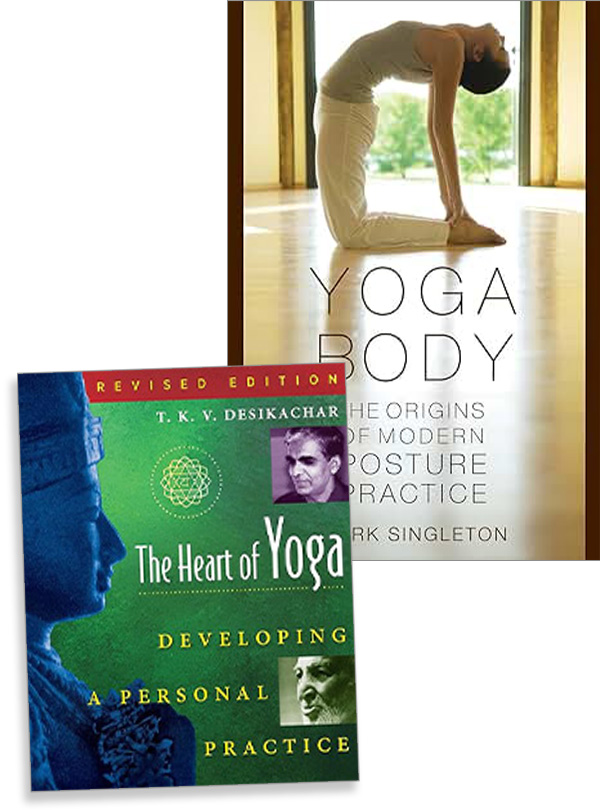
T.K.V. Desikachar’s The Heart of Yoga explores developing a personal practice, with an emphasis on adapting yoga to the individual’s needs.
It covers postures, breathing and yoga philosophy. It may suit you if you want to understand how these elements fit together, alongside learning physical movements from a qualified teacher.
Mark Singleton’s Yoga Body: The Origins of Modern Posture Practice examines how modern posture-based yoga developed, particularly during the twentieth century.
It explores the influence of Indian traditions, gymnastics and physical culture. This is a scholarly history rather than an exercise guide, for readers interested in how today’s familiar styles took shape.