

Somatic techniques focus on bodily sensations and movement. You might notice a clenched jaw, feel the chair supporting you or try a small, comfortable stretch.
Stress can affect both thoughts and physical sensations. Sometimes adjusting your position or moving gently is a useful place to begin, particularly when thinking through a worry is getting you nowhere.
“Somatic” means relating to the body. It covers a range of exercises and therapeutic approaches, rather than one method with a single set of instructions.
This page introduces everyday body awareness. It overlaps with grounding and gentle movement, but does not reproduce a course of somatic therapy.
Paying attention to sensations can feel pleasant, neutral or uncomfortable. You can keep your eyes open, focus on the support beneath you or leave out any area you do not want to attend to.
How to try it
Sit or stand in a supported, comfortable position and try the steps briefly. Keep movements within an easy range. If you feel pain, increased distress or less connected to your surroundings, stop and look around the room. If this happens repeatedly, discuss it with a qualified healthcare professional before continuing.
- Notice what supports you. Sit comfortably or stand with support nearby. Notice the chair beneath you or your feet on the floor. Keep your eyes open if you prefer.
- Choose one comfortable area. Notice your hands resting, the position of your shoulders or another area that feels neutral. You can skip a full body scan and avoid painful or unsettling sensations.
- Try a small adjustment. Unclench your hands, change your sitting position or gently lift and lower your shoulders. Stay within a comfortable range and stop any movement that hurts. Stillness is also an option.
- Let breathing stay easy. You can leave your breathing alone or try a few gentle, slightly slower breaths. Avoid forcing deep breaths or holding your breath. Return to your usual breathing if you feel dizzy or short of air.
- Finish by looking around. Notice a few objects in the room, then consider whether the exercise was useful. You might feel more comfortable, unchanged or less comfortable. Use that response to decide what to keep, adapt or leave out next time.
Different approaches, different aims
Somatic work is a broad label. Some approaches are forms of psychotherapy; others teach movement and body awareness. They differ in their aims, training and evidence.
Somatic Experiencing and sensorimotor psychotherapy work with bodily sensations and responses as part of therapy. Feldenkrais uses gentle movement and attention to explore how you move.
These approaches do not all share one explanation of stress. Claims about “stored trauma” or “releasing survival energy” belong to particular therapeutic models; they should not be treated as established descriptions of what happens in the body.
The short exercise on this page borrows simple elements of body awareness. It does not reproduce these therapies or require you to accept their theories.
What the evidence suggests
Some relaxation and movement practices may help with stress or anxiety. Evidence for one technique, however, does not establish that everything described as “somatic” works in the same way.
Research into Somatic Experiencing has reported promising findings, but a review identified limitations in the studies and called for stronger research. That leaves uncertainty about its effectiveness and who may benefit.
A comfortable stretch or change of position may ease muscle tension. It does not show that trauma has been released, and you do not need to produce shaking, tears or any other particular response.
Using body awareness in daily life
Noticing a familiar pattern can give you a practical choice. If your jaw is clenched while reading an email, you might loosen it, change position or take a break before replying.
Try a brief check at an ordinary moment, such as after sitting for a while. There is no need to monitor your body constantly or interpret every sensation as a sign of stress.
If inward attention makes you more anxious, focus on something outside you instead: a sound, an object or a task. Gentle yoga offers another way to explore movement, with adaptations for comfort.
When to seek support
Body-focused exercises can sometimes increase distress, particularly when sensations are linked to upsetting experiences. Stop if you feel overwhelmed or less connected to your surroundings; pushing through is not required.
If you seek somatic therapy, ask about the practitioner’s professional qualifications, training in the specific approach and experience with your difficulties. Discuss how they adapt exercises and respond if symptoms worsen.
Recurring flashbacks, panic or disconnection deserve assessment rather than more intensive self-help exercises. A qualified clinician can discuss treatment options and whether body-focused work has a useful role in your care.
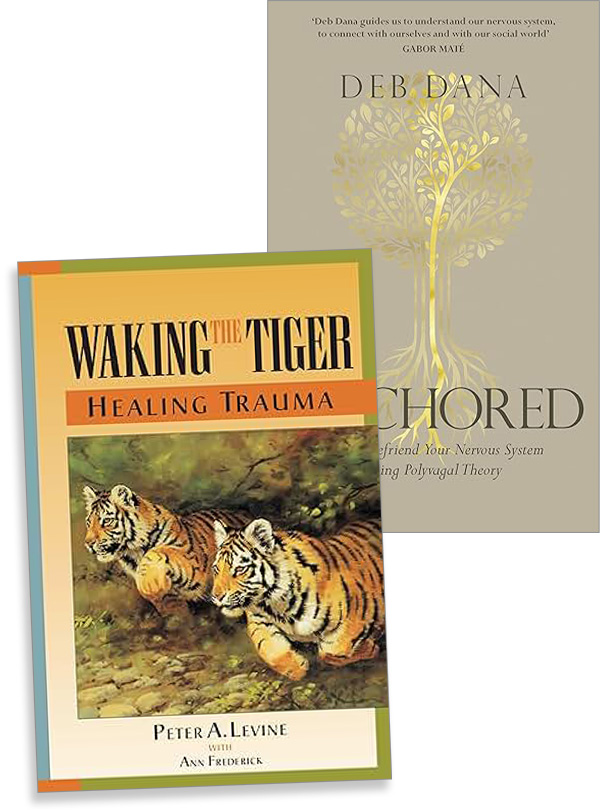
Recommended reading
Peter Levine’s Waking the Tiger, written with Ann Frederick, introduces his understanding of trauma and the ideas behind Somatic Experiencing. It combines explanations, examples and body-awareness exercises.
It is useful background if you want to understand this particular approach. Read its accounts of stored energy and release as Levine’s therapeutic framework, rather than established explanations of every stress response.
Deb Dana’s Anchored introduces her use of polyvagal theory, with practical exercises for noticing bodily responses and exploring what helps you feel comfortable and connected.
It offers another framework for body-focused practice. You can consider the exercises without using its categories to diagnose yourself or explain every sensation. Neither book replaces assessment or treatment for persistent difficulties.