
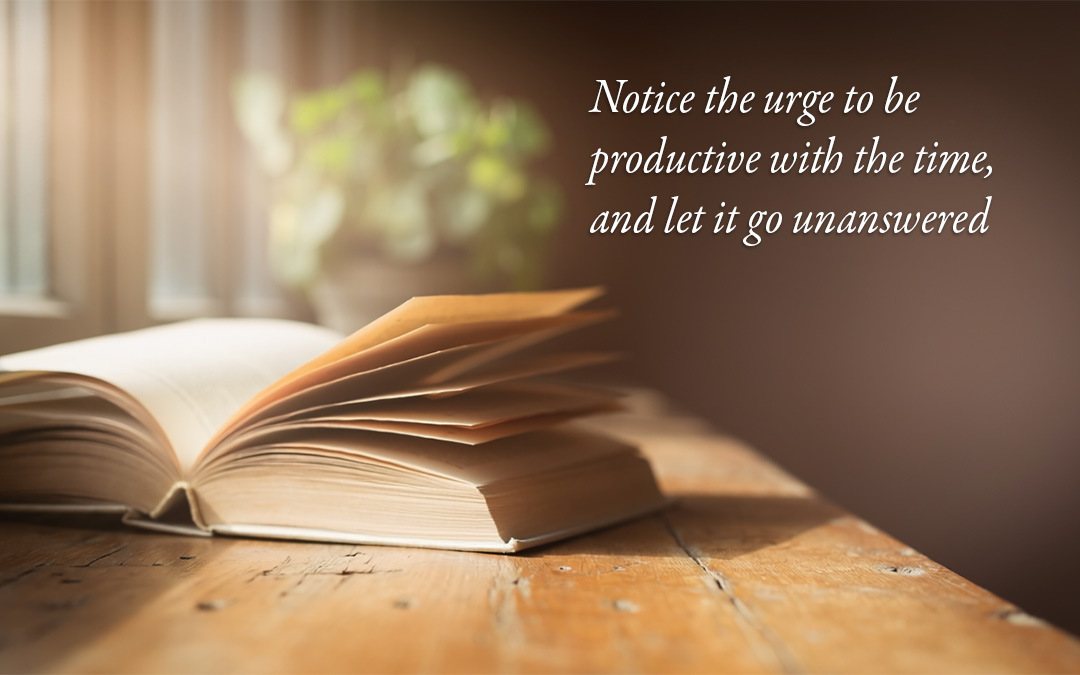
Unstructured rest means taking a short break without a task to complete. You might sit in a comfortable chair, look out of a window or rest somewhere quiet for a few minutes.
You do not need to follow your breath, clear your mind or use the time to solve a problem. Thoughts may come and go, and you can leave them unfinished.
A pause can feel pleasant, boring or restless. If you are used to keeping busy, you may notice an urge to check your phone or find something useful to do.
Start with a brief break that fits your day. Keep anything you need for comfort or accessibility nearby, and choose a position that does not cause strain.
How to try it
The suggestions below help make room for a pause. Choose what suits you; there is no particular feeling or result you need to achieve.
If quiet time leaves you increasingly distressed or caught in repetitive worries, finish the break. A gentle activity or conversation may suit you better at that moment.
- Choose a short pause. Begin with two to five minutes, or whatever feels manageable. Set a timer if it helps you stop checking the clock. You can finish earlier.
- Make yourself comfortable. Sit or rest in a supported position, with your eyes open or closed as you prefer. Adjust your position whenever you need to.
- Reduce interruptions where practical. Silence non-essential notifications or put your phone aside. Keep it available if you need it for accessibility, contact or peace of mind.
- Leave the time unplanned. Look around, let your thoughts wander or simply sit. If you notice an urge to start a task, you can leave it for later. There is no need to monitor your attention or make boredom disappear.
- Finish when you are ready. Return to your day without needing an insight or a calmer mood. If the pause felt uncomfortable, try a shorter break, a different setting or a gentle activity next time.
What happens during rest?
The brain remains active when you are resting. In 2001, Marcus Raichle and colleagues described a “default mode” of brain function, drawing attention to patterns of activity that change when people turn to demanding tasks.
Later research linked this network with aspects of remembering, imagining and thinking about yourself and others. These findings help explain why thoughts continue during quiet time.
They do not show that sitting without a task reliably produces calm, solves problems or gives the brain a particular kind of reset. Brain activity is not, by itself, evidence that a practice benefits wellbeing.
When quiet feels uncomfortable
Unoccupied time can bring boredom, restlessness or worries. Your response may depend on how you feel that day, where you are and whether the pause is something you have chosen.
In a widely reported 2014 experiment, some participants gave themselves an unpleasant electric shock while spending time alone with their thoughts. The study explored a particular laboratory situation; it does not establish why quiet time is difficult or whether practising it improves wellbeing.
You do not need to endure discomfort to make a break worthwhile. If sitting quietly leaves you increasingly distressed, try a shorter pause, some company or a simple activity.
The Dutch word niksen is often used in wellbeing writing to describe doing nothing. A name can make the idea easier to discuss, but it does not turn it into a standardised treatment with predictable results.
A break without a result to produce
You can take a pause because you want some time without demands. There is no need to justify it with an idea, a decision or improved productivity afterwards.
Unstructured rest differs from meditation, which usually gives your attention a focus or some guidance. Either may suit you at different times.
It also differs from sleep. Quiet time can offer a break, but it does not replace the sleep your body needs. The sleep and rest page covers practical sleep habits and when to seek help.
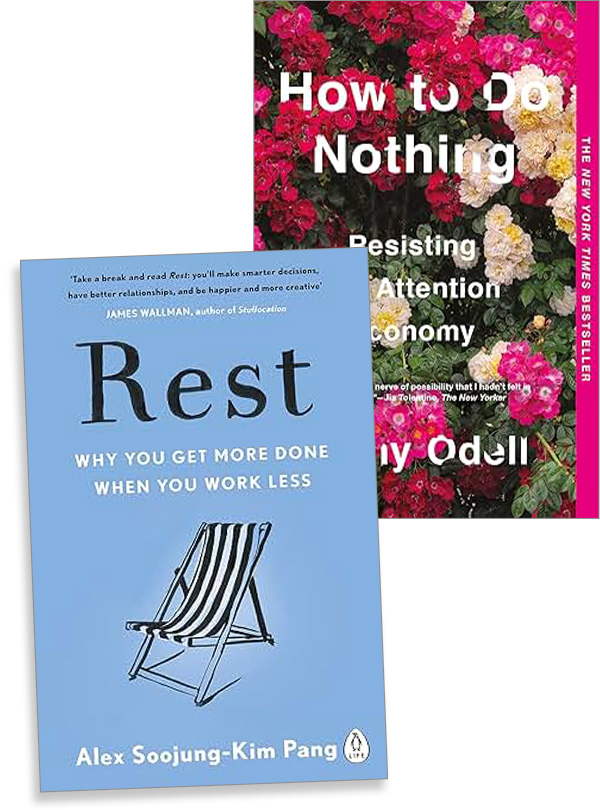
Recommended reading
Alex Soojung-Kim Pang’s Rest explores the relationship between work, rest and creativity through research and accounts of people’s routines. It covers several forms of rest, including sleep, walks and leisure, rather than focusing only on unstructured pauses.
Jenny Odell’s How to Do Nothing examines the demands placed on our attention and questions the pressure to make every moment productive. It is a reflective argument about how we spend our time, rather than a relaxation manual.