

Sleep supports health, mood and concentration. When it is disrupted, everyday demands can feel harder to manage. Stress and anxiety can also make it difficult to fall asleep or stay asleep.
You cannot make yourself sleep on command. What you can try is creating more comfortable conditions and a routine that fits your circumstances.
Sleep needs vary, and an occasional poor night is different from a persistent problem. How you feel and function during the day matters alongside the hours you spend asleep.
Pain, caring responsibilities, shift work and an unsettled home can limit your options. Sleep advice needs to make room for those realities, rather than become another standard you cannot meet.
Rest has a place too. A quiet break can give you time away from activity and demands, even when you do not sleep. It does not replace sleep, but it may still be worth making room for.
Things to try
The following suggestions offer a starting point. Choose one or two that seem practical, rather than changing everything at once. If sleep problems persist or affect daily life, speak to your GP; you do not have to exhaust every self-help option first.
- Aim for a regular waking time. Where your schedule allows, get up at roughly the same time each day, including after a poor night. Go to bed when you feel sleepy rather than forcing an early bedtime. If you work shifts, you may need advice suited to your working pattern.
- Take a break from trying to sleep. If you’re lying awake and becoming frustrated, get up if it is safe and practical. Do something quiet in dim light, then return when you feel sleepy. You don’t need to watch the clock or leave bed after an exact number of minutes.
- Make winding down manageable. Allow some quieter time before bed, perhaps reading, listening to something undemanding or having a wash. Reduce bright light and put aside work or upsetting content where possible. Choose a routine you can reasonably repeat.
- Make room for daylight. If you follow a daytime schedule, try spending time outside in the morning, perhaps during a short walk or while sitting outdoors. Daylight helps regulate the body clock; there is no single number of minutes that works for everyone.
- Include rest during your day. Take a short break from tasks when you can, without requiring yourself to fall asleep. Sit comfortably, look outside or listen to something quiet. Rest can offer a pause, but it does not replace sleep or require you to stay in bed when that feels frustrating.
Understanding sleep and rest
Sleep and rest meet different needs. A quiet break can reduce demands on you, but being awake and resting does not provide all the functions of sleep.
Most adults need around seven to nine hours of sleep, though needs vary. You do not have to reach an exact number every night. Ongoing tiredness, difficulty concentrating and how you manage the day are useful things to discuss if you’re concerned.
Sleep is influenced by the body clock and by how long you have been awake. Light, routines, medicines, health conditions and your surroundings can all affect it.
When sleep becomes hard work
Repeatedly checking the time or calculating how much sleep is left can make a difficult night more frustrating. A routine can help, but it does not need to become a series of tests you must pass.
If you find yourself adding more rules after every poor night, consider keeping just one or two manageable habits. You can put the clock out of view and choose something quiet to do if lying awake becomes upsetting.
Caffeine, nicotine and alcohol can affect sleep. Alcohol may make you feel sleepy initially but can disrupt sleep later. If you use these, consider their timing and effects rather than changing everything at once.
For daytime rest, you might try unstructured rest: a brief pause without needing to achieve anything. At night, staying in bed is not necessarily helpful if it leaves you increasingly frustrated.
When routine changes aren’t enough
Persistent insomnia often needs more than general sleep tips. Cognitive Behavioural Therapy for Insomnia (CBT-I) is a recommended first treatment for long-term insomnia.
CBT-I addresses thoughts and habits that can keep sleep difficulties going. It may involve a sleep diary, changes to sleep timing and ways to respond to wakefulness and worry. It is more specific than general CBT or relaxation advice.
Ask your GP about assessment and suitable treatment if sleep difficulties have lasted for months, routine changes have not helped or daily life is becoming hard to manage. Treatment may be offered with a therapist or through a structured digital programme.
Also mention loud snoring, gasping or pauses in breathing during sleep, particularly alongside daytime sleepiness. These may suggest sleep apnoea, which needs assessment rather than sleep-habit advice alone.
If you feel sleepy, do not drive. Getting help with sleep is also about keeping your daytime activities safe.
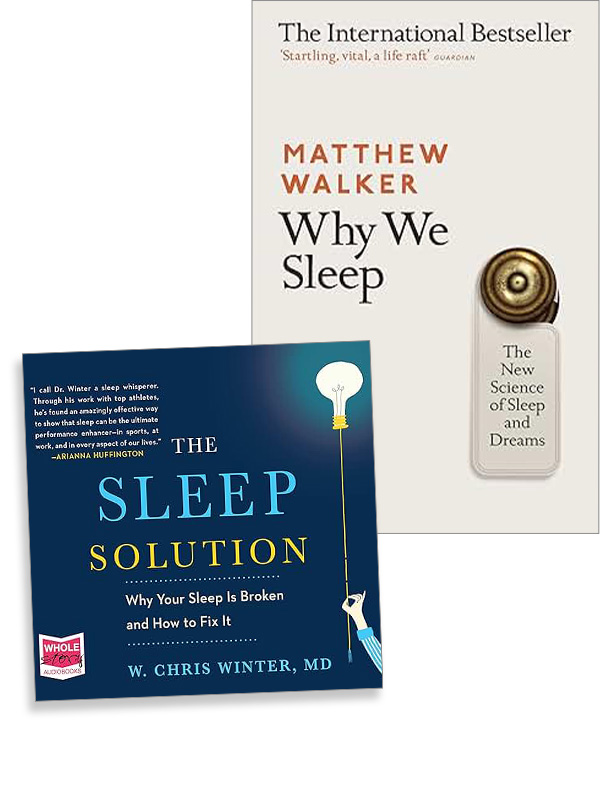
Recommended reading
W. Chris Winter’s The Sleep Solution explains how sleep works and explores common sleep difficulties, drawing on his experience as a sleep medicine specialist and neurologist.
It includes practical suggestions about routines, light and other influences on sleep. It may help you understand your experience and prepare questions for a healthcare appointment.
Matthew Walker’s Why We Sleep is a broad introduction to sleep and dreams, including their relationship with learning, memory and health.
It focuses heavily on the consequences of insufficient sleep, rather than providing a treatment programme for insomnia. If reading about health risks increases your worry at bedtime, you may prefer practical guidance or individual support.