
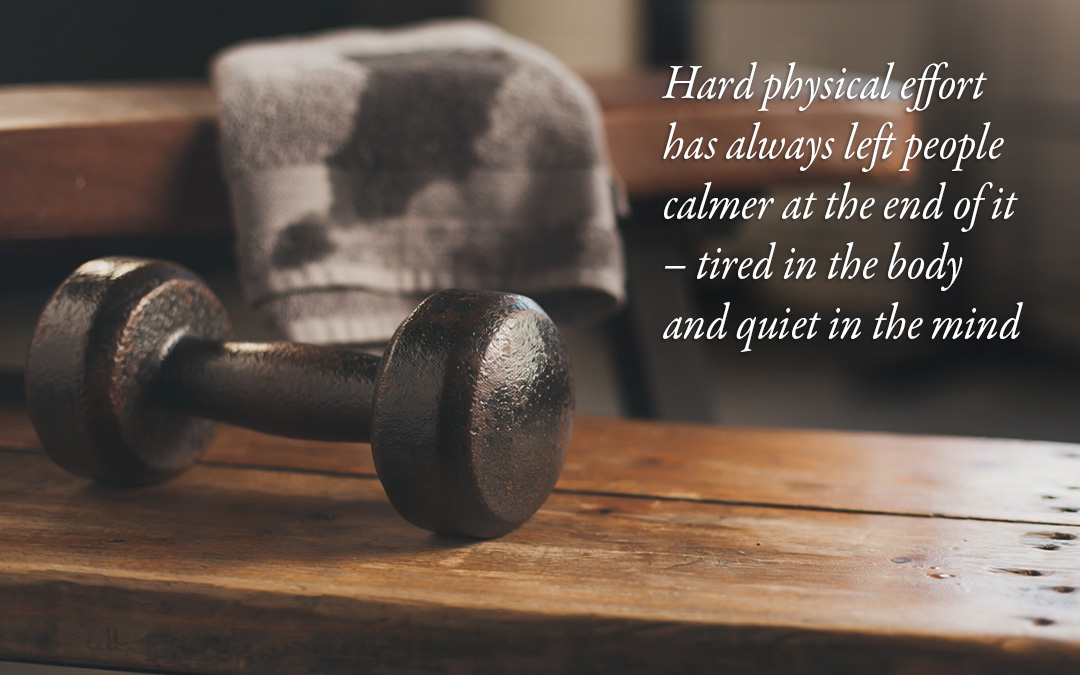
Physical activity can offer a change of focus and may help with mood and stress. You might enjoy a brisk walk, swimming, cycling or strength exercises that ask a little more of your muscles.
Some people feel more settled afterwards; others feel energised or notice little immediate change. You don’t need to work to exhaustion or stop thinking about your worries for the activity to be worthwhile.
The right level of effort depends on your health, fitness and how you feel that day. If you’re starting out, a short, manageable session is a useful place to begin.
Moderate effort is enough to start exploring. Your breathing may become faster and you may feel warmer, while still being able to talk. Harder exercise is not a requirement for feeling a benefit.
Choose something you can reasonably fit into your life. That could be walking outdoors, dancing at home or an adapted activity with support.
How to begin
If a health condition, injury or unexplained symptoms affect your ability to exercise, ask a healthcare professional about suitable activity. If exertion causes a delayed worsening of symptoms, seek advice rather than pushing through.
The following steps can help you try a manageable amount of effort and notice how you respond, including later in the day and the next morning.
- Choose a manageable activity. Try walking, cycling, swimming or familiar strength exercises, adapted to your abilities. Pick somewhere you can slow down, rest or finish easily. If you’re new to the activity, seek instruction rather than starting with a demanding session.
- Start gently and find a suitable pace. Spend the first few minutes moving easily. If comfortable, increase the effort a little. For moderate activity, you should still be able to talk. There’s no need to become too breathless to speak or keep going until your attention is fully occupied.
- Keep the first session short. A few minutes may be enough to explore how you respond. Rest when needed and finish before you feel exhausted. Stop if you develop chest pain, dizziness or unusual breathlessness; seek medical help as appropriate rather than pushing through.
- Ease off and notice the effects. Finish with a few minutes at an easier pace, then rest as needed. Notice your energy, mood and any discomfort afterwards and the next day. If activity causes a delayed worsening of symptoms, seek healthcare advice before increasing it.
- Adjust to what you learn. Choose a shorter session, gentler pace or different activity if needed. If evening exercise disrupts your sleep, try an earlier time. Increase activity gradually only when you’re recovering comfortably, without treating tiredness or calm as a result you must achieve.
Where it comes from
Using physical activity for wellbeing does not belong to one tradition. Walking, sport, dance and strength training offer different ways to move, develop skills and spend time with others.
Exercise research examines both the effects of a single session and changes that develop through regular activity. Feeling different after a walk is not the same outcome as a reduction in symptoms over several weeks.
Physical work is different again. A demanding job may involve fatigue, strain and little choice about when to rest. It should not be assumed to provide the same experience as a manageable activity you choose.
Worth knowing
Research supports physical activity as one way to help with symptoms of depression, anxiety and distress. That does not mean every session will leave you calm, or that exercise alone will meet every need.
Studies of single exercise sessions suggest anxiety can decrease afterwards, but results vary. There is no reliable promise that a particular intensity will quiet your thoughts or provide relief for a fixed length of time.
Several things may contribute: changes in bodily processes, a break from other demands, enjoyment, social contact or a sense of accomplishment. The benefits cannot be explained simply as exhausting the mind or switching the nervous system off.
You can benefit without working at your limit. More demanding activity suits some people, but the useful question is what you can do, recover from and reasonably continue.
A faster heartbeat and breathing can feel uncomfortable, especially if you associate them with anxiety. Start at a manageable pace. You do not need to deliberately provoke frightening sensations or use exercise as an exposure exercise without appropriate guidance.
If sessions repeatedly leave you restless, unusually fatigued or sleeping poorly, review their length, intensity and timing. Persistent symptoms deserve healthcare advice rather than another attempt to push harder.
For people with post-exertional symptom worsening, including some people with ME/CFS, increasing activity can cause harm. Follow individual healthcare advice rather than a plan that requires fixed increases.
If anxiety or low mood is affecting daily life, activity can sit alongside other support, including NHS Talking Therapies. Difficulty exercising should not become another reason to criticise yourself.
Recommended reading
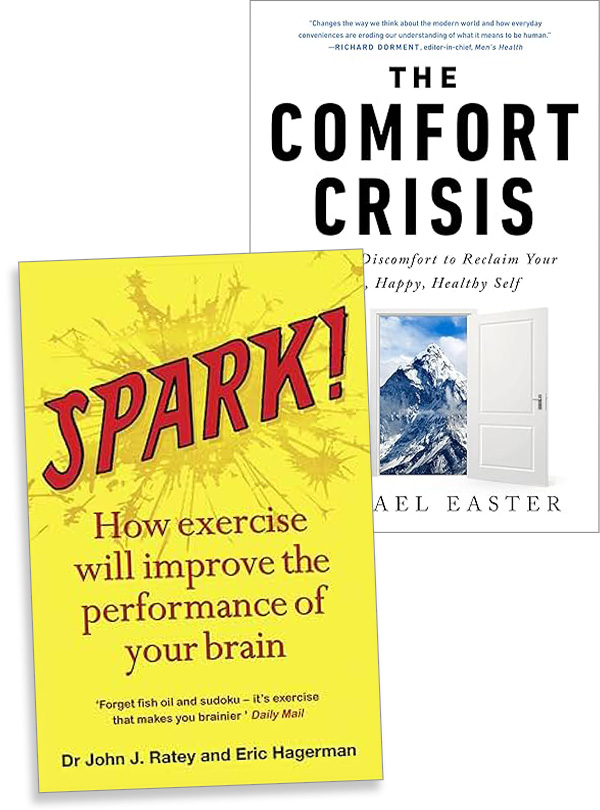
John Ratey’s Spark: The Revolutionary New Science of Exercise and the Brain, written with Eric Hagerman, explores connections between physical activity, learning, mood and mental health.
It combines research with accounts of exercise programmes and individual experiences. It may interest you if you want to understand the wider case for activity, rather than follow a particular workout plan.
Michael Easter’s The Comfort Crisis combines reporting and personal experience to explore his argument that chosen challenges can have a useful place in modern life.
Its focus extends beyond exercise to outdoor experiences and discomfort. It is not a clinical guide: you can consider its ideas without treating hardship as necessary for health or ignoring your limits.