
Food gives a day much of its shape. Going without it changes more than mealtimes: it can bring familiar habits into view, or mark a period set aside for reflection.
For someone observing a religious fast, the meaning may be inseparable from prayer, community and the meals shared afterwards. The hunger is only one part of a much larger experience.
Outside that setting, fasting is often presented as a route to clearer thinking, better health or greater self-control. Those are different claims, and they deserve more scrutiny than the promise of a fresh start usually gets.
Some people describe feeling focused during a fast. Others feel tired, irritable or distracted by food. Neither response says much about your character, and feeling uncomfortable is not evidence that something beneficial is happening.
Before changing how you eat
Your need for food is not something to overcome. Any decision about fasting needs to make room for your health, medication and relationship with eating.
A current or previous eating disorder is a reason to avoid fasting. So is finding that restriction draws you into rules, guilt or an increasing preoccupation with food and weight.
Children and teenagers, people who are pregnant or breastfeeding, and anyone who is underweight or frail should not take up fasting as a wellbeing practice.
If you have diabetes, another ongoing health condition or medication affected by food intake, speak with your healthcare team before fasting. Do not alter medication to fit an eating schedule.
Making room for reflection
Start with what you hope the practice will make space for. There may be more than one way to honour that intention, including ways that leave meals alone.
- Name what you want from the pause. Reflection, religious observance and a change to your diet are different purposes. Being clear about yours helps you decide whether fasting belongs in it.
- Take your circumstances seriously. Get individual advice where your health or medication calls for it. Someone else’s experience cannot tell you what is suitable for you.
- If you are observing a fast, plan the ordinary details. Seek appropriate guidance about meals, fluids, medication and your daily activities. Practical preparation matters more than an ambitious test of endurance.
- Leave room to change course. Dizziness, shaking, confusion or marked weakness are reasons to stop and seek appropriate help. You do not owe a completed fast to anyone.
- Keep other forms of reflection available. Prayer, a quiet walk, writing or time away from a familiar distraction can all mark a deliberate pause. Eating does not make that pause less meaningful.
A practice can matter deeply without being suitable on every occasion. Illness, changing needs or a difficult relationship with food may ask for a different approach.
If fasting is part of your faith, a trusted religious adviser and your healthcare team can help you consider those circumstances together.
More than going without
Fasting has a place in several religious traditions, with different rules and meanings. It may accompany prayer, repentance, generosity or a shared period of observance.
Someone’s experience is shaped by all of that: who they are with, what the time means, what they do during it and how they return to eating.
Reducing the experience to a biological effect misses much of what people value about it. Equally, its long history does not establish that food restriction improves health or wellbeing.
The promise of a clearer mind
Accounts of sharper thinking can be appealing, especially when you feel foggy or stretched thin. But research has not established fasting as a reliable way to improve concentration or emotional wellbeing.
Much of the human research concerns weight and metabolic health. Studies use different schedules and often change the amount eaten as well as its timing, making the results difficult to translate into a general recommendation.
You may also encounter claims about ketosis and autophagy. These refer to changes in how the body uses fuel and how cells recycle their components. They do not, by themselves, show that a particular fast improves mood or extends human life.
A personal account can be sincere without predicting your experience. Someone feeling better during a fast does not mean that you should expect the same, or keep going until you do.
When the rules take up too much room
Pay attention if fasting starts to organise more of your life than you intended: calculating when you are allowed to eat, feeling guilty when you do, or using restriction to compensate for a meal.
That is a reason to step back and seek support. There is no need to wait until things feel severe before talking to someone.
For everyday care, having enough food and meals you can manage is a useful foundation. Diet and the gut looks at that broader picture.
If the appeal is a moment that feels deliberate, personal rituals offer another way in. A few minutes set aside can carry meaning without asking you to go hungry.
Recommended reading
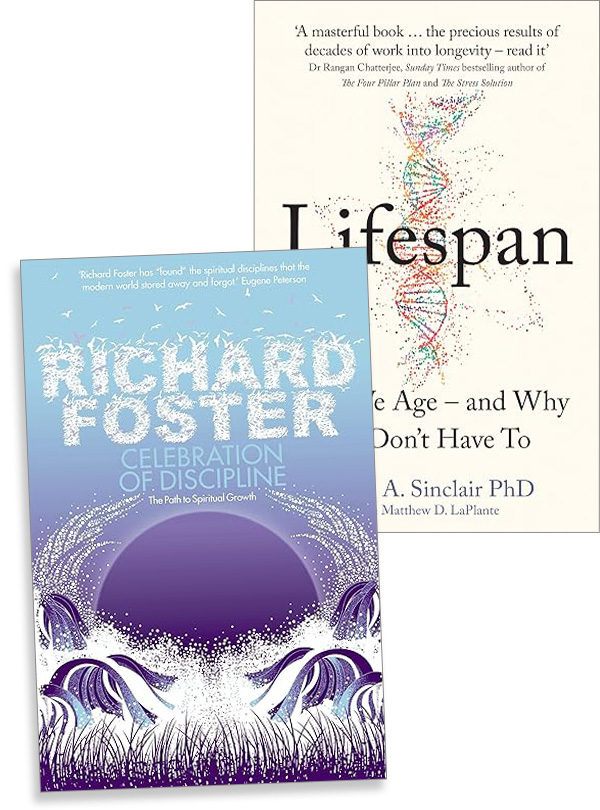
Richard Foster’s Celebration of Discipline explores fasting within Christian spiritual life, alongside prayer, meditation and simplicity.
David Sinclair’s Lifespan, written with Matthew LaPlante, presents an ambitious view of ageing research. Read its proposals with the distinction between emerging ideas and established human benefits in mind.