
On a difficult day, deciding what to eat can feel like one decision too many. Something familiar in the cupboard, or a meal you can make without much thought, can be a welcome bit of care.
Food belongs in the picture of how we look after ourselves. So do appetite, digestion, enjoyment and the practical business of getting a meal together when time or energy is short.
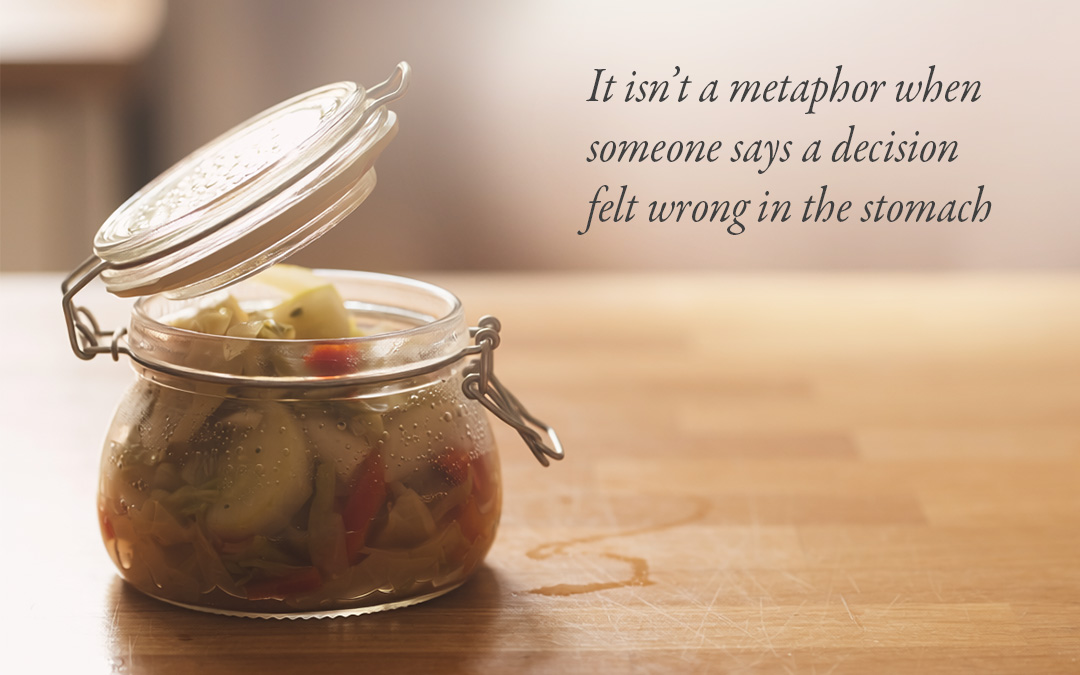
The connection with feeling is familiar too: a nervous stomach before an appointment, or digestive discomfort making an already tiring day harder.
The gut and brain communicate through nerves and chemical signals, in both directions. Researchers are also exploring how the microorganisms living in the gut contribute to that exchange.
It is an interesting field, but its possibilities can get lost beneath promises about the perfect diet or the right supplement. Everyday eating does not need to become a project in managing your microbiome.
A useful starting point is food you enjoy, enough of it, and a little variety over time. What that looks like will depend on your health, budget, culture and the day you are having.
Making the next meal easier
Start with something that removes a difficulty: an easy meal kept available, a food you like adding, or a small change that fits what you already eat.
- Keep a few easy meals within reach. Soup and bread, eggs on toast or a meal from the freezer can be useful on a low-energy day. Choose options that suit your needs and that you actually want to eat.
- Add variety where it fits. A piece of fruit, some frozen vegetables or beans added to a familiar dish can be a manageable change. You do not need every meal to contain everything.
- Build up fibre gradually. Oats, wholegrain bread, beans and lentils are possibilities, alongside enough fluids. Follow individual advice if a digestive condition affects what you can tolerate.
- Consider your caffeine habit. If you often feel jittery or struggle with sleep, look at coffee, tea and energy drinks. Reduce gradually if you want to experiment, or replace some drinks with decaffeinated options.
- Notice difficulties without turning every meal into a test. Repeated symptoms deserve attention, but one uncomfortable afternoon is not a reason to remove a whole food group. Seek advice if problems persist.
There will be meals assembled in a hurry and days when convenience matters most. A way of eating that makes room for those days is more manageable than one that depends on having plenty of time and energy.
Enjoyment belongs here too. A favourite meal, familiar flavours or eating with someone can be part of looking after yourself, without needing to justify each ingredient.
When the stomach joins the conversation
Stress can affect digestion, and digestive symptoms can affect how you feel. The gut–brain axis is the name given to the communication involved in that two-way relationship.
It helps explain why the boundary between a physical and an emotional difficulty is not always tidy. A nervous stomach is a real bodily experience; ongoing discomfort can also become something you worry about.
Gut microbes are another part of the picture being studied. Researchers are investigating how they interact with food, the immune system and signals between the gut and brain.
One detail often repeated in this discussion concerns serotonin. Much of the body’s serotonin is produced in the gut, but it does not cross into the brain. That fact does not translate into a simple recipe for improving mood.
Beyond the promises on the packet
“Gut health” can make ordinary food sound as though it needs specialist products. The science is more complicated, and there is still much to learn about changing mood through changes to gut microbes.
Studies linking eating patterns with mental health are difficult to interpret. Sleep, stress, income, activity and illness also shape what people eat and how they feel.
Finding a difference in gut bacteria does not necessarily tell us what caused it, or whether changing those bacteria will help. Results from animal studies also need testing in people.
Probiotics are being investigated, but their effects depend on the strains, doses and people studied. Evidence about one preparation cannot be assumed to apply to another product on the shelf.
If you enjoy yoghurt or other fermented foods and tolerate them well, they can have a place in your meals. They are optional, rather than something you need to add as a treatment for anxiety.
Keeping food part of care
You do not need to explain every change in mood through what you ate. Some days are difficult for reasons no meal could put right.
A little daily structure can make eating easier to remember and organise. Looking at sleep and rest alongside it may also be useful.
If digestive symptoms persist, speak with a GP or registered dietitian. Advice tailored to you is more useful than repeatedly removing foods or buying another supplement.
Seek support too if eating becomes increasingly restricted, worrying or governed by rules. Looking after your health should leave room for nourishment and enjoyment.

Recommended reading
Emeran Mayer’s The Mind-Gut Connection explores the conversation between the brain, digestive system and gut microbes, drawing on his work as a gastroenterologist and researcher.
Giulia Enders’s Gut offers a lively introduction to digestion, bringing curiosity and humour to a part of the body we often notice only when it causes trouble.