
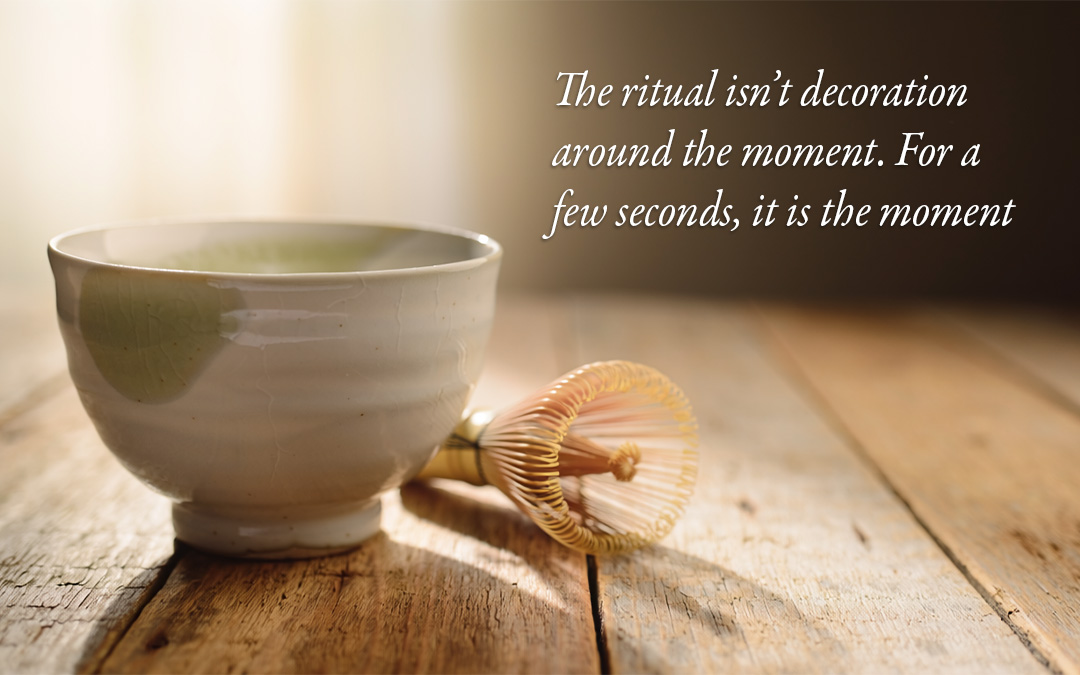
A personal ritual is a small act you use to mark a moment: making tea before settling down to read, playing a song at the end of work, or quietly remembering someone.
It might mark an everyday transition, prepare you for something difficult, or give you time to notice an occasion that matters.
The meaning can be simple and personal. Closing your notebook might signal that work is finished; tending a plant might be a way to remember someone you miss.
Some rituals come from religious, cultural or family traditions. Others are things you choose for yourself. You don’t need special equipment or an elaborate ceremony.
You can repeat a ritual regularly or use it for a particular occasion. What matters is that the act has a purpose for you and remains something you can freely change or leave out.
Creating a small ritual
Choose a moment you want to mark and one simple action that fits it. Try it a few times and notice whether it feels useful or meaningful.
- Choose a moment you want to mark. It could be the start or end of work, getting ready for bed, an anniversary or a moment of remembrance.
- Pick a simple action that means something to you. Make a drink, play a piece of music, say a few words or spend a moment with a photograph. Use what you already have.
- Give the act a little attention. Pause long enough to notice what you’re doing and why. You might silently name its purpose: “Work is finished for today” or “I’m taking a moment to remember.”
- Keep it manageable and flexible. If you want to repeat it, choose a version that fits ordinary days. You can shorten it, change the details or skip it when circumstances call for that.
- Notice whether you want to keep it. After trying it, consider whether it helps you mark the moment. Adapt it or let it go if it feels empty, burdensome or like something you must get exactly right.
Giving a moment meaning
A familiar action can become a ritual when you give it a particular meaning: a song that marks a homecoming, a meal shared on an anniversary, or a quiet moment to remember someone.
Religious, cultural and family ceremonies may also carry shared beliefs, history and a sense of belonging. Their meaning goes beyond the actions themselves, and differs between people and traditions.
A personal ritual can be simpler. Where a routine helps organise what you do, a ritual can express why a moment matters. Making tea might serve both purposes.
What to expect, and where to be careful
A ritual may feel comforting or help you give a moment your attention. It does not have to produce a noticeable change in mood to be meaningful.
Research has explored rituals in situations such as loss and uncertainty, but this does not establish that any chosen ritual will reliably relieve distress. Some widely cited findings about rituals and performance have also been retracted.
Placebo research concerns treatment settings, where expectations, care and other factors can interact. It does not show that a personal ritual works through the same processes, or that an object has special healing properties.
You can value a candle, photograph or other object for what it represents without needing it to change events. Choose something that fits your purpose; there is no need to buy a particular product.
Keep the practice optional. If you feel driven to repeat an act until it is exactly right, or fear that something bad will happen unless you do it, speak with a GP or mental health professional. Repetitive acts used to manage these fears can be compulsions, which need a different approach.
Recommended reading
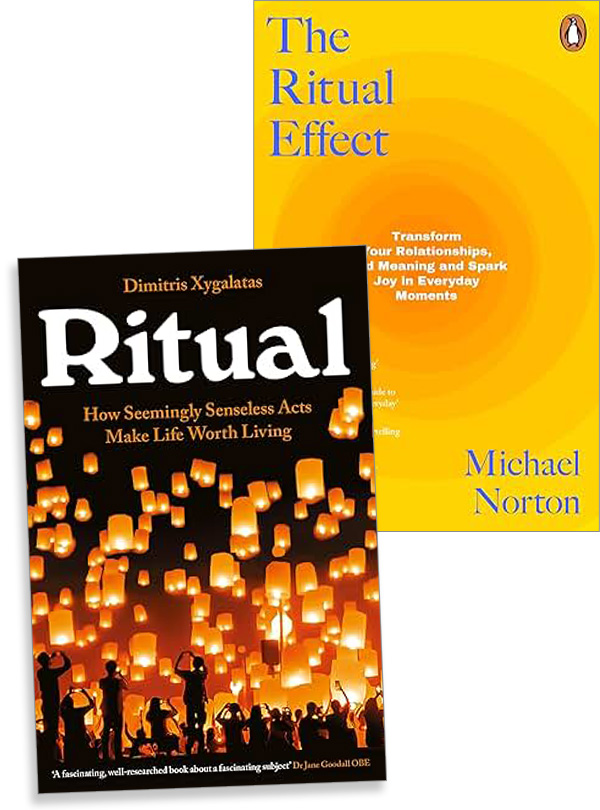
Dimitris Xygalatas’s Ritual explores rituals across cultures, from everyday customs to demanding ceremonies, and considers their roles in meaning, belonging and shared experience.
Michael Norton’s The Ritual Effect focuses more on everyday life, including relationships, work and personal occasions. It offers ideas for bringing intention to familiar actions; read its claims about benefits alongside the research limitations outlined above.