
Gardening gives you something concrete to attend to: checking whether a plant needs water, sowing a few seeds or clearing a small patch. It can offer an enjoyable task and a change from other demands.
Research suggests that gardening can support wellbeing and help with stress or low mood. Studies vary widely, so they do not establish that it works better than meditation, exercise or other activities.
Some research involves supported groups or therapeutic programmes. These may combine plant care with company, physical activity and professional support. Tending a pot at home is a different experience, though it can still be worthwhile.
You do not need a garden. A windowsill plant, a container outdoors or a task at a community garden can give you a starting point. Choose something that fits your space, budget and energy.
How to try it
Begin with one small task you can comfortably finish or leave for another day. You might check the soil in a pot, remove a few dead leaves or sow seeds according to the packet instructions.
Set things at a comfortable working height, sit if that helps and take breaks before you become tired or sore. The suggestions below are ways to make plant care manageable, rather than a programme you need to follow.
- Choose one manageable task. Check whether a pot needs water, remove a few dead flowers or weed a small area. Decide where to stop before you begin, rather than tackling everything that needs doing.
- Make the work comfortable. Bring a pot to a table, use a raised container or sit beside the task if that helps. Use tools you can handle comfortably and avoid lifting more than feels manageable.
- Notice what interests you. Look at a leaf, listen to nearby sounds or notice the scent of a plant. Wear gloves if you prefer; direct contact with soil is not needed. Wash your hands afterwards.
- Choose company or quiet. You might enjoy gardening with someone, joining a community session or working alone. If you join a group, ask what tasks and adaptations are available.
- Pause and review. Take a break before you become tired or sore. Notice what you enjoyed and what you would change next time. You can return to the task another day without needing a finished bed or thriving plant to make the time worthwhile.
You can leave a task unfinished and return another day. A short session may fit your life better than a full afternoon, especially if gardening is tiring or you are learning something new.
Gardening as supported care
Gardening has a long history in hospitals and care settings. Over time, it developed into more structured approaches in which practitioners adapt activities to a person’s needs and goals.
In the UK, this is often called social and therapeutic horticulture. It can involve support with physical tasks, opportunities for social contact and activities chosen for particular rehabilitation or wellbeing goals.
Community gardening can also be offered through social prescribing, which connects people with local activities and support. This can sit alongside medical treatment; it is not a reason to stop medication or other care.
What the evidence supports
Reviews suggest that gardening can support wellbeing, with some studies reporting improvements in stress, mood or quality of life. The research covers very different activities, participants and settings.
Many studies are small or have limitations in their design. Results from a supported group cannot tell us exactly what to expect from caring for plants alone, or how often someone needs to garden.
Research in dementia care has also reported benefits, but findings vary. Activities need to suit the person’s interests and abilities, with appropriate support and supervision.
Several things may contribute: enjoyable movement, time outdoors, company, a sense of purpose or satisfaction in a task. There is no established single explanation, and different people may value different parts.
Claims about soil bacteria
You may have seen soil described as a “natural antidepressant” because of research on the bacterium Mycobacterium vaccae. Much of the relevant work involves animals or specially prepared bacterial products.
It does not establish that handling garden soil treats depression or explains the benefits of gardening. You can use gloves and tools without needing direct contact with soil.
Keeping it manageable
Choose plants and tasks that fit your circumstances. Costs, heavy work and the responsibility of keeping things alive can become pressures, so it is reasonable to start small or share the care.
A regular task can give shape to the day if you enjoy it. The daily structure page offers other ways to build a manageable routine.
If tending plants feels like another demand, walking in nature or sitting outdoors may suit you better. You can enjoy a garden without taking responsibility for one.
Recommended reading
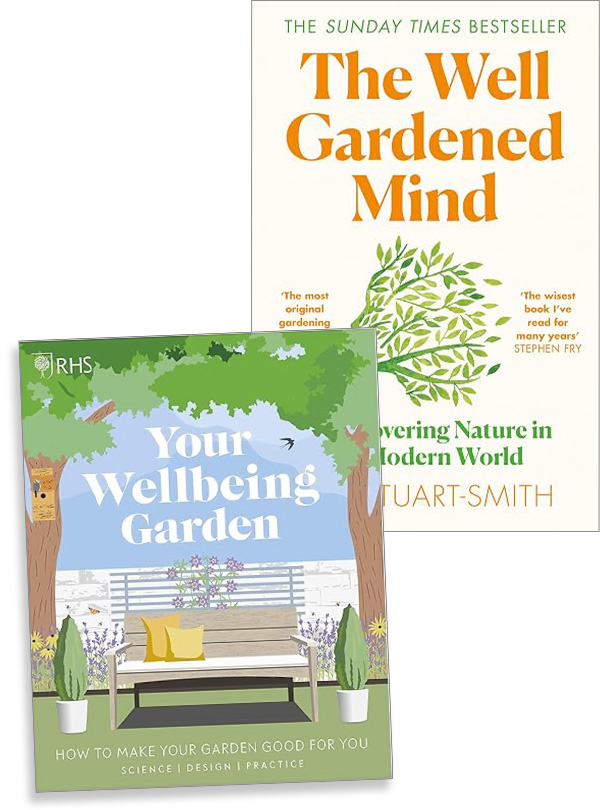
RHS Your Wellbeing Garden, by Alistair Griffiths, Matthew Keightley, Annie Gatti and Zia Allaway, combines research with ideas for garden design, plant choice and gardening activities. It offers practical suggestions for making an outdoor space more enjoyable to spend time in.
Sue Stuart-Smith’s The Well-Gardened Mind explores gardening through her experience as a psychiatrist and gardener, alongside research, personal stories and accounts of therapeutic projects. It is reflective reading rather than a step-by-step gardening manual.