

References: Drugs & substances
The key studies and reviews behind these pathways – organised by page, so you can see exactly what each claim on the site is based on.

Alcohol
- Kumar, S., Porcu, P., Werner, D.F., et al. (2009). “The role of GABA(A) receptors in the acute and chronic effects of ethanol: a decade of progress.” Psychopharmacology, 205(4), 529–564. The evidence behind this page’s claim that alcohol works on the same GABA receptors targeted by anti-anxiety medication, which is why the initial calming effect is genuine and fast.
- Kushner, M.G., Sher, K.J. & Beitman, B.D. (1990). “The relation between alcohol problems and the anxiety disorders.” American Journal of Psychiatry, 147(6), 685–695. A classic review supporting this page’s claim that the rebound increase in anxiety as alcohol metabolises is one of the more consistently replicated findings in this area.
Psychedelics
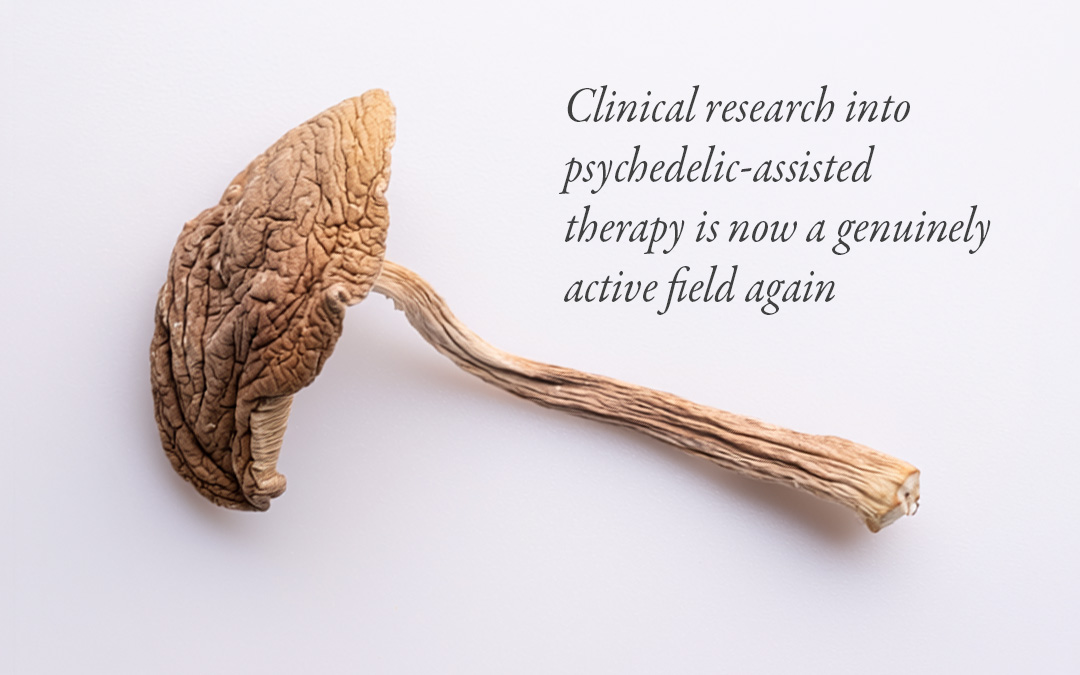
- Carhart-Harris, R.L., Giribaldi, B., Watts, R., et al. (2021). “Trial of Psilocybin versus Escitalopram for Depression.” New England Journal of Medicine, 384(15), 1402–1411. The trial behind this page’s claim that psilocybin-assisted therapy has, in controlled settings, outperformed a standard antidepressant over the trial period.
- Griffiths, R.R., Johnson, M.W., Carducci, M.A., et al. (2016). “Psilocybin produces substantial and sustained decreases in depression and anxiety in patients with life-threatening cancer: A randomized double-blind trial.” Journal of Psychopharmacology, 30(12), 1181–1197. The main evidence behind this page’s claim that the strongest results so far are specifically for treatment-resistant depression and end-of-life anxiety.

SSRIs & anxiolytics
- Bandelow, B., Reitt, M., Röver, C., Michaelis, S., Görlich, Y. & Wedekind, D. (2015). “Efficacy of treatments for anxiety disorders: a meta-analysis.” International Clinical Psychopharmacology, 30(4), 183–192. Supporting evidence behind this page’s claim that SSRIs and benzodiazepines are unambiguously effective for many people with diagnosed anxiety disorders, with a substantial evidence base behind both.
- Lader, M. (2011). “Benzodiazepines revisited—will we ever learn?” Addiction, 106(12), 2086–2109. The evidence behind this page’s account of benzodiazepines carrying real dependency risk with regular use, which is why they’re generally intended for short-term or occasional use.