

Both benzodiazepines and SSRIs delivered on parts of their original promise, and both came with complications nobody fully appreciated until years of real-world use had passed.
These medications help a great many people function, work, and stay alive who otherwise couldn’t manage any of those things. None of this page is medical advice – that decision belongs with a doctor who knows the specific situation, not a website.
Where it comes from
Benzodiazepines arrived in the 1960s promising a safer alternative to the barbiturates that came before them. SSRIs followed in the 1980s, promising something gentler still.
The two are often lumped together in conversation, but they work quite differently. A short list of things worth knowing before that conversation happens.
- SSRIs and benzodiazepines work through entirely different mechanisms, on very different timescales. They aren’t interchangeable in how they’re used.
- Benzodiazepines act quickly but carry real dependency risk with regular use. Which is why they’re generally intended for short-term or occasional use.
- SSRIs take weeks to show effect and aren’t intended for occasional use at all. They work by gradual adjustment, not immediate relief.
- Side effects and discontinuation experiences vary enormously between individuals. A bad experience with one doesn’t predict the same with another.
- A medication not working, or working with difficult side effects, is information for a doctor. Not a verdict on the whole category.
It’s the quality of the conversation with a doctor, more than any general rule, that seems to matter most in how well the decision goes. A rushed prescription and a rushed refusal can both go badly, for similar reasons.
SSRIs and benzodiazepines are unambiguously effective for many people with diagnosed anxiety disorders, and the evidence base behind both is substantial – these aren’t fringe treatments, whatever scepticism sometimes surrounds them culturally.
The harder question is different: whether pharmaceutical calm resolves the underlying issue, or sometimes numbs a signal worth addressing directly. There’s no single right answer – it depends on the individual, the diagnosis, and what else is being addressed alongside the medication.
Public conversation about these medications swings between two overconfident extremes – a lazy chemical fix on one side, a complete solution on the other. Both flatten a genuinely individual decision into a general verdict.
What survives that correction is the least dramatic but most useful position: a legitimate medical tool with real evidence behind it, best evaluated case by case with a qualified doctor.
Recommended reading
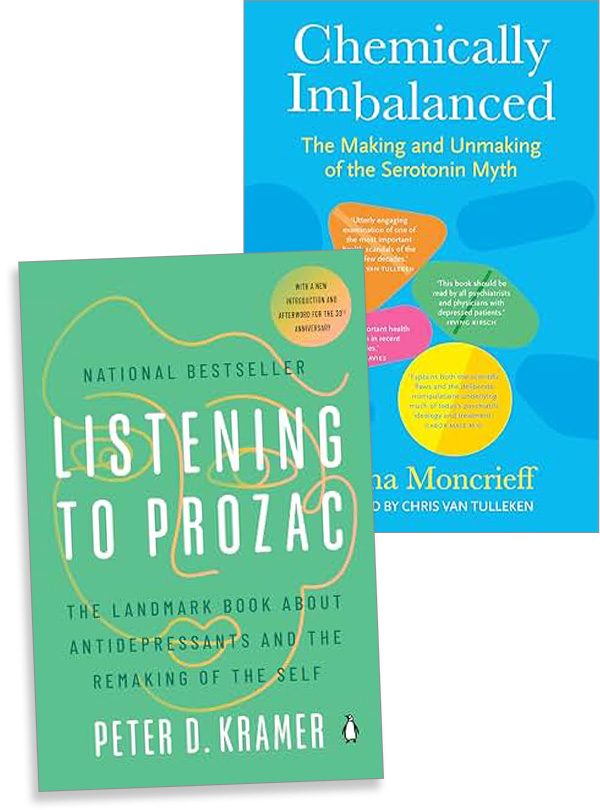
Peter Kramer’s Listening to Prozac is the natural starting point – the book that first opened up serious public conversation about what these medications do and don’t change.
For something more contemporary, Joanna Moncrieff’s The Myth of the Chemical Cure offers a more critical psychiatric perspective worth weighing alongside it.