
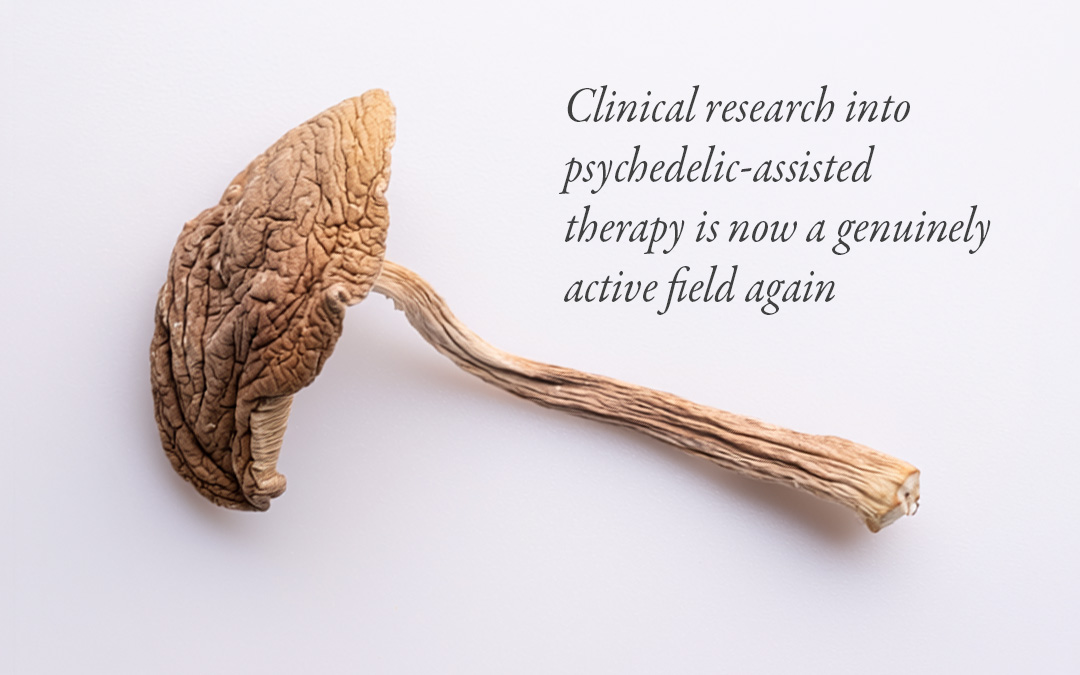
Psychedelic-assisted therapy is one of the more actively researched areas in mental health right now, after decades in which the whole subject was essentially untouchable in mainstream medicine.
This pathway exists to explain what the research actually says, not to encourage or guide any particular use – the legal status of these substances varies enormously by place, and unsupervised use carries real risks this page isn’t set up to help with.
Where it comes from
Psilocybin mushrooms turn up in Mesoamerican ritual going back centuries. Ayahuasca ceremonies in the Amazon have their own separate, equally long history.
For most of the twentieth century, none of that mattered to Western medicine, which simply stopped studying any of it for the best part of fifty years.
That gap has closed considerably in the last decade or so. Clinical research into psychedelic-assisted therapy is now a genuinely active field again, and some of the results have surprised even researchers who expected them to be promising.
Worth knowing
With that firmly understood, a short list of what’s actually worth knowing about this field.
- The strongest results so far are specifically for treatment-resistant depression and end-of-life anxiety. Not anxiety or low mood generally.
- Every serious trial involves careful screening, professional supervision, and structured preparation and integration. The substance is a small part of a much larger clinical process.
- People with a personal or family history of psychosis are typically excluded from trials for good reason. The same caution applies well beyond the clinical setting.
- Legal access through approved clinical trials or licensed clinics is a fundamentally different situation. Very different from unsupervised or recreational use.
- Real caution is warranted toward anyone selling a guided experience outside a properly regulated setting. However sincere the framing sounds.
Recent trials of psilocybin-assisted therapy have shown genuinely striking results for treatment-resistant depression, in some cases outperforming standard antidepressants over the trial period.
The proposed mechanism involves a temporary loosening of rigid, habitual thought patterns, paired with the psychological work of a structured therapy session built around the experience.
That combination, not the substance in isolation, is what the research is actually testing – exactly what separates a supervised trial from an unsupervised experience involving the same molecule.
Larger trials and longer follow-up are still needed before any of this counts as settled science.
Psychedelics have picked up a fair amount of uncritical enthusiasm in popular culture, sometimes framed as a near-universal cure for anxiety or depression.
The positive trial results are real, but they come from a tightly controlled context – screened participants, trained therapists, legal settings – that bears little resemblance to informal use.
What survives that correction is a field genuinely worth watching: real, specific promise, within a framework this page isn’t equipped to replicate.
Recommended reading
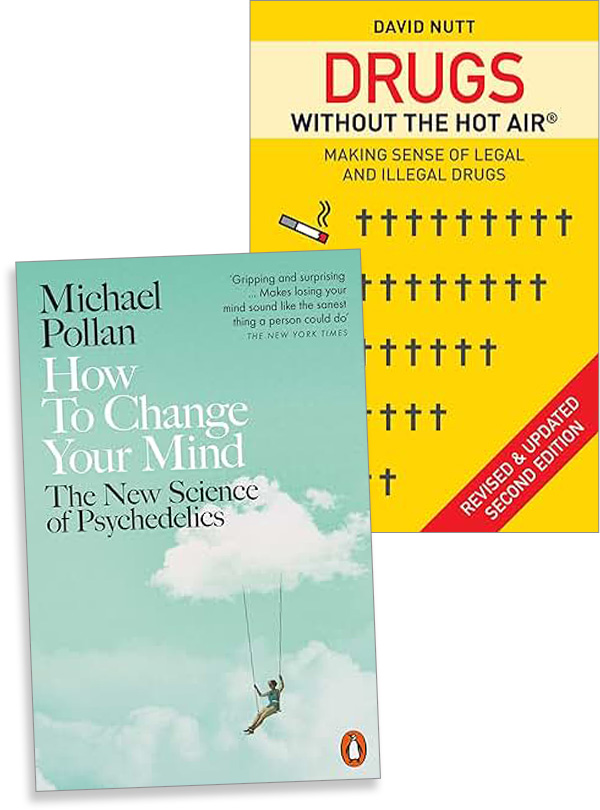
Michael Pollan’s How to Change Your Mind is the natural starting point – the definitive, balanced, journalistic account of the research and its history.
For something more clinical, David Nutt’s Drugs Without the Hot Air comes from a leading UK researcher and former government drugs advisor, and is built around evidence rather than advocacy.