
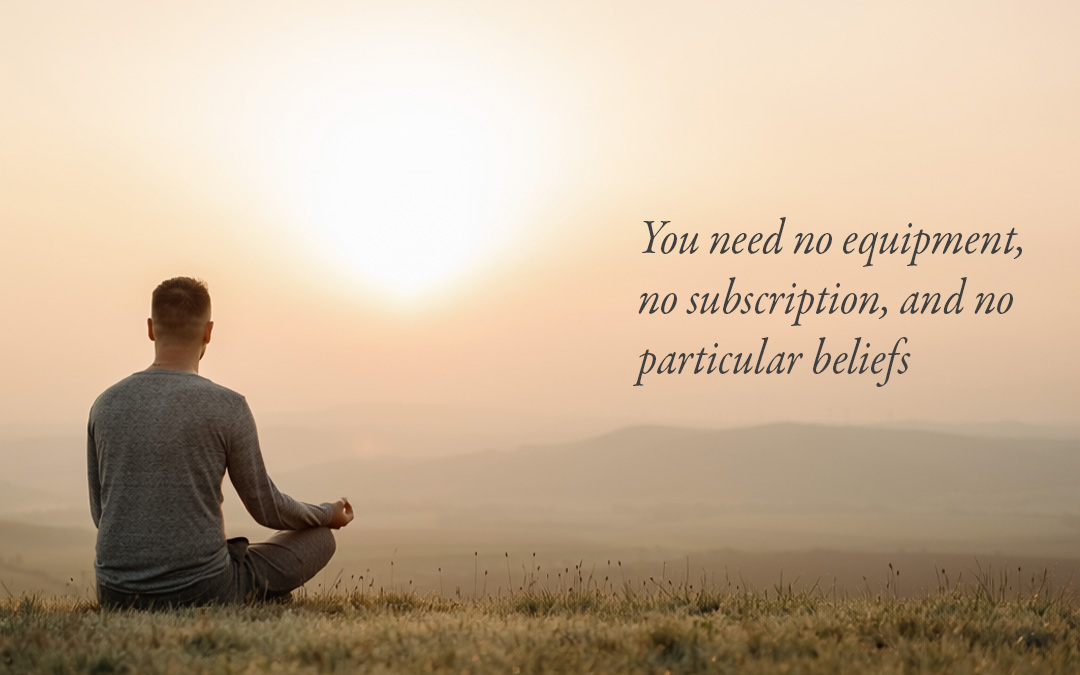
Meditation is the practice of resting the attention on one thing at a time. Everything written about it is really commentary on that single, unglamorous act – noticing where the mind has wandered, and bringing it back.
It’s probably the most studied calming technique, and the evidence is genuinely solid: regular practice reliably reduces anxiety and lowers cortisol. If the story ended there, meditation would sit unchallenged at the top of the list.
It doesn’t quite end there, but the basic claim holds.
How to do it
You need no equipment, no subscription, and no particular beliefs. You just need a few minutes and a willingness to be slightly bored at first.
- Sit comfortably. A chair is fine. Back upright but not rigid, hands resting, eyes closed or softened towards the floor.
- Find the breath. Don’t change it – simply notice it. Let one spot, perhaps the nostrils or the rise of the belly, be where you feel it most clearly.
- Rest your attention there, for as long as it will stay.
- Notice when it has wandered. It will, within seconds – and that’s not a failure. The moment you realise you’ve drifted into thought is the moment of meditation.
- Return, without comment. No scolding, no congratulation. Bring the attention back, as you would guide a wandering child by the hand. Then do it again.
Where it comes from
Meditation is among the oldest deliberate things human beings have done. The earliest detailed descriptions are Buddhist, reaching back to around the 5th century BC, though the impulse is plainly older than any record of it.
Almost every contemplative tradition arrived independently at the same discovery: that attention can be trained, and that a trained attention is a quieter place to live.
What’s genuinely new is the last sixty years. Meditation reached the West through Transcendental Meditation in the 1960s, then shed most of its religious vocabulary and entered the clinic in the 1970s.
There, Jon Kabat-Zinn built his Mindfulness-Based Stress Reduction programme around it. That move, from monastery to hospital, is what produced the evidence base we now have. The mystery thinned; the benefit, for those who practise, did not.
Worth knowing
Most people who download an app to meditate find their practice fading within a fortnight – and that’s an ordinary pattern, not a personal shortfall. The technique works; keeping it going is where the effort really lies.
So the more useful question isn’t whether meditation works – it does – but whether it suits how you actually live. There’s no failure in starting small, stopping, and starting again. That’s simply how the practice tends to go for most people.
Recommended reading
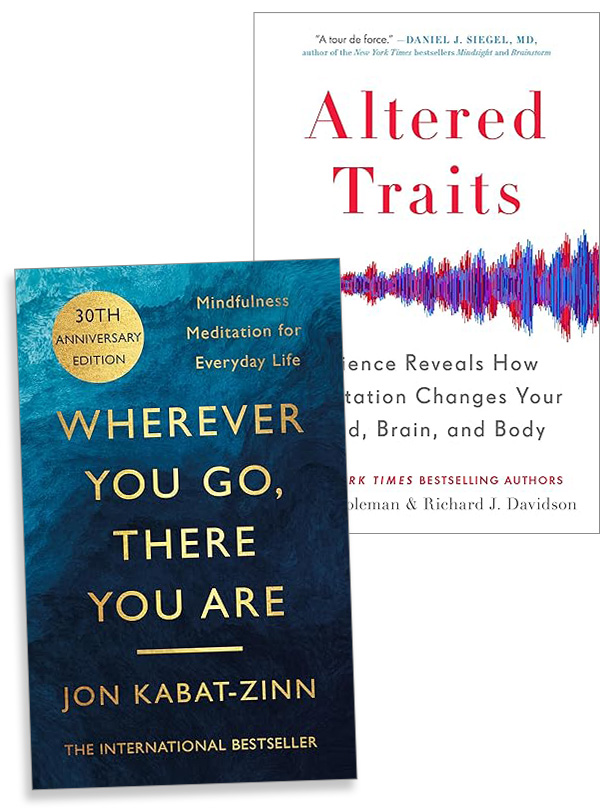
Jon Kabat-Zinn’s Wherever You Go, There You Are is the natural starting point – the book that carried his own Mindfulness-Based Stress Reduction work out of the clinic and into general readership, written in plain, unhurried language.
For something more contemporary and detailed, Daniel Goleman and Richard Davidson’s Altered Traits goes further into the actual neuroscience – what meditation does and doesn’t demonstrably change, drawn from decades of research the authors helped conduct themselves.