
Guided meditation is meditation with a voice. Instead of sitting alone with your attention and trying to hold it steady, you follow someone – a recording, an app, a teacher in the room – who tells you where to concentrate that attention.
For a great many people, that single difference is what makes the whole thing possible. In silent meditation, part of the mind does the practice while another part narrates it – and a guiding voice gives that narrating part something to follow instead of something to criticise.
How to do it
The appeal of guided meditation is that there’s very little to learn – the guidance does the structuring for you. Here are the five steps.
- Choose a recording. A free app, a video, a podcast – it matters less than starting. For a first try, pick something short, perhaps ten minutes, described as a body scan or a breathing meditation.
- Settle and put something in your ears. Sit or lie comfortably. Headphones help the voice feel close and the world feel distant, but they aren’t essential.
- Follow, don’t perform. When the voice asks you to notice your breath, or your feet, or a remembered place, simply go where it points. There is no grade.
- Let your mind wander, and let the voice bring it back. You will drift. The next instruction will arrive and return you. That returning is being done partly for you – which is the whole point.
- Notice how it left you, not how well you did it. The only useful measure is whether you feel a little steadier than before.
Where it comes from
The idea is far older than the apps suggest. Tibetan Buddhist visualisation practices lead the mind through elaborate, constructed images; the Jesuit “spiritual exercises” of the 16th century did something structurally similar.
Both used an external structure to direct the mind rather than leaving it to find its own way. The modern secular version – body scans, imagined beaches, a slow descending voice – owes as much to 19th-century hypnotherapy as to any Eastern tradition.
Worth knowing
Many studies have found that guided meditation is more effective than non-guided. Probably for the most obvious reason of all: guidance keeps people engaged long enough for it to work, where silence loses them within a fortnight.
Recommended reading
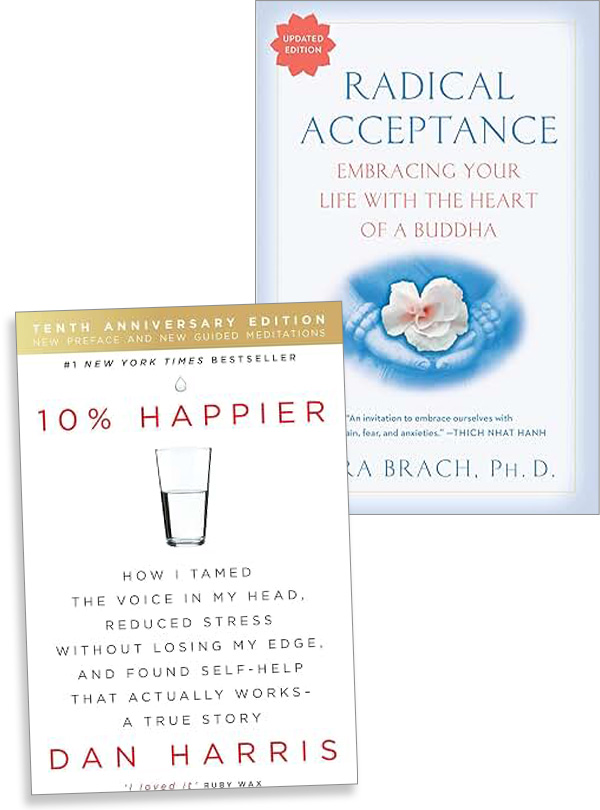
Tara Brach’s Radical Acceptance is the natural starting point – Brach is one of the best-known voices in guided practice, and the book pairs its central teaching with guided meditations you can follow along with directly.
For something more contemporary, Dan Harris’s 10% Happier follows a sceptical news anchor’s own reluctant discovery of guided meditation apps – a good next step if you’re curious but not yet convinced.