
People have been reaching for something to take the edge off for about as long as anyone’s been writing anything down. The instinct is old and completely understandable.
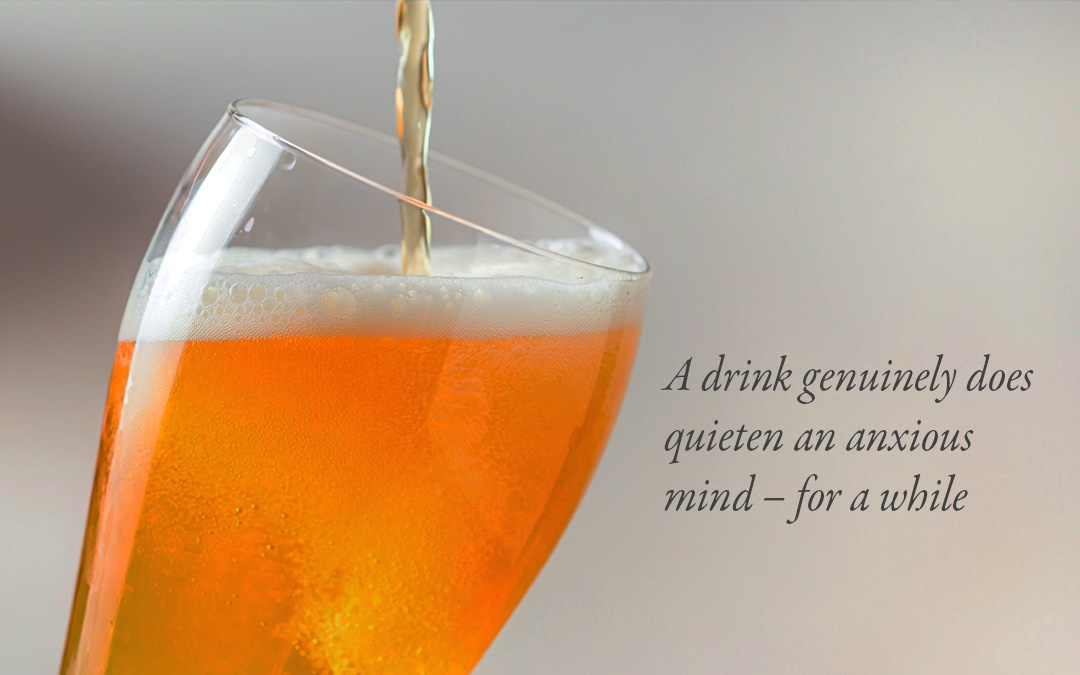
A drink genuinely does quiet an anxious mind, for a while. That part isn’t in question, and it’s worth saying plainly rather than pretending the appeal is imaginary. What’s less well understood is what happens next.
The same mechanism producing that initial calm sets up a rebound in the hours that follow, and for a lot of people that rebound quietly cancels out whatever relief came before it, or leaves them worse off than if they’d never reached for it.
How to do it
This is one pathway on this site written from a place of plain-eyed caution rather than technique. A short list of things worth knowing, and worth doing instead.
- Notice if a drink has become the specific tool reached for whenever anxiety rises. Rather than one option among several.
- Pay attention to the following morning as part of the same event. Not a separate, unrelated one.
- Try the underlying feeling without it once. If only to see clearly what’s actually being managed.
- Reach for one of the other pathways on this site instead. Breathing, walking, a difficult conversation finally had – on the nights it would usually be the first thing considered.
- Talk to someone openly if it’s become a nightly habit rather than an occasional one. This is worth real support, not just willpower.
None of this is about judgement for an ordinary drink enjoyed for its own sake. It’s specifically about the pattern of reaching for alcohol as a calming technique, which is a narrower and more specific thing than drinking itself.
It’s the reason for reaching, more than the reaching itself, that this pathway is really about. The same glass of wine is a different thing entirely depending on whether it’s being enjoyed or being used to manage something that hasn’t otherwise been addressed.
Where it comes from
The instinct is ancient enough to have its own word in one of the oldest stories we have. The Odyssey describes nepenthe, a drug of forgetfulness handed round to dull a grief too large to sit with.
Alcohol specifically has been used this way, deliberately, across nearly every culture with access to it, for roughly as long as it’s been brewed or distilled – making it probably the oldest self-medication for anxiety there is, and, as the evidence below shows, probably one of the most counterproductive.
Worth knowing
Alcohol works on the same GABA receptors targeted by anti-anxiety medication, which is exactly why the initial calming effect is so genuine and so fast.
As it metabolises, though, the same system rebounds in the opposite direction, producing a documented, measurable increase in anxiety in the hours that follow – often peaking the next morning, exactly when it’s least welcome.
That rebound effect is one of the more consistently replicated findings in this area, and it’s the central reason alcohol is generally regarded by researchers as a poor long-term strategy for managing anxiety.
Regular reliance on it also tends to interfere with sleep quality even when it seems to help someone fall asleep faster, compounding the next day’s anxiety rather than easing it.
There isn’t really a hype problem here in the usual sense – nobody markets alcohol specifically as a wellness technique.
The distortion runs the other way: cultural normalisation, not marketing, is what keeps the pattern going, through the sheer ordinariness of “a drink to take the edge off.”
That very ordinariness is worth treating with more scrutiny than it usually gets, precisely because it doesn’t announce itself as a technique the way meditation or breathing does – it slips in as simply normal, which makes the pattern easier to miss.
What’s worth taking from this plainly is narrow but important: the short-term calm is real, the rebound is also real, and for anxiety specifically, the balance of evidence points toward this being one of the least effective tools on this entire site.
Recommended reading
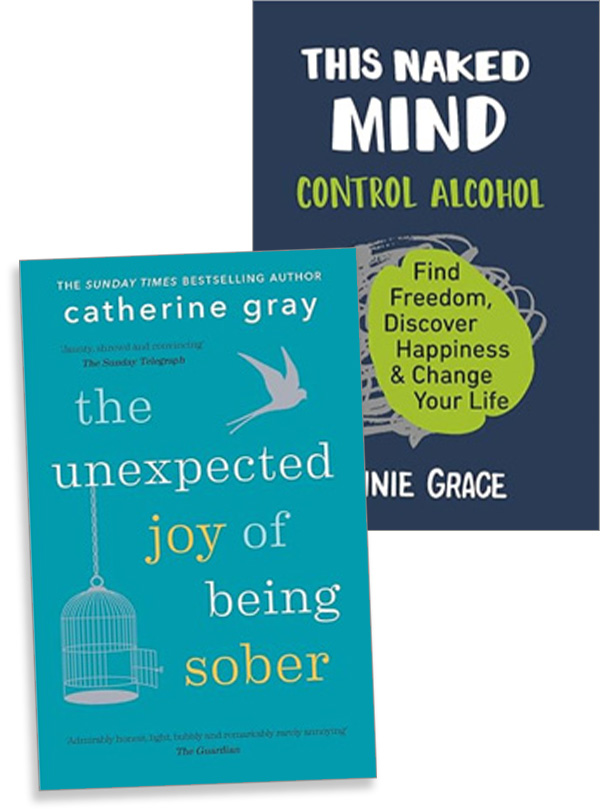
Catherine Gray’s The Unexpected Joy of Being Sober is the natural starting point – warm, honest and explicitly not preachy, from a UK writer who talked to neuroscientists about why we reach for a drink.
For something more explanatory, Annie Grace’s This Naked Mind lays out the psychology and neuroscience behind the pattern this page describes.