
Sleep has the strongest claim on this site to being non-negotiable – it’s less a technique for feeling calmer than the biological floor everything else here rests on.
Skimp on it and meditation, exercise and therapy all work a little less well. Calm and sleep feed each other in both directions – difficulty sleeping can heighten anxiety, and anxiety can make sleep harder to reach. What follows is about loosening that knot gently, rather than forcing the issue.
How to do it
None of what follows is a rigid programme – it’s a set of conditions that make sleep more likely, held loosely rather than enforced.
- Keep the wake time fixed. A consistent rise time – even after a poor night – is one of the most powerful and underused levers there is. Bedtime can drift a little; the morning is what’s worth holding steady.
- Let the bed mean sleep. If you’re awake for more than fifteen or twenty minutes, it can help to get up, find somewhere dim and quiet, and return when drowsy again.
- Wind down for real. Thirty to sixty minutes of low light and low stimulation before bed gives a genuine slope down from the day, rather than a sudden drop from screen to pillow.
- Get light early. Morning daylight, ideally outdoors, is one of the strongest signals available to the body clock – ten minutes outside after waking can go a long way.
- Let wakeful rest count. If sleep isn’t coming, calm, undemanding restfulness – eyes closed, no phone, no clock-watching – is genuinely restorative in its own right, and often makes sleep more likely too.
Where it comes from
There’s no single inventor to credit – every culture has its own rituals for ending the day, rituals as old as we are. What’s newer is the science behind them.
Sleep is now one of the most heavily researched areas in health, and the picture is about as settled as findings in this field get: consistent, adequate sleep reliably supports mood, attention, and the body’s stress response.
One useful distinction worth holding onto: “rest” and “sleep” aren’t quite the same thing, even though they’re often treated as interchangeable.
Worth knowing
The case for sleep barely needs making – it isn’t so much that sleep creates calm as that its absence makes calm harder to reach.
The one thing worth knowing going in is that sleep responds better to gentle conditions than to effort: most good sleep advice is really about clearing obstacles out of the way, not adding a new technique to get right. Easing off the attempt to fall asleep is often the more effective move.
Sleep can’t quite be forced – but rest can always be offered. Lying quietly in the dark, asking nothing of yourself, isn’t a failed attempt at sleep – it’s a worthwhile state in its own right, and often the one that lets sleep arrive naturally.
The harder the grip, the more it tends to slip. The art is mostly in loosening it.
Good sleep habits help most people most of the time. When they’re not quite enough, CBT-I – a structured therapy with strong evidence behind it – is the well-established next step, and persistent sleep problems are always worth mentioning to a GP, not as a sign anything’s gone wrong, but because there’s real help available.
Recommended reading
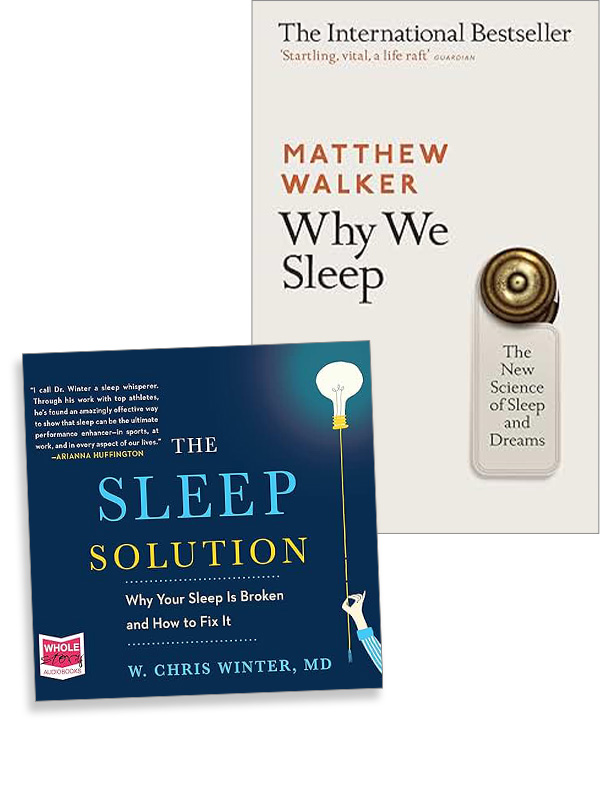
W. Chris Winter’s The Sleep Solution is the natural starting point – practical, unhurried advice from a practising sleep doctor, in the same gentle-conditions-not-effort spirit as this page.
For something more contemporary, Matthew Walker’s Why We Sleep is the book most responsible for the current wave of public interest in sleep science – ambitious in scope, though some of its more striking claims have been disputed since.