
There’s a particular kind of tiredness that comes from a day with no shape to it – nothing to wake up for, nothing anchoring the hours together.
A handful of fixed points, kept loosely, seems to be enough to change how a day feels, even when nothing about the day itself has changed.
It doesn’t take much. Waking at roughly the same time, eating at roughly the same times, having one thing you do at a similar point each day.
These small, repeated anchors seem to give the mind something steady to stand on, in a way that’s easy to underrate until it’s missing.
How to do it
None of this needs a plan drawn up in advance. A few small, kept promises tend to do more than a full timetable.
- Start with your wake time, not your bedtime. It’s the anchor the rest of the day tends to arrange itself around.
- Eat at roughly the same times each day, more than eating any particular thing. The timing itself seems to be doing the work.
- Pick one small point of movement or activity and give it a regular slot, rather than waiting for spare energy to show up.
- Keep the anchors small enough that they survive a bad day. Two or three that hold matter more than a full day that doesn’t.
- If a day falls apart entirely, let it. One missed day changes very little; it’s only giving up on the whole idea that does.
Where it comes from
This isn’t a new discovery so much as an old one, taken seriously. Therapists working with people whose moods are especially sensitive to disruption have long used steady daily rhythms as part of the support they offer.
Precisely because an unpredictable day can be genuinely destabilising for some people.
You don’t need that sensitivity for the same idea to be worth borrowing – most of us feel steadier with a shape to the day, even if the stakes are lower.
Worth knowing
Part of it is simply the body’s own clock. Waking, eating and moving at similar times each day helps that clock stay properly set, and a well-set clock is generally linked to steadier mood and better sleep.
The other part is kinder to notice: a routine takes a whole category of small decisions off your plate.
What to eat, when to start the day, whether to get up and move – decided once, in advance, rather than argued with every single time they come round.
You may have heard that a new habit takes 21 days to settle in. It’s a comforting number, but not a very accurate one. Real research puts the average closer to 66 days, with some habits taking under three weeks and others closer to eight months.
If a routine hasn’t stuck by day 21, that isn’t a sign you’ve failed. It’s simply how long these things tend to take, for everyone.
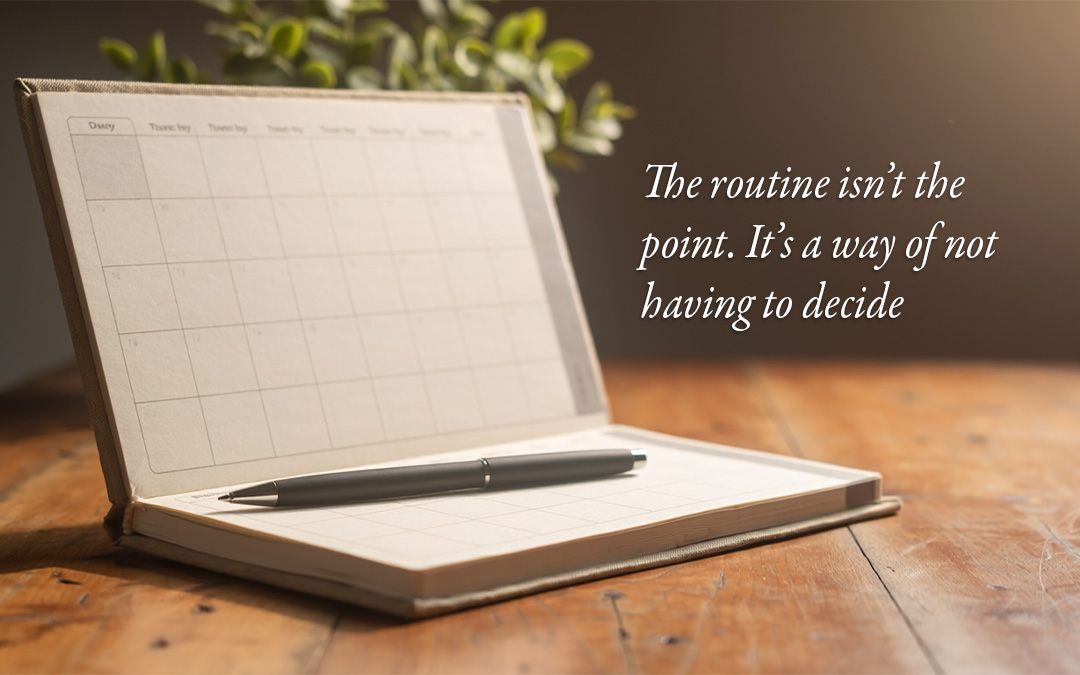
The routine isn’t really the point. It’s a way of not having to decide, over and over, how to spend a day you’ve already decided how to spend.
None of this asks you to be rigid. A handful of anchors, kept gently, is closer to a loose scaffold than a timetable – and a scaffold is allowed to bend.
Recommended reading
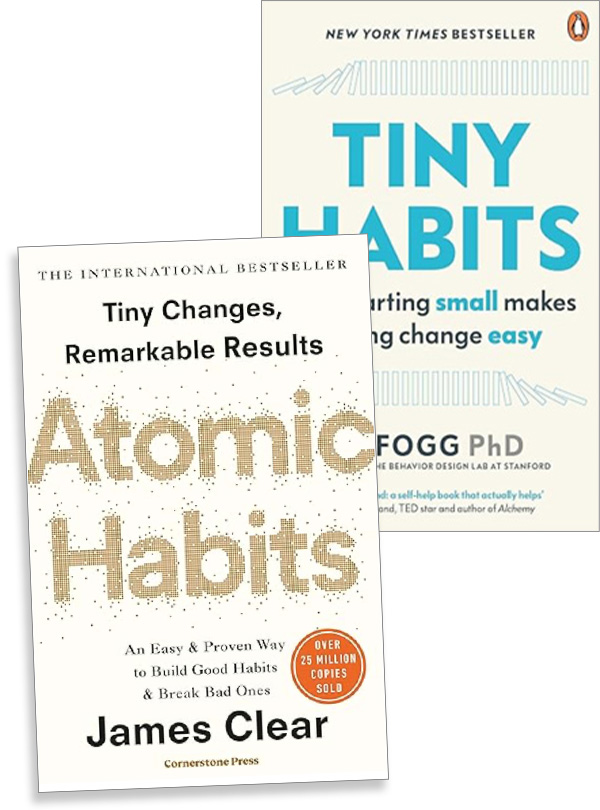
James Clear’s Atomic Habits is the natural starting point – by far the most widely read book on building small, lasting routines.
For something more research-grounded, BJ Fogg’s Tiny Habits is built directly on the behavioural science of what actually makes a habit stick.