
Divorce is often talked about as a decision – but grieving a decision is still grieving, and the ending doesn’t stop being a loss just because you chose it.
There’s a script society tends to apply to divorce: if you chose to leave, or agreed the marriage was over, the grief should be lighter, or shorter, or absent altogether. Relief is allowed. Sadness is treated as a sign something went wrong with the decision itself.
In practice, most divorces carry both at once. Relief that a difficult chapter is ending, and grief for the future that had been quietly assumed – the shared holidays, the growing old together, the version of yourself that existed inside that marriage.
Meanwhile the practical unwinding – solicitors, finances, who keeps which friends – drags on long after the emotional decision has been made, which means the process rarely gets to resolve in one clean movement.
- It’s a loss even when it’s chosen. Wanting the marriage to end doesn’t cancel out grief for what it was, or for what you’d once hoped it would become.
- Two griefs arrive together. One for the relationship itself, and one for the future that had been built around it – both are real, even when only one gets acknowledged.
- Identity takes the hit too. Much of adult identity gets built jointly – “we” plans, shared friends, a shared home – and divorce means rebuilding a sense of self as well as a life.
- The people around you don’t split evenly. Friendships, family loyalties and shared spaces rarely divide cleanly, and that recalibration is its own quiet loss.
- The legal process keeps the wound open. Negotiating logistics while trying to grieve means the emotional ending and the practical ending rarely land on the same day.
Why this grief gets waved away
Divorce is one of the only major losses where the person grieving is also assumed to have caused it.
Bereavement gets recognised almost automatically. Divorce doesn’t, particularly when it was mutual, or initiated by the person now grieving it. There’s an unspoken assumption that agency and grief can’t coexist – that choosing to leave, or agreeing to separate, should mean the ending was already emotionally settled.
It rarely works that way. A marriage can be genuinely wrong for both people and still represent years of shared history, routine, and identity – all of which has to be grieved separately from the decision to end it.
What actually helps
Letting both feelings be true at once tends to matter more than resolving which one is “correct.”
It helps to stop trying to decide whether you’re supposed to feel sad or relieved, and let both sit in the same place. They’re not contradictory – they’re usually describing two different things: the marriage, and the future that had been built on top of it.
It also helps to treat the practical unwinding – finances, logistics, custody arrangements where relevant – as a separate task from the emotional grieving, rather than expecting one to finish before the other can begin. They run on different timelines, and that’s normal.
Where possible, naming the loss out loud – to a friend, a therapist, or in writing – tends to help more than trying to reason your way out of it. Divorce grief often has nowhere obvious to go, precisely because it isn’t socially treated as grief in the first place.
Worth knowing
The parts of this that feel most private are often the most common.
Missing someone you were glad to leave. Grieving a version of the future you no longer wanted. Feeling both freer and lonelier in the same week. None of this means the decision was wrong.
If grief is accompanied by prolonged difficulty functioning day to day, or by thoughts of self-harm, that’s worth raising with a GP rather than carrying alone.
Recommended reading
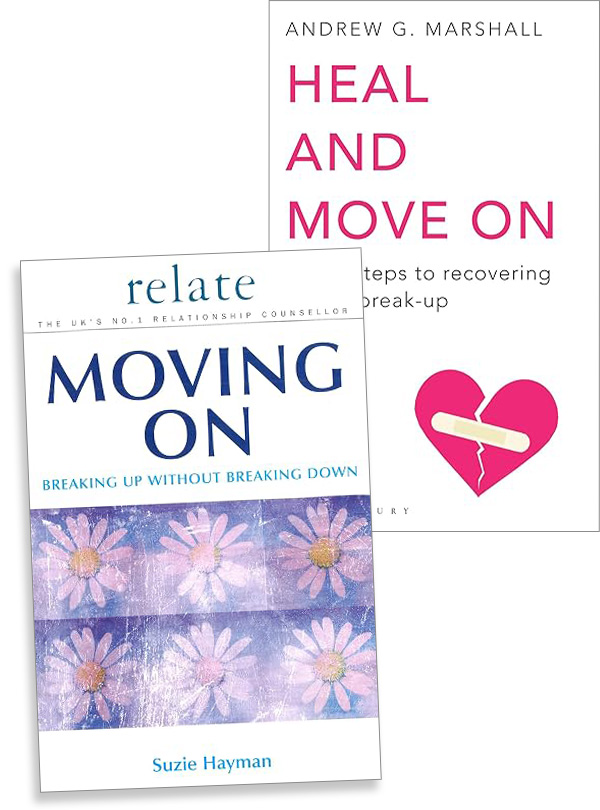
Suzie Hayman’s Moving On: Breaking Up Without Breaking Down is the standard starting point – part of the Relate series (the UK’s leading relationship counselling charity), it’s built entirely around practical strategies for managing the emotional and logistical sides of separation at once.
For something more structured, Andrew G. Marshall’s Heal and Move On: Seven Steps to Recovering from a Break-Up breaks the recovery process into concrete stages, drawing on his three decades as a Relate-trained marital therapist – useful for anyone who wants a clearer sense of what comes next.