
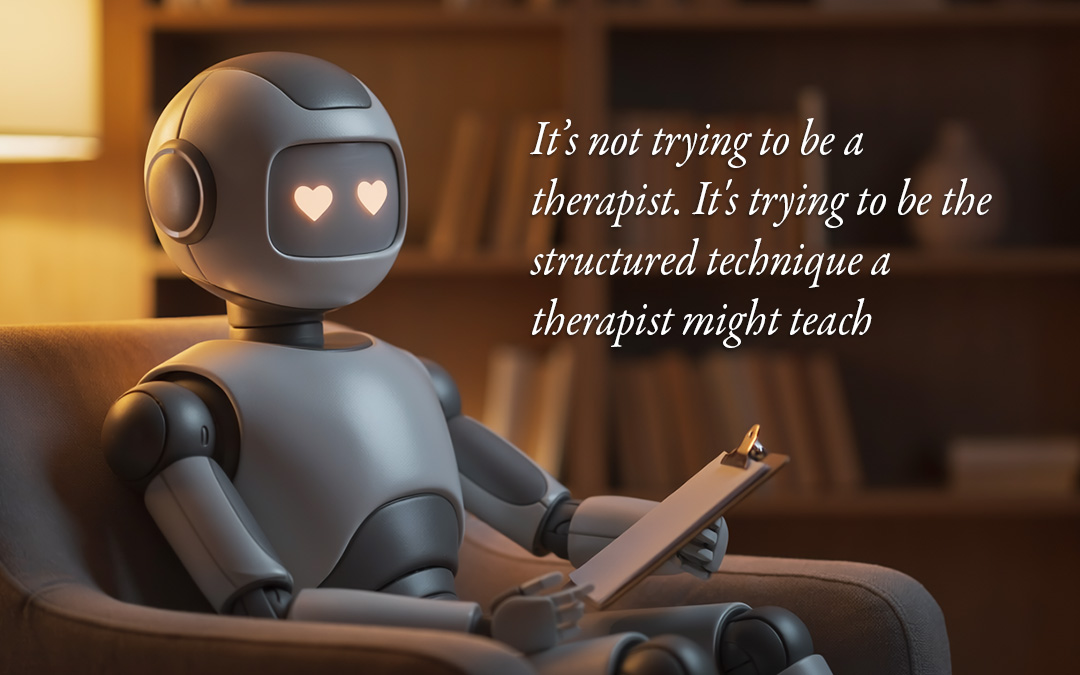
A structured breathing exercise doesn’t care what time it is. Neither does an app trying to walk you through one at eleven at night, when the actual clinic that taught the technique closed hours ago and the next appointment is weeks away.
That gap – between needing support and being able to reach it – is exactly where this category of tool has found its footing.
It isn’t trying to be a therapist. It’s trying to be the structured technique a therapist might have taught, made available at the moment it’s actually needed rather than the moment a diary allows.
None of this makes it equivalent to trained human support, and the tools themselves are generally careful to say so. It’s better understood as a genuinely useful stopgap, or a supplement alongside proper care, not a replacement for it.
How to do it
Using one well doesn’t require expecting more from it than it can offer. A short list of ways to get real value from it.
- Use it for structured technique. Breathing patterns, thought records, grounding steps – rather than for a genuine crisis.
- Notice if it’s becoming the only source of support. Treat that as a signal to seek a real person, not a success.
- Be honest with it, the way you’d want to be honest with a person. A guarded conversation gets less out of any format.
- Use it to prepare for a real appointment. Organise what’s actually troubling you before the conversation that matters.
- Notice when a response feels generic or slightly off. Don’t force a fit that isn’t there.
Sticking with it isn’t necessary for it to have been worthwhile. A single useful session on a bad night still counts, even without becoming a habit.
It’s the specific gap being filled, more than the technology itself, that seems to matter – a genuine wait for care is a very different situation from avoiding the harder step of seeking it at all.
Where it comes from
One of the earliest and most-cited tools in this category was Woebot, built in 2017 by the clinical psychologist Alison Darcy, who trained at Stanford and had spent years frustrated by how few people who needed care ever actually reached a therapist.
The same year, a randomised controlled trial at Stanford found that college students who used the chatbot for two weeks showed a measurable reduction in symptoms of depression and anxiety, compared with a control group given only a self-help resource – among the first peer-reviewed studies to test whether an AI tool could deliver a recognised therapeutic technique and produce a real clinical effect.
Worth knowing
Early trials of AI-delivered CBT and mindfulness tools show genuinely promising results for mild to moderate anxiety, particularly among people who might never have sought help otherwise.
The complete absence of stigma and the total availability appear to be doing real work here, separate from the quality of the therapeutic content itself – accessibility is the strongest, most consistent finding across this research.
A structured technique delivered at 2am to someone who wouldn’t have called a helpline, or couldn’t afford private therapy, represents a genuine expansion of who gets any support at all.
The caveat sits right alongside that promise: this field is only a few years old, and understanding of what happens when people form an ongoing therapeutic relationship with an AI system is moving considerably slower than the technology itself.
Some AI therapy tools are marketed with confidence that implies parity with a trained clinician, sometimes explicitly claiming to replace the need for one entirely.
No AI tool has been shown to match a trained therapist’s ability to handle complexity, risk, or the kind of nuanced judgement that real clinical work regularly demands. Treating one as a full substitute risks leaving someone without the care they actually need.
What survives that correction is still genuinely useful: as an accessible, judgement-free way to practise structured technique or bridge a genuine wait for care, these tools have real value. It’s the claim of full equivalence to human therapy that the evidence doesn’t support.
Recommended reading
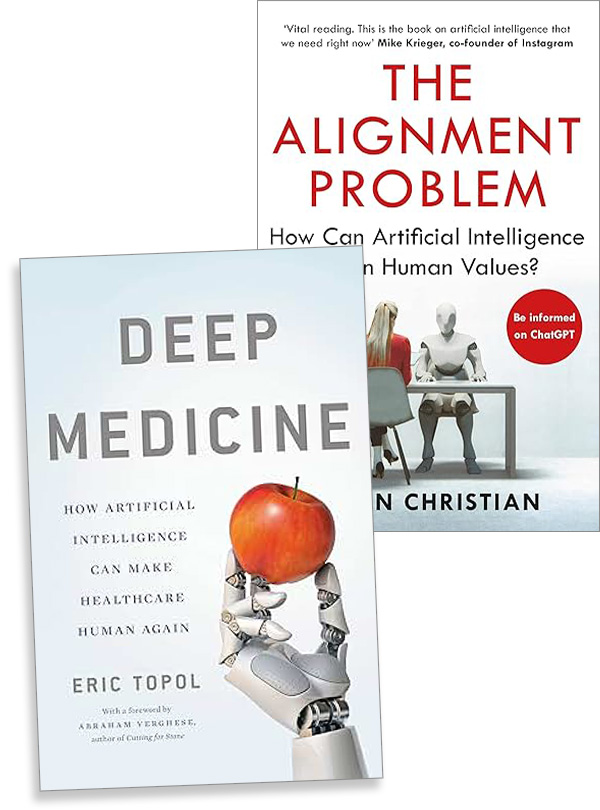
Eric Topol’s Deep Medicine is the natural starting point – a physician’s case for AI restoring human connection in healthcare rather than replacing it.
For something more contemporary, Brian Christian’s The Alignment Problem looks at the wider question of building AI systems that actually serve human wellbeing.