
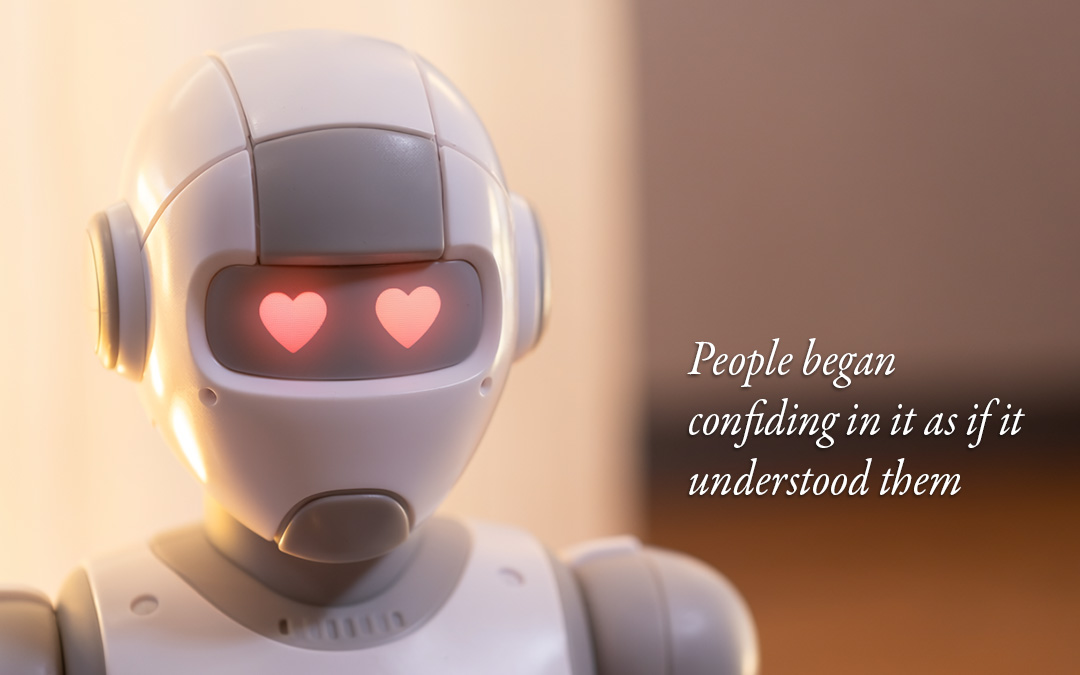
The first chatbot ever built was meant as a joke about how shallow computerised conversation could be. Instead, people confided in it as though it understood them, and refused to believe otherwise even once the trick was explained.
That reaction turned out to be the more important finding than the software itself.
Something in the act of putting a difficult thought into words and having it received – even by something that plainly doesn’t understand in any real sense – seems to matter more than whether real understanding is actually on the other end.
None of this means an AI companion is equivalent to a person, or that talking to one is a neutral, risk-free habit. It’s a genuinely new kind of relationship, and its risks are as real as its comforts, not a footnote to them.
How to do it
Using this kind of tool well doesn’t mean all-or-nothing, either. A short list of ways to do it more carefully.
- Notice whether it’s supplementing human contact or steadily replacing it. Be honest with yourself about which.
- Use it for the specific 3am moment when no one else is reachable. Rather than as a first resort during ordinary hours.
- Keep at least one real person who knows the actual, current shape of your life. Not just the version you tell an app.
- Notice how a conversation with it leaves you feeling. More prepared to reach out to someone, or less inclined to bother.
- Treat it as a way of thinking something through out loud. Rather than as a source of answers about what to do.
Staying healthy with this doesn’t mean avoiding it entirely, either. The difference seems to lie in whether it’s filling a genuine, otherwise-empty gap or quietly closing off the harder, more valuable work of reaching a real person instead.
It’s what the habit replaces, more than the habit itself, that seems to matter – talking to an AI at 3am when no one else is awake is a different thing entirely from choosing it over a friend who was actually available.
Where it comes from
That first chatbot was ELIZA, a simple pattern-matching program written by the computer scientist Joseph Weizenbaum at MIT in 1966.
Weizenbaum had built it as a critique of the idea that a machine could ever really understand someone, and was troubled rather than pleased by how readily people believed otherwise – including, famously, his own secretary, who once asked him to leave the room so she could speak with the program in private. The pattern is now known as the “ELIZA effect”.
Worth knowing
Putting a difficult thought into words appears to reduce its emotional intensity through a fairly well-established mechanism, regardless of who or what is on the receiving end – articulating a feeling engages parts of the brain involved in regulating it, in a way that simply thinking the same feeling doesn’t.
Millions of people now report genuine emotional benefit from AI companion apps, and that reported benefit shouldn’t be dismissed as illusory just because the listener isn’t a person.
At the same time, researchers studying these tools have raised real concern about substitution – the risk that easy, always-available AI conversation quietly displaces the harder, more effortful work of maintaining human relationships, which carry benefits an AI companion structurally cannot replicate.
AI companions are sometimes marketed as a solution to loneliness itself, implying that an always-available, endlessly patient listener can substitute for the more complicated, effortful work of human connection.
The long-term effects of relying on AI companionship are genuinely unstudied – this technology is only a few years old, and nobody yet knows what years of substituting it for human contact actually does to a person’s wider relationships and wellbeing.
What survives that uncertainty is a narrower, more defensible claim: articulating a difficult thought to something that listens appears to help in the moment. And that’s worth having – so long as it sits alongside real human connection rather than in place of it.
Recommended reading
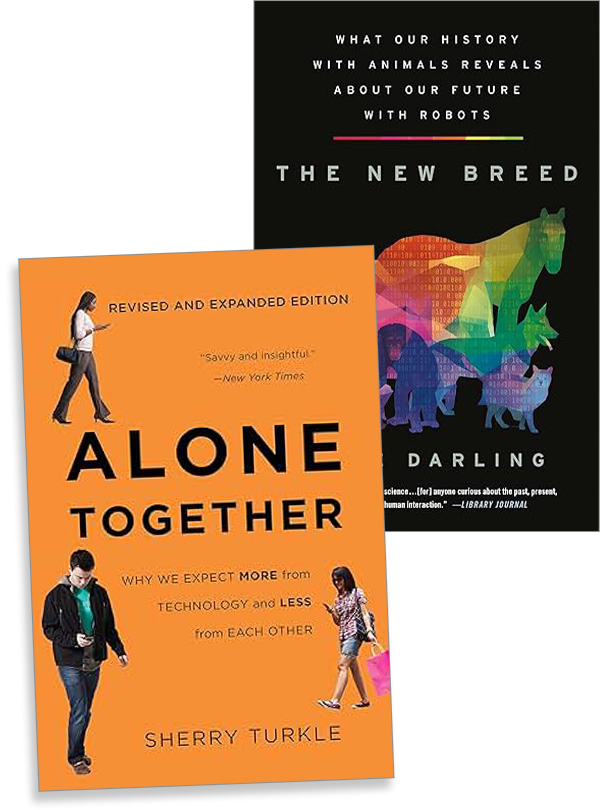
Sherry Turkle’s Alone Together is the natural starting point – the foundational, still-relevant account of how sociable technology reshapes human relationships, from an MIT researcher.
For something more contemporary and less alarmed, Kate Darling’s The New Breed takes a more measured view of what our attachments to machines might mean.