

Supporting a child or teenager
Worrying about a child is a different kind of hard – you’re not just supporting them, you’re often deciding how much to step in, when to involve their school, and how to balance their privacy against your responsibility for their safety.
Here’s how to think through that, by age and by how serious things feel.
Starting the conversation
Younger children and teenagers generally need different openings – but the underlying rule is the same: notice out loud, without diagnosing or demanding an explanation on the spot.
- With younger children, keep it concrete and short – “I’ve noticed you’ve seemed sad at bedtime, do you want to tell me about it?” works better than open-ended questions about feelings.
- With teenagers, timing matters more than wording – alongside them doing something else (in the car, walking the dog) often works better than sitting them down face to face.
- Avoid leading with consequences or fixes. “What’s going on?” lands better than “Is this about your grades/friends/phone?”
- Expect “I’m fine” the first time, especially from teenagers. That’s not always a real answer – it’s often a test of whether it’s safe to say more.
Privacy versus how much you need to know…
- Give them room to have their own inner life. Not every low mood or bad week needs full disclosure to you – some privacy is normal and healthy at any age.
- Safety overrides privacy, not curiosity. If there’s any risk to their safety – self-harm, an eating pattern, talk of not wanting to be here – that’s the line where you act on what you know, even if it wasn’t fully shared with you.
- Involve their school when it affects their day-to-day, not just as a first resort. A form tutor or pastoral lead can often see patterns you can’t from home, and most schools have a named mental health lead worth asking for by name.
- If you find something you weren’t meant to see – a message, a search history – lead with the concern, not the method: “I saw something that worried me” rather than explaining exactly how you found it.
When it’s more than you can manage at home
A GP is the right first step for anything beyond what talking at home can shift, and can refer into CAMHS (Child and Adolescent Mental Health Services) for more specialist support.
Preparing for your GP appointment covers how to make that conversation count, even with only ten minutes. Waiting times for CAMHS vary a great deal by area and can be long – it’s worth asking your GP about school-based counselling or charity support to bridge the gap while you wait.
If a child or teenager talks about self-harm or not wanting to be here, take it seriously every time – even if it’s been said before and nothing happened.
In an emergency, the same rule applies as for adults: call 999 or go to A&E if there’s immediate danger, rather than waiting for a routine appointment.
See the support directory for current crisis contacts, including services specifically for young people.
Worth knowing
You’re allowed to get this wrong sometimes and try again – a single misjudged conversation doesn’t close the door permanently, especially with teenagers who are testing whether you’ll stay steady over time, not just in one moment.
Worried about an adult rather than a child? Supporting someone else covers the same territory for that situation.
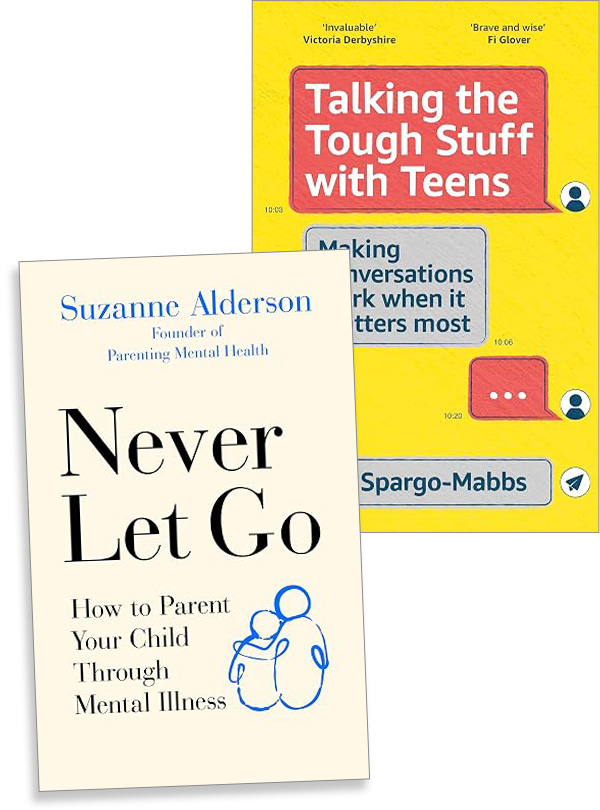
Recommended reading
Suzanne Alderson’s Never Let Go is written from her own experience of her son’s mental health crisis, and stays close to what parents actually face rather than staying theoretical.
For the harder conversations specifically – not just mental health but risk-taking and substances too – Fiona Spargo-Mabbs’s Talking the Tough Stuff with Teens is a practical toolkit from a UK charity founder who started this work after her own son’s death.