
Losing a job can leave you wondering how you’ll pay the bills and what to do with your day. You may also miss colleagues, familiar routines or work that gave you a sense of purpose.
Even if you knew it might happen, the change can be hard to take in. One week you have tasks to finish and people expecting you; the next, you may be at home trying to work out where to begin.
You might feel upset, angry, embarrassed or relieved to leave a difficult workplace. You don’t have to miss the job itself to find losing it unsettling.
If you’d worked there for years, or took pride in what you did, questions about work may feel awkward. You may miss being useful or having your experience recognised. At the same time, money worries and the need to find another job can leave little room to think about those feelings.
Practical advice and emotional support can both matter. You can start with what needs attention now without expecting yourself to have your whole future worked out.
A few things to keep in mind…
- You may miss more than the work. Colleagues, familiar routines and being someone others turn to can all matter. Noticing what you miss can help you decide what kind of company or activity would be useful now.
- Redundancy doesn’t mean you did your job badly. A role can disappear because an organisation’s needs have changed. It may still feel personal, but losing the role doesn’t erase your skills, experience or contribution.
- Give the day a little structure. A regular getting-up time, meals and a few planned tasks can provide a starting point. You don’t need to turn every free hour into job searching or prove that you’re constantly productive.
- Get advice about the practical questions. Pay, benefits, employment rights and household bills may need prompt attention. Write down what you’re unsure about and seek advice rather than feeling you have to work it all out alone.
- Ask for support if your mood is making life difficult. If you’re withdrawing from people, feeling persistently low or struggling to manage everyday tasks, speak to your GP. NHS Talking Therapies may help with anxiety or depression; in England, you can refer yourself without going through your GP.
Adjusting to the change
You may notice the loss most at the start of the day, when you would usually be getting ready for work. Or it may be a message from a former colleague that reminds you how much is carrying on without you.
You don’t have to dismiss what the job meant to you. It may have provided friendship, satisfaction or a place to use skills you’d spent years developing.
The ending may also have felt rushed or impersonal. If you didn’t get a chance to say goodbye, you could contact a colleague you’d like to stay in touch with. You can keep that connection without needing updates about everything happening at work.
Things that may help
Start with the practical questions that need attention. Gather the information you have about your final pay, notice and any redundancy payment. Write down questions rather than trying to hold them all in your head. Acas provides guidance on redundancy rights in Great Britain, and MoneyHelper has information about managing money after job loss.
Give job searching a manageable place in the day. Choose a few specific tasks, such as updating part of your CV, contacting someone or preparing an application. Set aside time for them, alongside meals, rest and other responsibilities. If you receive benefits, check any job-search requirements that apply to you.
A day without an offer isn’t necessarily a day without progress. Preparing an application or asking for advice may be the useful step available today.
Keep a record of what you can offer. Write down projects you contributed to, problems you helped solve and skills you used. This can help with applications and give you something concrete to return to when losing the role has shaken your confidence.
Choose how much to tell people. A short answer is enough: “My role was made redundant, and I’m looking at what comes next.” With someone you trust, you can be more direct about needing company, practical help or a chance to talk.
Keep something in the week that isn’t about finding work. A walk with a friend, time with family or an activity you enjoy can give you company and a change of focus. Choose something affordable and manageable, rather than making it another task to perform well.
Working out what comes next
You may need another income quickly, or have some room to consider a different kind of work. Your options will depend on your finances, health, responsibilities and the jobs available. You don’t have to treat redundancy as an opportunity if it doesn’t feel like one.
You can make a plan for the next few weeks without deciding the rest of your working life.
If applications aren’t leading anywhere, consider asking someone experienced to review your CV or help you prepare for interviews. If worry or low mood is making it difficult to begin, seek support for that too. Practical advice and help with how you’re feeling can happen alongside each other.
Recommended reading
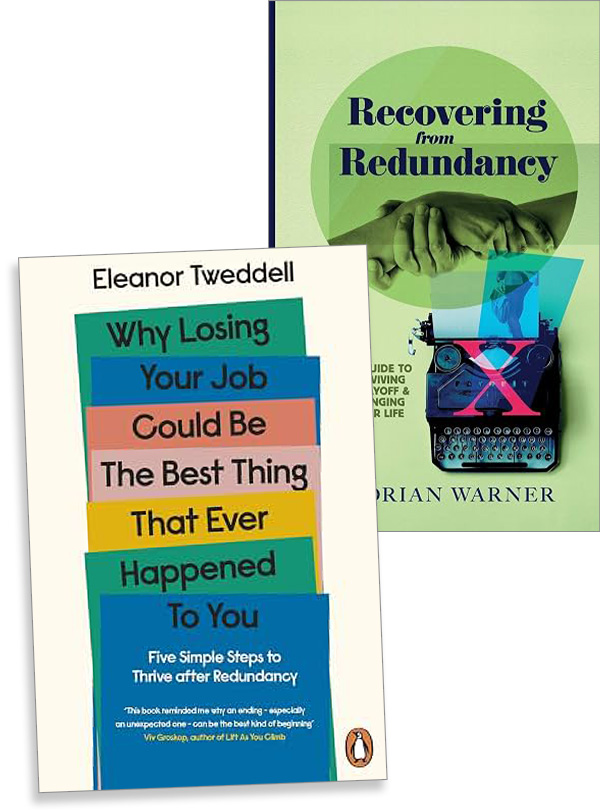
If you’d like to read about other people’s experiences of redundancy, these books combine personal accounts with suggestions for finding your next steps.
Eleanor Tweddell’s Why Losing Your Job Could Be the Best Thing That Ever Happened to You draws on her own experience of redundancy and offers a five-step approach to adjusting and considering what comes next. It may interest you if you’d like some structure for thinking about your future.
Adrian Warner’s Recovering from Redundancy describes losing his BBC job and looking for work in his fifties. Alongside the personal account, it offers suggestions for handling the emotional difficulties and practical demands of job searching.