
You may know the experience of becoming absorbed in a task: following a piece of music, working through a puzzle or making something, then noticing that more time has passed than you expected.
Flow is a term for a particular kind of deep engagement, when an activity holds your attention and your actions feel fluent. You may become less aware of yourself and of time passing.
It can happen during quiet or active pursuits, alone or with others. The activity usually offers enough challenge to engage you, while remaining within reach of your skills.
You cannot reliably make flow happen on demand. What you can do is choose an activity that interests you and arrange conditions that make sustained attention easier.
The time can still be enjoyable or worthwhile if you do not enter flow. There is no need to use complete absorption as a measure of whether a session has gone well.
Setting up an engaging activity
Start with something you want to spend time on. Give yourself a clear next step, adjust the challenge and reduce interruptions where practical.
- Choose an activity that interests you. Start with something you have enjoyed becoming absorbed in before, or try a manageable task involving music, making, movement or problem-solving.
- Give yourself a clear next step. Work on one passage of music, one part of a project or one puzzle. Choose something where you can notice progress or adjust what you are doing as you go.
- Adjust the challenge to your skills. If the task feels dull, add a little complexity. If it feels overwhelming, break it down or practise an easier version before moving on.
- Reduce interruptions where practical. Gather what you need and pause unnecessary notifications. Keep essential alerts available, and choose a stretch of time that fits your responsibilities.
- Allow time to settle in, with a stopping point. Begin without repeatedly checking whether you are in flow. Use a timer or planned break if you might lose track of meals, rest or other commitments.
Some sessions will feel absorbing; others may be enjoyable without that sense of complete focus. You can adjust the activity without treating flow as something you must achieve.
Afterwards, notice what helped you stay engaged and whether the time suited your energy. That can guide your next attempt more usefully than trying to recreate an exact feeling.
Understanding flow
Psychologist Mihaly Csikszentmihalyi developed the concept of flow in the 1970s while studying experiences people found absorbing and rewarding in themselves.
His research included interviews and reports collected during everyday life. People described experiences across activities such as art, music, sport and work, with recurring features including deep concentration, less self-consciousness and an altered sense of time.
Clear goals, feedback and a manageable balance between challenge and skill are commonly proposed conditions for flow. They can help you organise an engaging activity, but they do not guarantee the experience.
Researchers also differ in how they define and measure flow. Being interested, concentrating hard and losing track of time can overlap with it without necessarily describing the same state.
Absorption with room for breaks
An absorbing activity may give you a temporary break from worries, but flow is not an established treatment for anxiety or persistent rumination.
It can feel rewarding while still requiring effort. You may finish satisfied, tired or both, so do not assume deep engagement will meet your need for rest.
If you tend to lose track of time, keep a stopping cue for meals, medication, movement or other commitments. With tools, cooking or outdoor activities, attention to safety remains part of the task.
You do not need a special playlist, product or demanding pursuit. A familiar activity with an interesting next step is a reasonable starting point, including play or a suitable task in gardening and tending.
If the activity becomes frustrating or exhausting, simplify it or stop. Useful practice and ordinary enjoyment still count, whether or not flow arrives.
Recommended reading
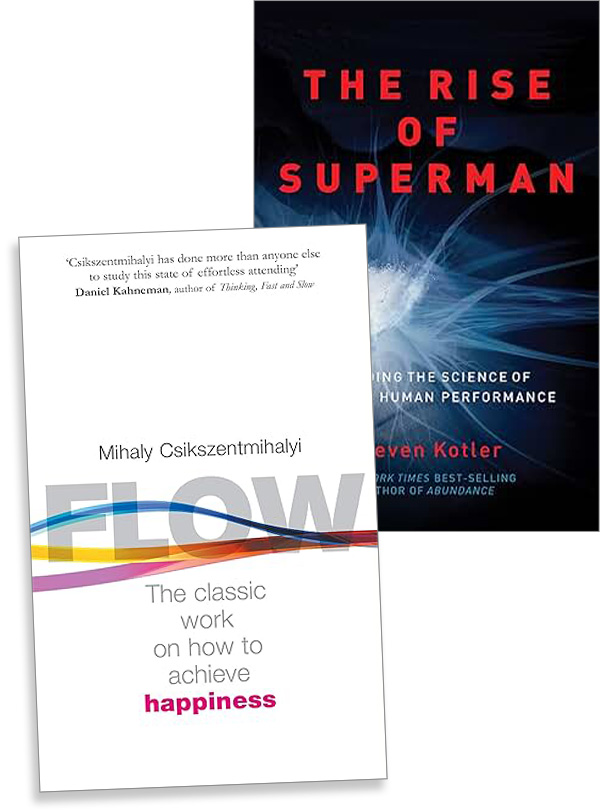
Mihaly Csikszentmihalyi’s Flow: The Psychology of Optimal Experience introduces his account of deep engagement and its place in a satisfying life. It is a useful starting point for understanding the concept and the research that shaped it.
Steven Kotler’s The Rise of Superman explores flow through stories of action and adventure athletes. Its emphasis is on exceptional performance; you do not need extreme challenges to explore absorption in everyday activities.