
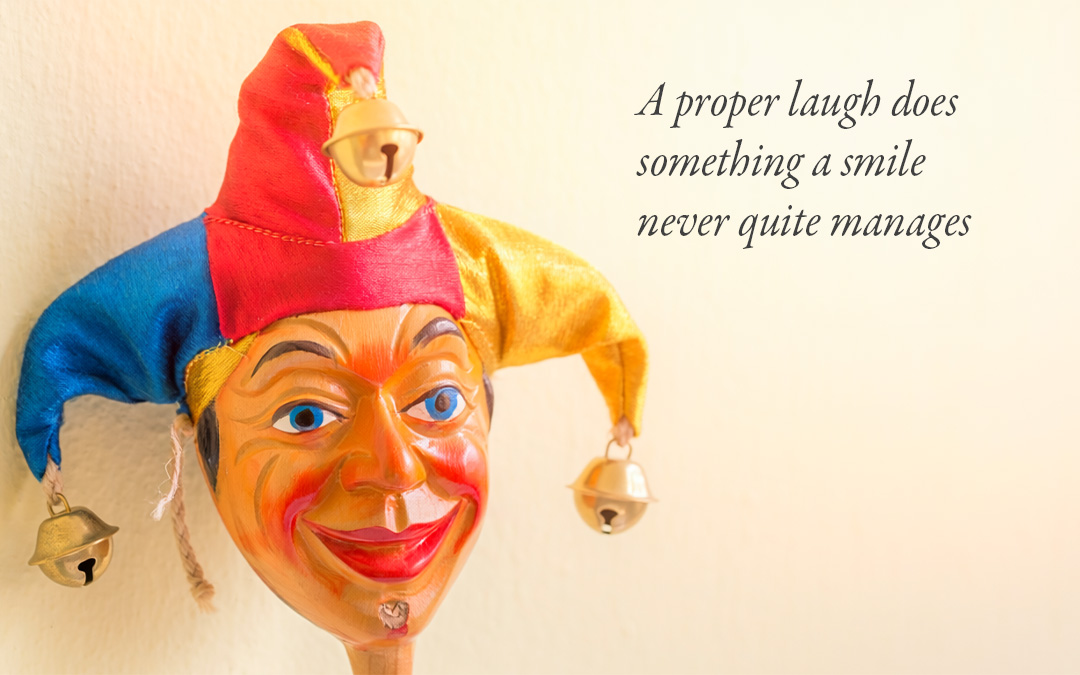
A proper laugh – the kind that catches you off guard – does something a smile never quite manages. The shoulders drop before the mind’s worked out why.
Most of what makes a day feel heavy resists being reasoned with directly. A deadline doesn’t shrink because you’ve thought about it clearly, and a bad mood rarely lifts because someone’s explained why it shouldn’t be there.
Laughter works differently – it doesn’t argue with the tension, it just briefly overrides it. That’s partly why it turns up so reliably in rooms that are otherwise stiff with nerves – a funeral, a job interview, a hospital waiting room.
It isn’t inappropriate so much as instinctive: something in a difficult moment reaching for the one lever that actually moves.
None of this needs a joke to be objectively funny to work. Half of what makes people laugh together is the fact of laughing together, not the material itself.
Which is why the same line lands harder in company than it ever does read alone.
How to do it
None of it needs staging, either. A short list of low-effort ways to let more of it in.
- Notice what actually makes you laugh, rather than what’s supposed to. Taste in this is oddly personal and worth trusting.
- Let a shared joke with someone become a running one. The second and third time round often lands harder than the first.
- Put something genuinely silly on when a day’s gone flat. Rather than something merely distracting.
- Laugh at yourself first, before someone else gets there. It tends to defuse a mistake faster than any explanation.
- Sit with people who make you laugh more than you plan to. Notice who they are.
Where it comes from
Much of the modern understanding of this comes from the work of the neuroscientist Robert Provine, who spent years studying laughter as it actually happens, in ordinary conversation, rather than in a lab.
He found that people are roughly thirty times more likely to laugh in the presence of others than when alone, and that most laughter follows ordinary remarks rather than anything resembling a joke – findings that back up exactly what this page keeps returning to: the company matters more than the material.
Worth knowing
Laughing measurably lowers levels of stress hormones and appears to boost pain tolerance – patients asked to watch something funny before a mildly uncomfortable procedure report less discomfort than those who didn’t.
The muscular act of laughing itself, not just the amusement behind it, seems to do a share of that work.
The social side may matter just as much. Shared laughter reliably increases feelings of closeness between people faster than most other ordinary interactions manage.
Which is likely why comedians, best men, and nervous first dates all reach for a joke before anything else – it’s a shortcut past the more effortful, considered kind of bonding.
“Laughter is the best medicine” gets repeated so often it’s practically furniture, usually alongside claims that it can meaningfully treat serious illness on its own.
The more dramatic medical claims – that laughter alone can meaningfully shrink tumours or cure disease – have never held up to scrutiny, and the researcher whose early work is often cited in support of them was later found to have overstated his results considerably.
What survives that correction is genuinely useful without the exaggeration: laughter reliably lowers stress and eases discomfort in the moment, and it measurably strengthens the bond between the people sharing it.
Recommended reading
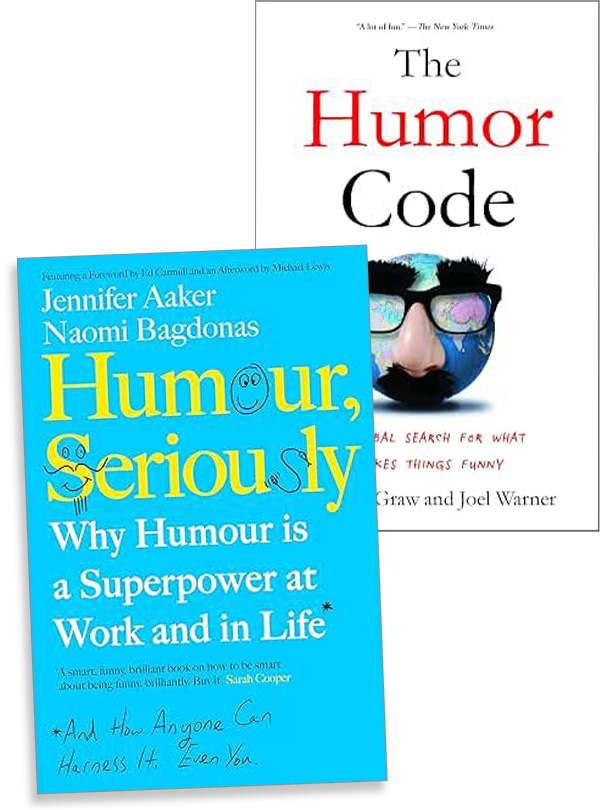
Jennifer Aaker and Naomi Bagdonas’ Humour, Seriously is the natural starting point – a lively, research-backed look at why humour matters and how to bring more of it into everyday life, from the Stanford Business School course of the same name.
For a different research angle, Peter McGraw and Joel Warner’s The Humor Code travels the world to test a theory of what actually makes things funny.