
Nobody has to teach a child how to play – it’s the default state, interrupted only by the adults asking them to stop. Somewhere on the way to being one of those adults, most people lose the knack entirely, and rarely notice the exact moment it happened.
Almost everything else on this site has a point to it – a technique with a purpose, a habit worth building, a benefit worth naming. Play is the one entry that only works if it doesn’t have one.
That’s a hard needle for an adult to thread. Most hobbies picked up in adulthood arrive already dressed as self-improvement – the run becomes a pace to beat, the guitar becomes a skill to master. And something gets lost in the translation.
None of this needs to look impressive, or even coherent, to count. A grown adult being genuinely silly for its own sake looks a little undignified from the outside – which is precisely the tell that it’s actually working.
How to do it
None of it needs new equipment, either. A short list of ways back into it.
- Pick something with absolutely no outcome attached. No score, no product, no personal best to beat.
- Let a game stay a game, even once you’re good at it. Resist the pull to start taking it seriously.
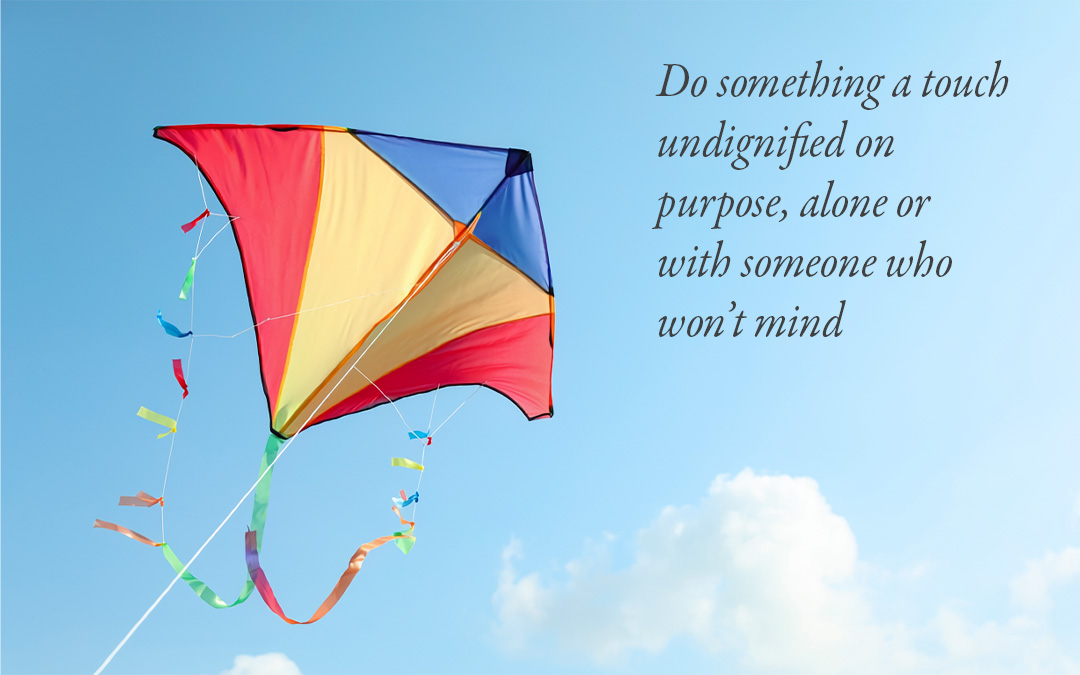
- Do something a touch undignified on purpose. Alone, or with someone who won’t mind.
- Follow whatever a child nearby is doing. Rather than organising an activity for them – they’re usually already there.
- Notice the moment an activity starts to feel like admin. Stop before it fully turns into one.
None of it needs to last long to count, either – ten genuinely absorbed minutes does more than an hour spent half-heartedly going through the motions.
It’s the state of not minding how it turns out, more than the activity itself, that seems to matter. The instant an outcome starts to matter, the thing stops being play and quietly turns back into work wearing a costume.
Where it comes from
The clearest thread of research traces back to the psychiatrist Stuart Brown, whose interest in the subject began, unexpectedly, in 1966, when he was part of a commission investigating a mass shooting and found a childhood strikingly empty of play in the perpetrator’s history.
That observation set off decades of further study – including a year-long study of imprisoned murderers, most of whom turned out to be severely play-deprived – and research into animal play alongside the primatologist Jane Goodall.
Brown went on to found the National Institute for Play, arriving at the same conclusion in setting after setting: play isn’t a lesser cousin of “real” activity, it’s a biological need in its own right.
Worth knowing
Adults who report the least play in their lives also report higher rates of rigidity and low mood – and animals deprived of play in early life tend to struggle more with unfamiliar or stressful situations later on.
Play appears to matter less for what it produces than for what it temporarily switches off – the part of the mind that scores, ranks, and evaluates gets a genuine rest, in a way that most deliberately relaxing activities don’t quite manage.
“Reconnect with your inner child” has become one of those phrases that gets stitched onto almost any wellness product going, usually alongside an adult colouring book or a subscription box.
Most of the research behind play and adult wellbeing is observational rather than experimental, which means it’s genuinely hard to say whether playfulness causes lower rigidity, or whether people who are already less rigid simply find it easier to play.
What survives that caveat is still worth having: unstructured, outcome-free activity reliably feels different from everything else on a day’s list, and that difference seems to matter, whether or not the causal arrow points the way the marketing suggests.
Recommended reading
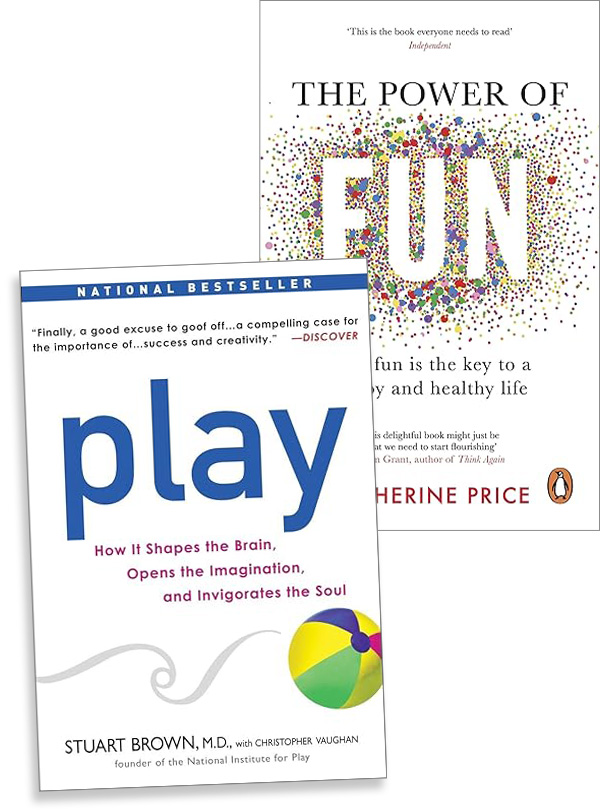
Stuart Brown’s own Play is the natural starting point – the research described above, drawn from thousands of life histories.
For something more contemporary, Catherine Price’s The Power of Fun offers a practical, more everyday way into the same territory.