

References: Therapy tools pathways
The key studies and reviews behind these pathways – organised by page, so you can see exactly what each claim on the site is based on.

Grounding techniques
- Najavits, L.M. (2002). Seeking Safety: A Treatment Manual for PTSD and Substance Abuse. Guilford Press. A widely used clinical manual from the 1990s trauma-therapy tradition this page traces the technique back to, built around structured grounding exercises for acute distress.
- Wells, A. (1990). “Panic disorder in association with relaxation induced anxiety: An attentional training approach to treatment.” Behavior Therapy, 21(3), 273–280. Early evidence for the mechanism this page describes – that redirecting attention outward, rather than arguing with a thought, can interrupt an anxiety spiral.

Safe place visualisation
- Wolpe, J. (1958). Psychotherapy by Reciprocal Inhibition. Stanford University Press. The origin of systematic desensitisation, pairing imagined scenes with relaxation – the clinical root this page traces safe-place work back to.
- Shapiro, F. (2001). Eye Movement Desensitization and Reprocessing (EMDR): Basic Principles, Protocols, and Procedures (2nd ed.). Guilford Press. The standard clinical reference for the “safe/calm place” installation step this page describes as part of EMDR.
- Van Kuiken, D. (2004). “A meta-analysis of the effect of guided imagery practice on outcomes.” Journal of Holistic Nursing, 22(2), 164–179. The evidence behind this page’s claim that reviews generally find a modest but real calming effect from guided imagery.

Working with your parts
- Schwartz, R.C. (1995). Internal Family Systems Therapy. Guilford Press. The founding clinical text behind the IFS model described on this page, from the psychologist who developed it.
- Shadick, N.A., Sowell, N.F., Frits, M.L., et al. (2013). “A randomized controlled trial of an internal family systems-based psychotherapeutic intervention on outcomes in rheumatoid arthritis: a proof-of-concept study.” Journal of Clinical Psychology, 69(1), 67–90. A randomised trial offering some of the more concrete outcome evidence for the IFS approach this page describes.

Somatic techniques
- Levine, P.A. (1997). Waking the Tiger: Healing Trauma. North Atlantic Books. The foundational text behind Somatic Experiencing, from the approach’s own originator, referenced on this page’s account of where body-first trauma work began.
- Porges, S.W. (2011). The Polyvagal Theory: Neurophysiological Foundations of Emotions, Attachment, Communication, and Self-regulation. Norton. The theoretical basis behind this page’s claim that a long exhale and a felt sense of the ground speak to the nervous system “in its own language, below words.”
- Brom, D., Stokar, Y., Lawi, C., et al. (2017). “Somatic Experiencing for Posttraumatic Stress Disorder: A Randomized Controlled Outcome Study.” Journal of Traumatic Stress, 30(3), 304–312. A randomised trial supporting the effectiveness of the somatic, body-first approach this page describes.

The STOP technique
- Linehan, M.M. (1993). Cognitive-Behavioral Treatment of Borderline Personality Disorder. Guilford Press. The founding text for Dialectical Behaviour Therapy and its distress tolerance skills, the tradition this page traces STOP back to.
- Ochsner, K.N. & Gross, J.J. (2005). “The cognitive control of emotion.” Trends in Cognitive Sciences, 9(5), 242–249. Evidence behind this page’s account of why a brief pause and a conscious breath can let a slower, more deliberate part of the brain come back online before a reaction fires.
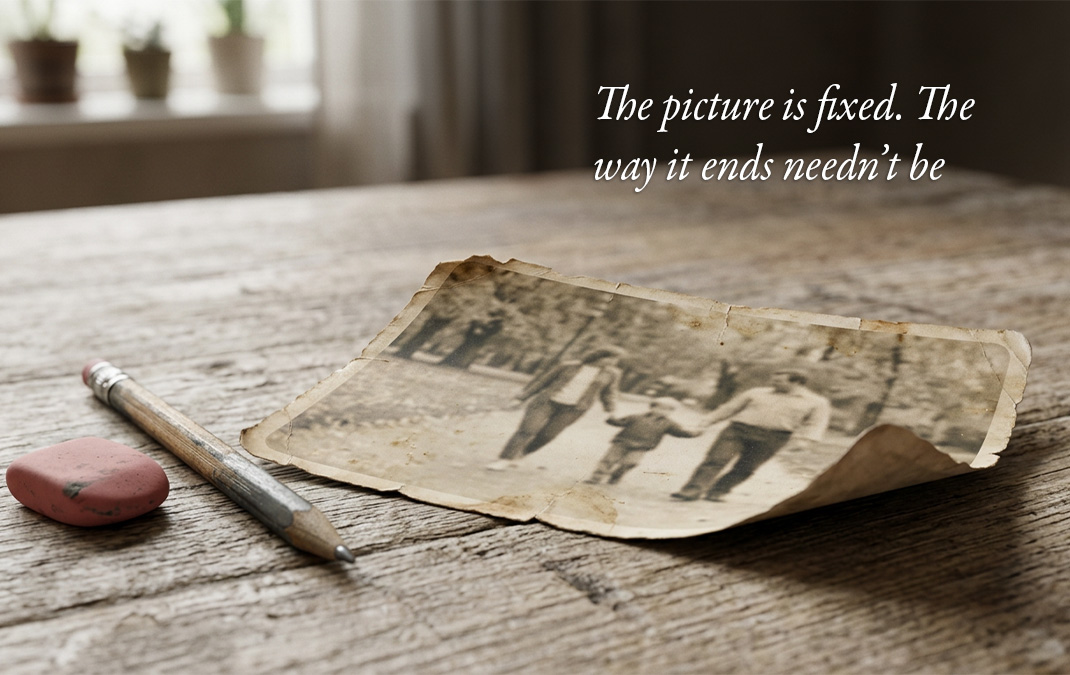
Imagery rescripting
- Arntz, A. & Weertman, A. (1999). “Treatment of childhood memories: theory and practice.” Behaviour Research and Therapy, 37(8), 715–740. One of the key papers behind the refinement of imagery rescripting as a structured clinical technique through the 1990s, as described on this page.
- Morina, N., Lancee, J. & Arntz, A. (2017). “Imagery rescripting as a clinical intervention for aversive memories: A meta-analysis.” Journal of Behavior Therapy and Experimental Psychiatry, 55, 6–15. The main evidence behind this page’s claim that imagery rescripting is “one of the better-evidenced tools in the therapeutic repertoire.”
- Nader, K., Schafe, G.E. & Le Doux, J.E. (2000). “Fear memories require protein synthesis in the amygdala for reconsolidation after retrieval.” Nature, 406, 722–726. Foundational research behind this page’s account of memories becoming briefly malleable when recalled, which the technique relies on.

Positive data logs
- Young, J.E., Klosko, J.S. & Weishaar, M.E. (2003). Schema Therapy: A Practitioner’s Guide. Guilford Press. The founding text for schema therapy, from the psychologist behind the approach this page traces the technique to.
- Nickerson, R.S. (1998). “Confirmation bias: A ubiquitous phenomenon in many guises.” Review of General Psychology, 2(2), 175–220. The evidence behind this page’s account of the mind noticing what confirms a belief and dismissing what doesn’t.
- Baumeister, R.F., Bratslavsky, E., Finkenauer, C. & Vohs, K.D. (2001). “Bad is stronger than good.” Review of General Psychology, 5(4), 323–370. The classic source behind this page’s reference to a general negativity bias that makes failures louder than quiet good.

The placebo effect
- Kaptchuk, T.J., Friedlander, E., Kelley, J.M., et al. (2010). “Placebos without deception: a randomized controlled trial in irritable bowel syndrome.” PLOS ONE, 5(12), e15591. The landmark open-label placebo trial this page describes, in which people told plainly they were taking a sugar pill still improved.
- Benedetti, F. (2008). “Mechanisms of placebo and placebo-related effects across diseases and treatments.” Annual Review of Pharmacology and Toxicology, 48, 33–60. The main review behind this page’s account of the measurable neurobiology of placebo – endorphin and dopamine release, and shifts trackable on a scan.