
People have been working out that too much stuff does something to the mind for centuries, long before anyone filmed themselves folding t-shirts for an audience.
A decade or so of decluttering media has turned a fairly ordinary intuition into something closer to a genre, complete with its own celebrities and methods.
None of this means a tidy room is a moral achievement, or that a cluttered one reflects badly on anyone.
The claim worth taking seriously is narrower: external disorder does seem to have some effect on internal state for a lot of people, independent of any of the surrounding culture built up around it.
How to do it
None of it needs a dramatic weekend clear-out to test. A short list of smaller ways in.
- Start with one drawer or one shelf, rather than a room. Notice how it actually feels afterward.
- Separate what to clear from what to organise. These are different jobs, often confused as the same one.
- Notice which specific kind of clutter bothers you most. It’s rarely all clutter equally.
- Keep the things that are genuinely used or genuinely loved. Be honest about the difference between those and things kept from guilt.
- Stop before exhaustion sets in. A rushed, resentful clear-out tends to undo itself within weeks.
None of it needs to result in a minimalist home to count as worthwhile. A single decluttered corner of an otherwise ordinary, lived-in house still does real work.
It’s the act of deciding, more than the resulting tidiness, that seems to matter – which is why the relief tends to arrive during the sorting itself, not only once the room looks different.
Where it comes from
Much of the modern wave traces to one person: Marie Kondo, whose book on the KonMari method was published in Japan in 2011 and became a global phenomenon after her Netflix series arrived in 2019.
The instinct itself is much older, though – decluttering as a route to a calmer mind shows up in minimalist and monastic traditions long before anyone attached a camera crew to it.
Worth knowing
Visual clutter has been shown to compete for attention in ways that measurably tax cognitive resources, making a cluttered room a source of low-grade mental effort even when nobody’s consciously thinking about the mess.
Clearing that clutter appears to free up some of that attention, which may explain why a tidied space so often produces an immediate sense of relief rather than a slow-building one.
The evidence for this is genuinely real but thinner than the cultural enthusiasm around it suggests – much of the research is smaller in scale than the size of the industry now built on top of it.
Decluttering media sometimes implies that a sufficiently organised home will resolve anxiety, relationships, or life satisfaction more broadly.
That broader claim isn’t well supported. The evidence points to a real but modest and specific effect – reduced clutter, reduced immediate cognitive load, not a transformation of wellbeing that extends much beyond the room actually being tidied.
What survives that correction is still genuinely worth having: clearing a cluttered space does appear to provide real, if modest, relief, and that’s a perfectly reasonable reason to do it.
Recommended reading
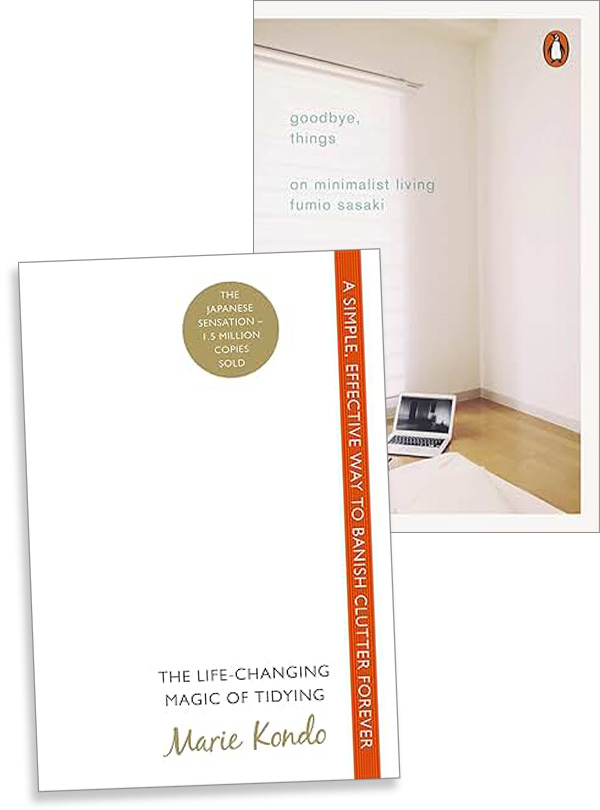
Marie Kondo’s The Life-Changing Magic of Tidying Up is the natural starting point – the book behind the whole modern wave.
For something more personal, Fumio Sasaki’s Goodbye, Things is less a method than a quiet account of what got him there.