
A diagnosis doesn’t just tell you what’s wrong – it interrupts the future you were expecting.
A diagnosis is usually treated as a medical event with a medical response: get the facts, understand the treatment, make a plan. That’s true as far as it goes, but it skips over something that happens first – the moment of hearing the words is its own kind of shock, separate from whatever comes after it.
Doctors are trained to explain a condition calmly and clearly, and that’s exactly as it should be. But calm, clinical language can land strangely against a piece of news that has just reorganised your sense of the future – the mismatch between the two registers is disorienting in its own right.
None of this means the diagnosis itself is the whole story. It means that, for most people, the moment of hearing it deserves to be taken seriously on its own terms, before the practical work even begins.
- It’s a shock even if you suspected it. Bracing yourself for bad news and being blindsided by it aren’t opposites – you can see it coming for months and still feel the ground disappear when someone says it out loud.
- The waiting can be worse than the news. The gap between a referral and an answer often does more damage to peace of mind than the diagnosis itself, precisely because nothing can be planned around a question mark.
- Clinical language and emotional reality speak different dialects. A measured explanation of next steps can feel strangely distant from the fact that your life just changed – both things are true at once, and neither cancels the other out.
- People rush to fix it or reassure you. Well-meaning others often can’t sit with news as news – they reach for solutions or silver linings before you’ve had a chance to simply feel what’s happened.
- It can tip into something more. Persistent low mood, dread, or pulling away from people in the weeks that follow are worth acting on – NHS Talking Therapies (self-referral, no GP needed) is built for exactly this. If it feels more urgent than that, the Support directory has crisis contacts.
Why the news itself is its own kind of blow
The practical questions arrive fast, but the news itself has to be absorbed first.
A diagnosis often draws an involuntary line through time – there’s now a before and an after, whether or not the condition itself changes anything imminent. That line can appear the instant the sentence is finished, long before any treatment has begun.
It also tends to arrive without ceremony. A phone call, a letter, a few minutes in a consulting room – nothing that matches the size of what’s just happened, which can make the whole moment feel strangely unreal.
What actually helps
Giving yourself permission to be shaken by the news isn’t a delay tactic.
It helps to let the facts and the feelings run on separate tracks for a while, rather than expecting yourself to feel calm just because you understand the medical explanation. Understanding a thing and having made peace with it are not the same task.
It also helps to choose, deliberately, who gets told what and when. You don’t owe anyone the full story on their timetable – a short answer is enough until you’re ready to say more.
Worth knowing
Most people adjust to a diagnosis in stages, not all at once.
There’s rarely a single morning when it suddenly makes sense. That adjustment is real work, even when nothing about the condition itself is changing week to week.
It’s fair to give this the same seriousness you’d give any other major shock, rather than pressure to appear composed for other people’s comfort.
If it would help, here's a short message of encouragement to sit with before moving on.
Recommended reading
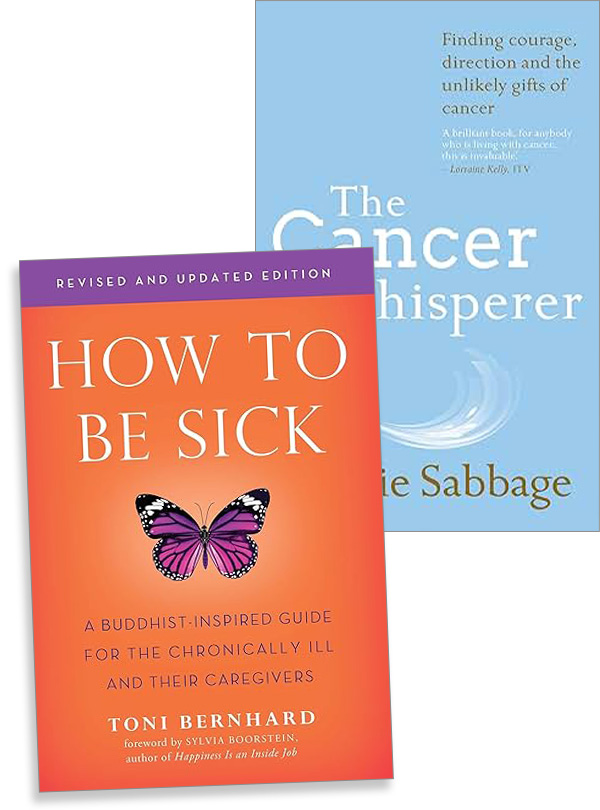
Toni Bernhard’s How to Be Sick: A Buddhist-Inspired Guide for the Chronically Ill and Their Caregivers is the natural starting point – a practical, unsentimental guide to the actual daily experience of illness, written by a law professor after her own sudden diagnosis.
For a more personal account, Sophie Sabbage’s The Cancer Whisperer is a British writer’s candid account of receiving a late-stage cancer diagnosis at 48, written with unusual honesty about fear, anger and grief rather than forced positivity.