
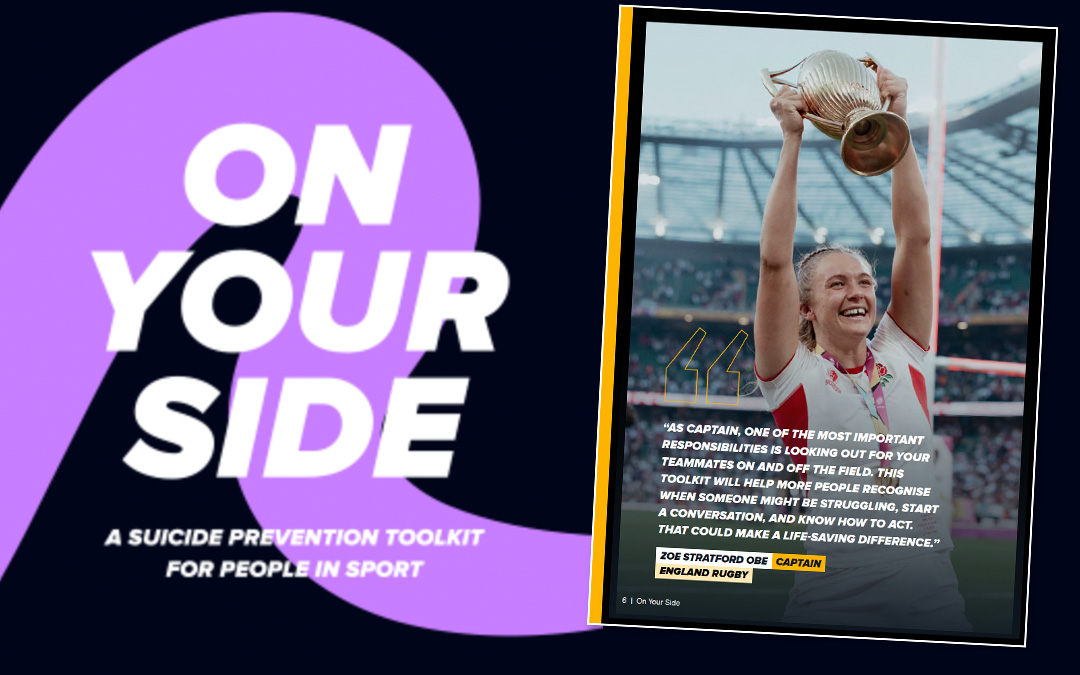
The Prince of Wales visited Everton Football Club’s stadium on Thursday, World Suicide Prevention Day, to launch a new toolkit called On Your Side – the first built specifically for sport.
He was joined by the Princess of Wales and a line-up of sporting stars backing the initiative.
The toolkit gives coaches, teammates, volunteers and fans practical guidance: how to talk to someone at risk, how to spot the warning signs, and where to send them next.
William said he hoped it would become “part of a club’s culture and duty of care,” because when somebody is struggling, “often it is not a professional who first notices.”
While there, William and Kate met Carol Speed, the mother of Gary Speed, the former Everton player and Wales manager who died by suicide in 2011, aged 42.
They also watched a panel discussion in which Dame Kelly Holmes, the Olympic runner, described struggling with her mental health despite what she called her “fame and fortune” – and the night, five years ago, she reached out for help at 1.30am and says it saved her life.
A launch video features Harry Kane, George Russell and the former England rugby captain Rochelle “Rocky” Clark asking people directly if they’re OK. Clark’s own father died by suicide when she was eleven; she called the toolkit part of his legacy.
Here’s what the toolkit itself is built on:
- One in four UK adults have thought about taking their own life. That figure includes plenty of people who, by every outward measure, look entirely fine.
- One in thirteen have attempted suicide at some point in their life. Exposure to suicide is far more common than most people in sport realise.
- Someone in the UK dies by suicide every 90 minutes on average. Each death affects around 135 other people – teammates, coaches, volunteers and fans, not just immediate family.
- Asking someone directly whether they’re considering suicide does not increase the risk. A review of the evidence found no link between asking and “planting the idea” – if anything, the question tends to open a door rather than push someone through one.
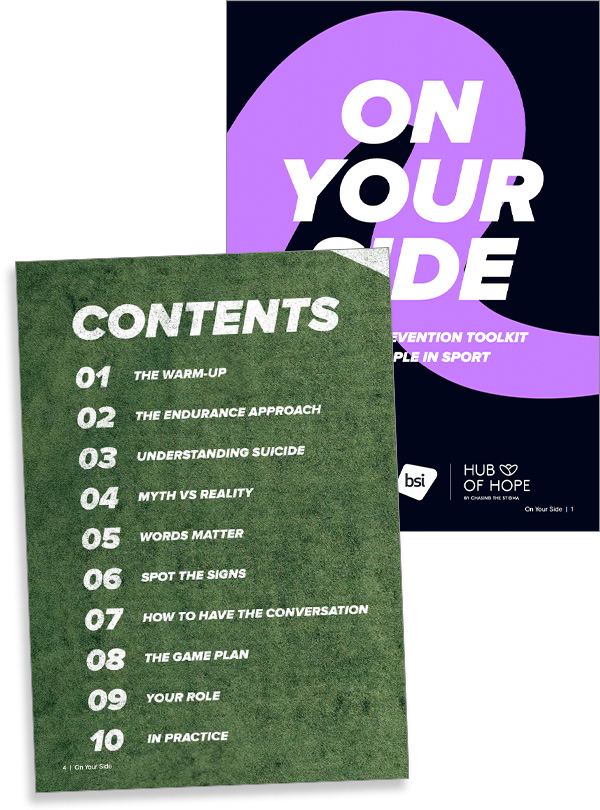
- The toolkit’s core framework, GOALS, breaks the conversation into five steps. Get ready, Open the conversation, Ask the question, Listen and respond, then Support and signpost.
The wider argument
The case for starting in sport isn’t sentimental. Nearly 40 million UK adults engage with sport in some way – following it, attending it, or playing it – reaching people, across every class and background, that mental health services often don’t.
At its best, sport builds exactly what protects against suicide risk: routine, purpose, belonging, a reason to show up. At its worst, the same culture that makes it powerful – pressure, competition, the expectation to push through pain – can make it harder for someone to admit they’re struggling at all.
The toolkit is direct about the myths in its way. That elite athletes are too mentally tough to be at risk. That it would be obvious if someone was struggling. That asking the question makes things worse rather than better.
Gary Speed’s death, and Kelly Holmes’s own admission on the panel, sit as a quiet rebuttal to all three – success and visible struggle were never mutually exclusive, however much sporting culture has assumed otherwise.
What the toolkit doesn’t do is ask coaches or teammates to become therapists. Its distinction is clear: organisations aren’t expected to provide clinical care, but they are expected to notice, respond appropriately, and know where to send someone next.
Confidentiality matters, but doesn’t override safety – if someone is at risk, that has to be said honestly, from the start, not discovered as a broken promise later.
William closed the launch by framing it as something ordinary rather than exceptional: suicide prevention as routine, eventually, as a warm-up – “part of your game plan.”
Sources: “On Your Side: A Suicide Prevention Toolkit for People in Sport”, The Royal Foundation, British Standards Institution and Chasing the Stigma (Hub of Hope), 2026 – the toolkit itself, available at hubofhope.co.uk/onyourside.