

You may spend every evening with your partner but still miss having someone to talk to. Conversations cover shopping, bills or family arrangements, while things you’d like to share never quite get said.
You might miss affection, curiosity about your day or the feeling that you’re facing things together. Perhaps you’ve tried to explain and felt brushed aside, or you’re unsure how to begin without sounding critical.
Having a partner doesn’t mean all your needs for company and closeness are being met. Feeling lonely is worth paying attention to, even if the relationship looks settled from the outside.
Work, illness, caring responsibilities or unresolved disagreements may have changed how you spend time together. This may be a recent distance or something you’ve felt for years. Before deciding what it means for the relationship, it can help to identify what you miss and whether you feel able to talk about it.
A few things to keep in mind…
- Try to name what you’re missing. You may want more affection, time together or someone to listen without immediately offering solutions. A specific example can be easier to discuss than a general sense that you’re no longer close.
- Your partner may experience things differently. They might feel connected through everyday routines while you miss longer conversations. Neither of you has to feel exactly the same for your loneliness to deserve attention.
- Choose a time when you can both listen. If it feels safe, try “I’ve been missing time together. Could we talk about it?” rather than raising everything during an argument or when one of you is rushing out.
- You can love someone and still feel lonely. Saying you want more closeness doesn’t erase what you value about the relationship. You don’t have to wait until you’ve decided its future before talking about what feels difficult now.
- Rebuilding closeness needs a response from both of you. You can explain what you need and suggest changes, but you can’t make the relationship feel different through your effort alone. Notice whether your partner is willing to listen and take part.
When conversations keep getting stuck
You may have tried to talk about feeling lonely, only for the conversation to become an argument about who does more or who last suggested spending time together. The thing you wanted to explain can get lost.
If one of you wants to keep talking and the other wants to stop, agree a time to return to the conversation. A pause is more useful when it doesn’t leave the subject indefinitely unanswered.
There may be pressures you both recognise, such as work or caring responsibilities. There may also be hurt or disagreements that need attention. Spending more time together won’t necessarily address everything that has made closeness difficult.
Things that may help
Start with one recent example. You could say, “When I tried to tell you about my appointment yesterday, we got distracted and never came back to it. I’d like you to ask how it went.” This gives your partner a clearer picture of what you’re missing.
Ask what closeness looks like to them. They may miss something too, or not have realised how you’ve been feeling. Try to give each other time to answer without immediately correcting the other person’s account.
Understanding your partner’s experience doesn’t mean setting yours aside. The aim is to find out what each of you needs and what you’re both willing to change.
Agree on something small and specific. You might try a walk together, a meal without phones or time to talk after the children are asleep. Choose something that fits your circumstances, then check in about whether it helped rather than assuming the arrangement will look after itself.
Notice what happens after the conversation. Does your partner make time, ask questions or follow through on what you agreed? One awkward discussion needn’t settle the future of the relationship, but repeated dismissal deserves attention.
Keep other connections in your life. Friends, family and activities you enjoy can offer company and support. They don’t remove the need to address difficulties with your partner, but you don’t have to rely on that relationship for every kind of connection.
Finding support
If you’re both willing but keep getting stuck, relationship counselling can offer space to discuss what’s happening with someone outside the relationship. You can also seek support on your own if your partner doesn’t want to take part. Relate is one place to look for information about relationship support.
You don’t have to decide whether to stay or leave before asking for help. You can begin by talking through what’s happening and what you need.
If you’re afraid of your partner’s reaction, or there are threats, control or humiliation, seek confidential advice on your own from a specialist domestic abuse service. You don’t need to try another conversation or joint counselling first. The Support directory is a starting point for finding support.
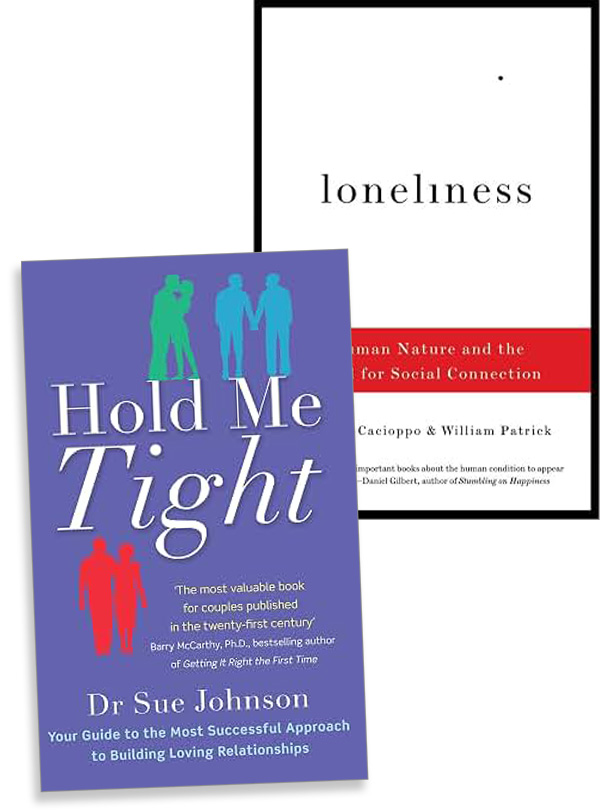
Recommended reading
Sue Johnson’s Hold Me Tight draws on Emotionally Focused Therapy and guides couples through seven conversations about their relationship. It may interest you if you’re both willing to look at recurring arguments and talk about what helps you feel close.
John Cacioppo and William Patrick’s Loneliness offers a broader account of our need for social connection and how feeling isolated can affect us. It explores loneliness generally, rather than focusing on difficulties between partners.