

You’re tired, but as soon as you’re in bed, your thoughts get busy. You go over a conversation, remember something you need to do or start worrying about tomorrow. Then you check the time and wonder how much sleep you’ll get.
You may have trouble falling asleep, or wake in the night and struggle to settle again. In the quiet, a concern that felt manageable during the day can take up most of your attention.
Worrying about being awake can add another difficulty: you’re no longer just thinking about tomorrow, but trying to make yourself sleep so you can cope with it.
Worry isn’t the only reason for a sleepless night. Pain, illness, medicines, caffeine or your surroundings may also play a part. These suggestions focus on nights when thoughts and worry are making it harder to settle.
A few things to keep in mind…
- You don’t have to force yourself to sleep. Trying to make sleep happen can leave you frustrated and more alert. If you’re lying awake and becoming upset, try getting up for a quiet activity, such as reading, and return to bed when you feel sleepy.
- Keep the clock out of easy view. Calculating how many hours are left before morning can add pressure. Set any alarm you need, then turn the clock away or put your phone somewhere you won’t keep checking it.
- Give tomorrow’s tasks somewhere else to go. Before bed, write a short list of things you need to remember. If a concern needs action, note a next step for the daytime rather than trying to work through it in bed.
- A relaxation tool and insomnia treatment serve different purposes. Music, a breathing exercise or an app may help you unwind. Persistent insomnia may need a structured treatment, such as cognitive behavioural therapy for insomnia (CBT-I), rather than another relaxation tool.
- Ask for help if poor sleep is affecting daily life. If sleep problems continue or make it hard to cope, speak to your GP. They can look for possible causes and discuss treatment. NHS Talking Therapies may also help if anxiety or depression is part of the difficulty.
When sleep becomes another worry
After a few difficult nights, you may start worrying about bedtime well before it arrives. You might calculate how much sleep you need, cancel evening plans or keep checking whether you feel tired enough.
It’s understandable to want a better night. But making sleep something you have to get right can add pressure when you’re already tired.
This doesn’t mean you’re causing your sleep problems. Worry may be one part of the difficulty, alongside your health, routines or circumstances.
Things that may help
Make some space for worries before bed. Earlier in the evening, write down what’s on your mind and any action you can take tomorrow. Keep it brief. You’re giving yourself a reminder, rather than trying to solve every problem before sleeping.
Choose a familiar way to wind down. Reading, quiet music or a warm bath may suit you. Keep the routine manageable, so it doesn’t become a long list of things you feel you must do perfectly.
A quiet activity can be worthwhile even if it doesn’t send you straight to sleep. You don’t need to keep testing whether it’s working.
Take a break from bed if you’re becoming frustrated. If you’ve been awake for a while and feel increasingly tense, get up if you can and sit somewhere comfortable. Keep the lighting low and try something quiet, such as reading. Return to bed when you feel sleepy; you don’t need to time yourself precisely.
Keep a fairly steady getting-up time. After a poor night, try to get up around your usual time rather than sleeping much later. Go to bed when you feel sleepy, rather than very early to make up for lost sleep.
Use sound or apps according to what they offer. An ambient sound app may make your surroundings more pleasant or help you unwind. A structured insomnia programme has a different purpose. Check what an app actually provides rather than relying on its promise of better sleep.
When to ask for help
A poor night can leave you tired and make the next day harder. Where possible, simplify what you need to do and ask for help with demanding tasks. Don’t drive if you feel sleepy.
You don’t have to wait for sleep problems to become severe before discussing them. How they’re affecting your daily life matters as well as how long they’ve lasted.
If changing your habits hasn’t helped, sleep problems have continued for months, or you’re finding it hard to cope, speak to your GP. They can check for possible causes and discuss treatment, which may include cognitive behavioural therapy for insomnia (CBT-I), delivered by a therapist or through an online programme.
Recommended reading
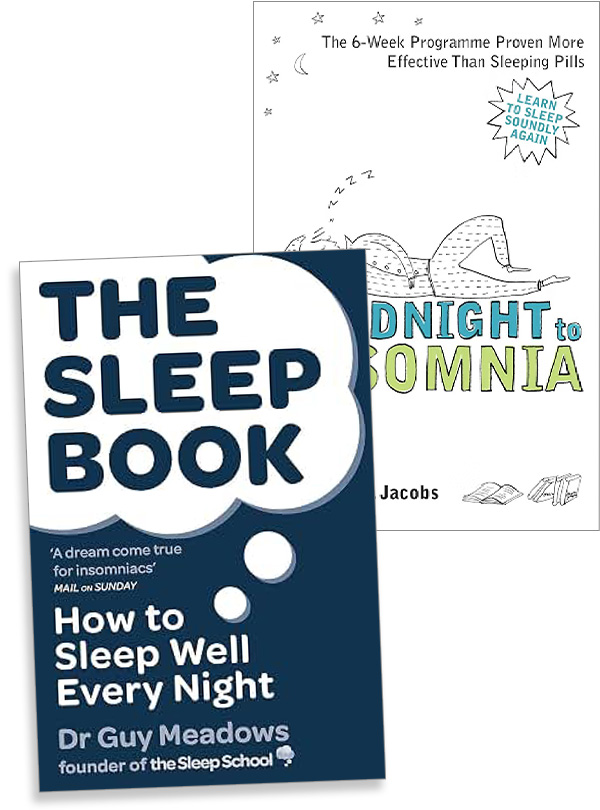
If you’d like to read more about sleep difficulties, these books offer different approaches to the thoughts and habits that can accompany sleepless nights.
Guy Meadows’s The Sleep Book uses mindfulness and acceptance and commitment therapy (ACT). It may interest you if bedtime has become a struggle to control your thoughts or make yourself fall asleep.
Gregg Jacobs’s Say Good Night to Insomnia offers a structured six-week programme based on cognitive behavioural therapy. It includes work on sleep habits, beliefs about sleep and ways to manage stress.