

Rain against a window, a fan in the corner, the low murmur of a café: some sounds are pleasant company without asking you to follow them.
You might welcome that background while reading, resting or winding down at the end of a day. There is something to hear, but no conversation to keep up with and no story you need to finish.
An ambient-sound recording lets you bring a little of that atmosphere into the room. It may also make an occasional noise outside less noticeable.
The choice is personal. Rain can feel cosy to one person and irritating to another; birdsong might be welcome during the afternoon and much too interesting at bedtime.
Start with what you enjoy hearing. You do not need a specially engineered frequency or an elaborate soundscape to make your surroundings feel more comfortable.
Finding a background that suits the moment
Try one sound at a low volume while doing something ordinary. Notice whether you can leave it in the background, or whether it keeps drawing your attention.
- Begin with a sound you already like. Rain, a fan or a gentle wash of noise are possible starting points. The site’s Calm Mixer offers somewhere to explore.
- Choose for the occasion. A lively outdoor recording might suit an afternoon break, while something steadier may be easier to leave alone when resting.
- Keep the volume low and comfortable. You are adding a background, rather than trying to drown out everything around you. Check that it also suits anyone sharing the room.
- Set things up before settling down. Choose the recording, silence unwanted notifications and put the screen aside. Use a timer where available if you only want sound for a while.
- Change it when it stops being pleasant. A sound that suited you yesterday may grate today. Turning it off is as reasonable as finding another one.
Once you find something you like, you can return to it without searching again each time. Familiarity may simply make the choice easier.
You can also leave some occasions quiet. Background sound is there to serve the moment, rather than become another part of the day you have to arrange.
Softening the noises around you
In a quiet room, a passing car or a creaking pipe can stand out sharply. A steady background may make that contrast less noticeable.
This is called sound masking. It does not remove the original noise, and making the recording louder can introduce a disturbance of its own.
You will often see labels such as white, pink or brown noise. These describe different distributions of sound frequencies; white noise tends to sound hissier, while the others put more emphasis on lower frequencies.
The label need not decide the choice. Listen at a comfortable volume and see whether you like what you hear.
At the end of the day
A recording can be part of winding down: something familiar playing while you put a book away, dim the light or settle into bed.
Some people find that helpful. Others sleep more comfortably in quiet. Research has not established that continuous background noise reliably improves sleep, or that one kind works best for everyone.
Studies use different sounds, volumes and surroundings. A result from a noisy hospital room may tell us little about what happens in your bedroom.
Claims about special frequencies improving deep sleep or memory also need care. Some laboratory experiments use brief sounds timed precisely to brain activity during sleep. An ordinary recording playing all night is a different thing.
You can enjoy the sound without asking it to deliver those benefits. Making bedtime feel a little more comfortable is a worthwhile purpose in itself.
Letting it stay simple
Notice if choosing the perfect recording becomes more absorbing than the rest you wanted. One comfortable option may be enough.
If you want something with more emotional shape, music may suit you better. On another evening, you might prefer no audio at all.
For persistent sleep difficulties, consider the wider picture described in sleep and rest. If they are affecting your daytime life, seek advice; you do not need to keep searching for a sound that solves them.
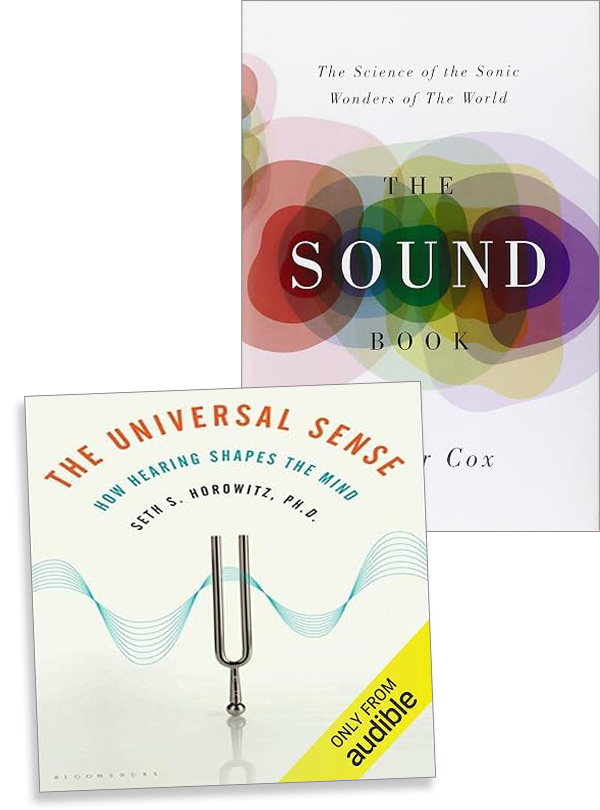
Recommended reading
Seth Horowitz’s The Universal Sense explores how hearing shapes attention, feeling and everyday experience, bringing familiar sounds into a wider story.
Trevor Cox’s The Sound Book travels through remarkable acoustic places, from echoes to singing dunes, encouraging a more curious ear for the world around us.