
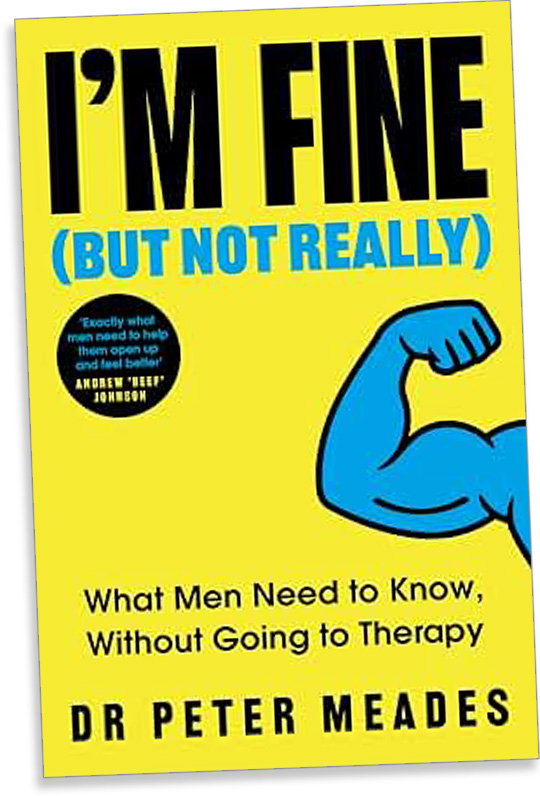
A new interview with the psychotherapist Dr Peter Meades – built around his book I’m Fine (But Not Really): What Men Need to Know, Without Going to Therapy – sets out a case this site keeps returning to from a different angle: the practices that help aren’t complicated, but far too many men never get near them.
Meades trained as a nurse, worked the Aids wards at the height of the epidemic, then spent more than two decades in NHS and private practice before leaving to write the book.
His reasoning was practical rather than literary – most men who need help will never book a session, so he wanted something they could read, or listen to, without anyone knowing.
- Men still make up a minority of referrals. They account for only 36 per cent of NHS talking-therapy referrals, despite suicide being the leading cause of death for men aged 18 to 50.
- The presenting question has changed. Where men once arrived asking “Who am I?”, Meades now hears “What’s wrong with me?” – a shift he reads as more medicalised, and less curious.
- Depression is the single biggest driver of referral, at over 80 per cent – and he’s candid that overprescribing plays a part, because talking therapy is expensive and GPs are short on time.
- Phones have widened the gap they promise to close. Men go down rabbit holes instead of making plans with friends, and loneliness grows even as “connection” appears constant.
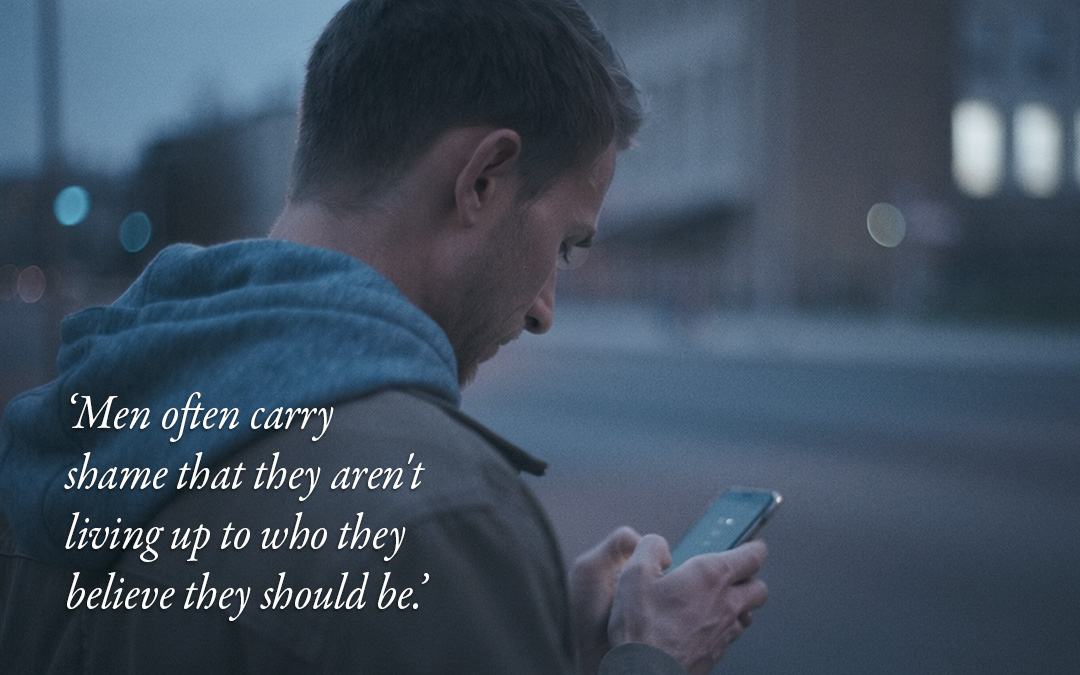
- Shame is the thread running underneath most of it – men not living up to who they believe they should be, without yet having the vocabulary to say so.
Practical tools over disclosure
Meades is unusually guarded about his own life in the book itself, which makes the practical content carry more weight than the personal.
“Self-disclosure as a therapist isn’t helpful,” he says – and two exercises stand out as things a reader could try alone, tonight, with nothing more than a pen.
The first is a life timeline: draw a line, plot the events of your life above and below it according to how they made you feel, and look for where your mood dipped and where it recovered.
The second is an interpersonal map – four concentric circles, yourself in the middle, everyone else placed by emotional closeness – as a way of seeing which relationships are working, which need attention, and which quietly need distance.
Both are versions of something familiar to regular readers here: externalising what’s been carried internally, so it can be looked at rather than just felt.
What this isn’t
This isn’t a case against therapy, and Meades is clear that he’d rather see more men in a consulting room, not fewer.
The book exists for the gap underneath that – the men who will never book the appointment at all, for whom a diary or a timeline is at least a start rather than nothing.
It’s also not a claim that journalling or breathing exercises replace treatment where treatment is actually needed. Meades is direct that a chronic view that life isn’t worth living needs medical help, not a workbook. The self-help end of this sits alongside professional support, not instead of it.
And it’s worth reading past the individual advice to his wider point: some of what men carry – shame, isolation, a sense of not having a role that fits – isn’t only a private failure of coping. It’s also a culture that’s given men very little practice at naming what they feel, and then criticised them for not doing it well.
A few places to start
If keeping a diary or working through a timeline sounds worth trying, the practice this site covers most closely is journalling – a private, low-stakes way to see patterns you can’t quite see while they’re only in your head.
Source: interview with Dr Peter Meades, The Times. I’m Fine (But Not Really): What Men Need to Know, Without Going to Therapy by Dr Peter Meades (Little, Brown, £16.97) is on the bookshelf.