
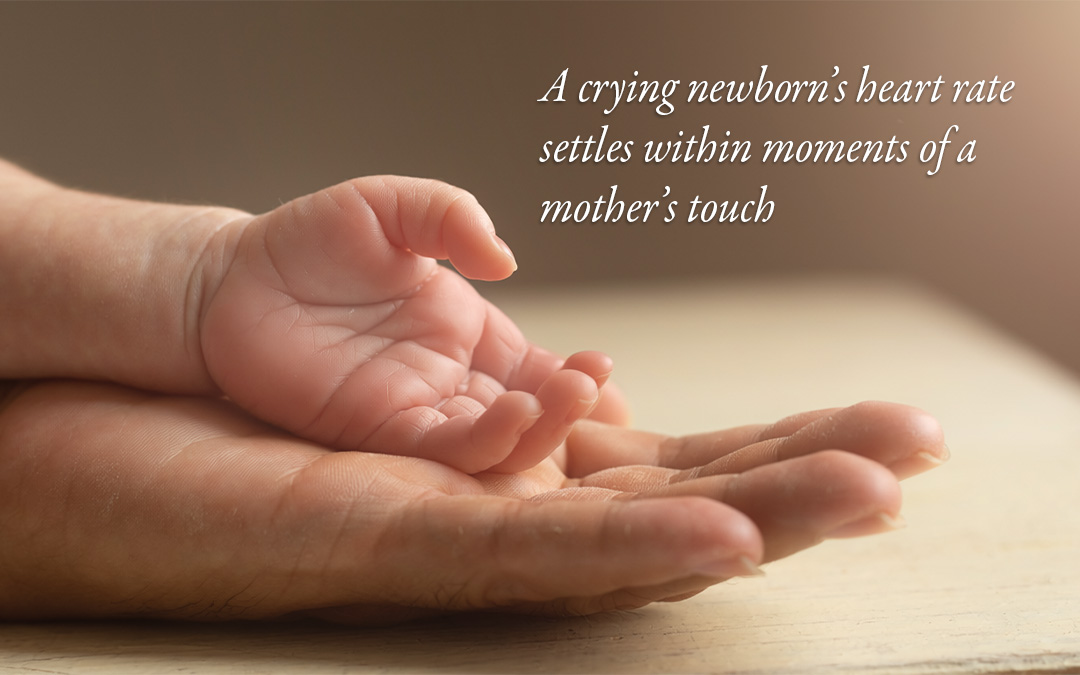
Holding hands, sharing a hug or resting a hand on someone’s shoulder can be ways to offer comfort and affection, when the contact is welcome.
Touch can accompany a conversation or be a way to spend a quiet moment together. It might be part of a greeting, a goodbye or support during a difficult day.
What feels comforting varies from person to person. Some people enjoy firm contact, others prefer something brief or light, and some would rather not be touched.
Your preference can also change with your mood, health, surroundings or who you are with. Familiarity does not mean that a particular kind of touch is always welcome.
You can try gentle contact with your own body too, such as resting a hand on your forearm. There is no need to continue if it feels uncomfortable, or to use touch when another form of support suits you better.
Finding touch that feels comfortable
Start by asking what is welcome. Keep contact easy to adjust or end, and let each person choose the kind of touch, if any, that suits them.
- Ask before offering contact. Try “Would you like a hug?” or “Would holding my hand help?” Give the person room to say no, especially if they are distressed.
- Agree on what feels comfortable. A brief hug, holding hands or a hand on the shoulder may suit you both. Let the other person choose where and how they are touched.
- Keep checking that contact is welcome. Ask “Is this comfortable?” If someone pulls away, stiffens or seems unsure, stop and give them space. You can change your mind too.
- Try gentle self-touch if you prefer. Rest a hand on your forearm, chest or another comfortable place, without pressing. Notice how it feels and move or remove your hand whenever you want.
- Offer another kind of company when touch is not wanted. Sit nearby at an agreed distance, listen or ask what would help. You do not need physical contact to show care.
There is no set length of contact you need to aim for. A brief touch may feel welcome, but extending it does not necessarily make it more helpful.
Consent matters in its own right. Ask, pay attention to the response and stop when either person wants to. Even well-intended touch can be uncomfortable or distressing.
What the research suggests
Research suggests that touch can help with some aspects of physical and emotional wellbeing, though the findings cover many different kinds of contact and circumstances.
In a small 2006 study led by James Coan, married women faced the possibility of a mild electric shock while having a brain scan. Holding their husband’s hand was associated with less activity in brain regions involved in responding to threat than facing it alone.
This offers one example of how supportive contact may affect a stress response. It does not establish that any touch will calm someone, or that hand-holding is a treatment for panic.
A larger review published in 2024 brought together 137 studies in its statistical analysis. It found benefits for outcomes including pain and anxiety in adults. Most adult studies involved massage, so those results cannot simply be applied to a brief hug or a hand on an arm.
Let comfort guide you
The useful question is how contact feels to the people involved. Touch can express care, but it cannot create trust on demand or replace listening and practical support.
You may enjoy some kinds of touch and dislike others. Pain, sensory sensitivities, past experiences and cultural preferences can all affect what feels comfortable.
If contact feels unpleasant, move away or stop. You do not need to get used to it for this practice to count. Grounding techniques offer other ways to attend to your surroundings without another person touching you.
Touch is one possible part of close relationships. Conversation, shared activity and simply being available can also be ways to show care.
Recommended reading
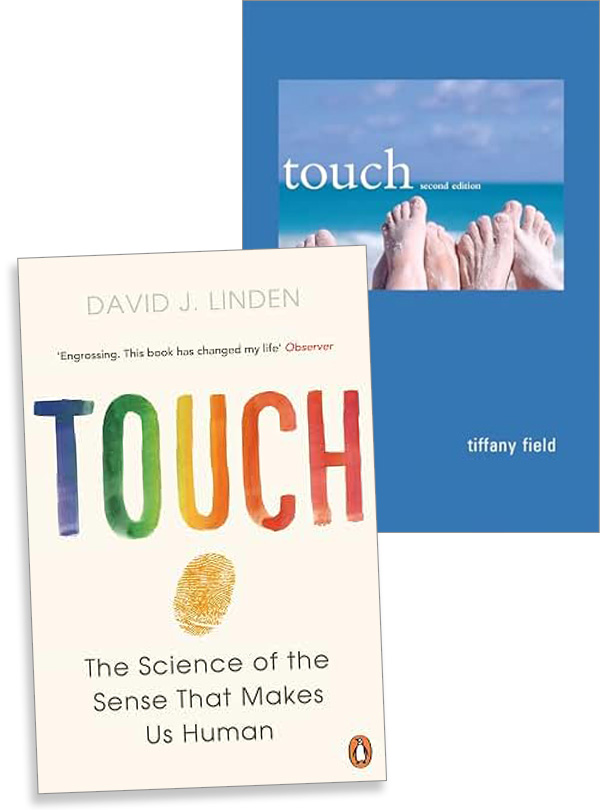
David J. Linden’s Touch: The Science of Hand, Heart, and Mind explores how the skin and brain process touch, and how sensation connects with emotion and everyday experience.
Tiffany Field’s Touch looks at touch across development, communication and health, with particular attention to massage research. The second edition was published in 2014, so read its account alongside more recent findings.