
Deliberately going without food is one of the oldest deliberate practices there is, present in some form in nearly every major religious tradition.
Whether it holds up as a calming practice specifically, rather than a spiritual or disciplinary one, is a fair question worth asking plainly rather than assuming the answer.
Who this isn’t for
None of this is a suggestion for anyone with a difficult history around food, or anyone who isn’t already secure in their relationship with eating.
This is one pathway on this site where caution matters more than curiosity, and it’s worth saying that plainly rather than only implying it.
How to do it
For people for whom this is genuinely appropriate, a short list of ways it’s typically approached.
- Start with something modest and well within ordinary limits. Rather than an ambitious first attempt.
- Notice mental clarity and mood over the fasting period. Rather than focusing only on hunger itself.
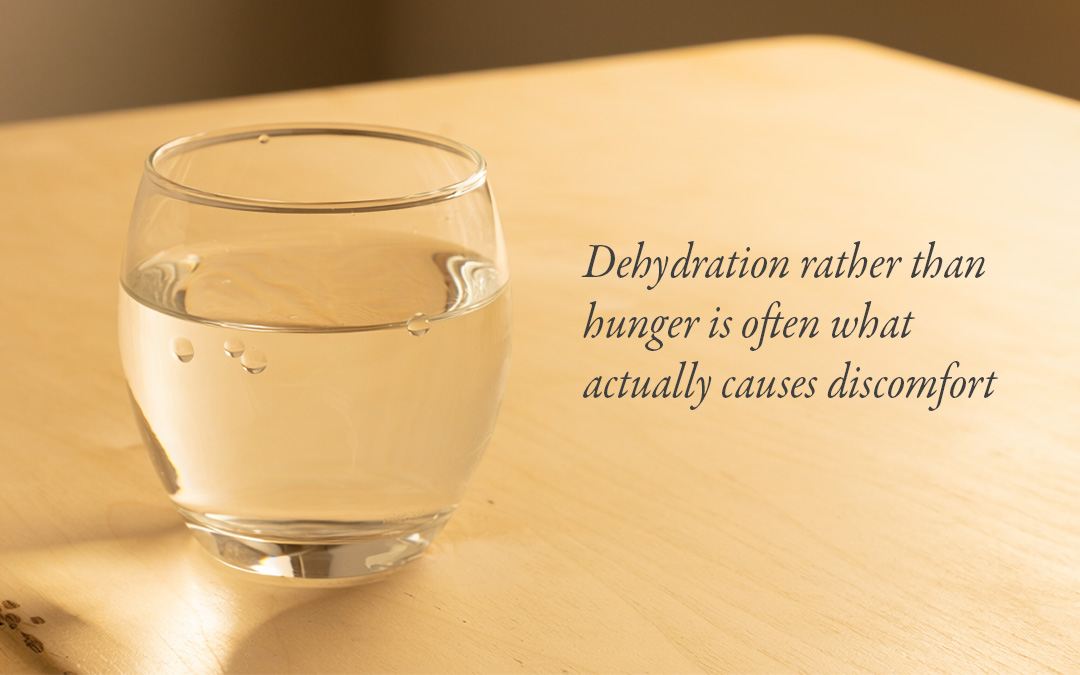
- Stay properly hydrated throughout. Dehydration rather than hunger is often what actually causes discomfort.
- Break a fast gently, with something easy to digest. Rather than a large or rich meal.
- Stop and eat normally if it starts to feel like anything other than a chosen, temporary practice.
None of it needs to be extended or frequent to be worth trying, either. A modest, occasional practice seems to carry most of whatever benefit is genuinely there, without the risks that come with anything more extreme or sustained.
It’s the deliberateness of the choice, more than the length of the fast, that seems to matter most in what people report. A chosen, time-limited period of restriction is a different experience entirely from involuntary hunger or restrictive eating more broadly.
Where it comes from
Ramadan, Yom Kippur, Lent, extended Buddhist fasting periods – traditions with almost nothing else in common all independently arrived at the same idea: that deliberately going without food does something to the mind, not just the body.
That’s a genuinely old and widespread observation, older by far than anything modern research has had time to properly test.
Worth knowing
Fasting produces measurable physiological changes – a shift toward ketosis, reduced inflammation markers, and a cellular process called autophagy in which the body clears out damaged components – and all three have plausible, if not yet fully proven, links to mood and mental clarity.
Some of the calm people report during fasting may also be considerably simpler than any of that: the satisfaction of demonstrated self-control, and a break from the near-constant background decisions around food that occupy more mental space than most people realise.
Untangling the physiological effect from the psychological one is genuinely difficult, and careful research on this tends to say so rather than picking one explanation and running with it.
Intermittent fasting has been marketed at various points as a near cure-all – for weight, mood, longevity, mental clarity, and more, often on the back of thin or preliminary evidence dressed up as settled science.
Much of the more dramatic mental-clarity messaging around fasting rests on small studies, animal research, or simple anecdote rather than robust human trials.
And fasting carries real risks for a considerable number of people, including anyone with a history of disordered eating, for whom this pathway may do active harm rather than good.
What survives that correction is a modest, defensible claim: for the right person, in the right circumstances, an occasional, moderate fast may support mental clarity and a genuine sense of accomplishment.
But it is very much not a universal recommendation, and self-awareness about who it isn’t for matters as much as any technique described here.
Recommended reading
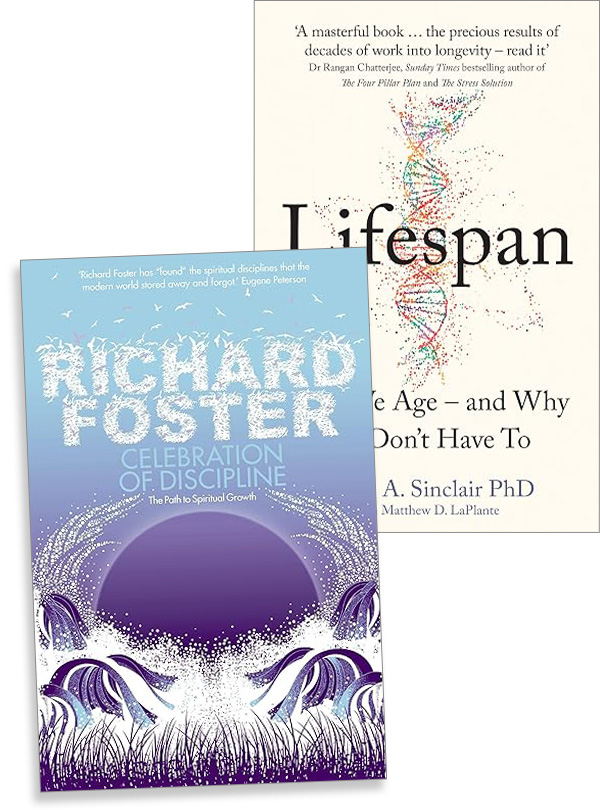
Richard Foster’s Celebration of Discipline is the natural starting point – a respected classic that treats fasting as one spiritual practice among several, alongside prayer and simplicity, with nothing to do with weight.
For something more scientific, David Sinclair’s Lifespan covers fasting and autophagy as part of the wider biology of ageing, rather than as a diet method.