

EMDR is a psychological therapy for working with traumatic memories. With a trained therapist, you briefly focus on a memory while following a movement, sound or tapping that alternates from side to side.
The full name is eye movement desensitisation and reprocessing. Its aim is to reduce the distress associated with a memory and address beliefs linked to it, such as feeling responsible for what happened.
Remembering an event can bring back images, emotions or physical sensations even when you know it is over. Treatment works with those reactions; it does not erase the memory.
EMDR is an established treatment for post-traumatic stress disorder (PTSD). Whether it suits you depends on your symptoms, circumstances and preferences, which a clinician should explore with you.
It involves assessment, preparation and ongoing support. Following a moving dot or tapping along with a video does not reproduce the treatment.
How to get started
You do not need to prepare a detailed account of everything that happened before asking about help. Start with the difficulties you are experiencing now and what you would like treatment to address.
- Ask about an assessment. Speak to your GP or contact your local NHS Talking Therapies service, where available. Explain any flashbacks, nightmares, avoidance or other difficulties. Ask which treatments may suit you and whether EMDR is offered.
- Check the therapist’s training. If seeking private treatment, ask about their professional registration, recognised EMDR training and experience with difficulties like yours. The EMDR Association UK directory lists accredited therapists. Check fees, availability and arrangements for online sessions before booking.
- Agree on preparation and support. Discuss what helps you manage distress, anything that makes exercises uncomfortable and how to signal that you need a pause. Ask what support is available between appointments. Preparation should fit your needs rather than follow a fixed timetable.
- Ask how sessions can be adapted. Eye movements are common, but alternating sounds or taps may be more appropriate. Tell the therapist about visual or hearing difficulties, discomfort with touch or feeling disconnected from your surroundings. Ask how much detail you will need to share.
- Review how treatment is going. Agree on the changes you hope to notice in daily life, such as fewer nightmares or less avoidance. Tell the therapist about increased distress or difficulties between sessions. You can discuss a slower pace, more preparation or another treatment.
What happens in a session?
The first appointments usually involve understanding your difficulties, agreeing on treatment goals and preparing for memory work. You may spend several sessions on this before approaching a particular memory.
When you are ready, the therapist helps you identify a memory and the thoughts, feelings and bodily sensations associated with it.
You bring it to mind while following brief sets of side-to-side movement, sounds or taps. Between sets, the therapist asks what you notice and decides with you how to continue.
You generally do not have to describe every detail aloud. You do need to bring aspects of the experience to mind, which can feel uncomfortable.
Sessions include time to finish and return attention to the present. Later appointments review your response and whether further work is needed.
Preparation that suits you
Preparation may include ways to manage distress between sessions. The therapist should help you find approaches you can use comfortably, rather than assume one exercise suits everyone.
Some therapists use safe-place visualisation. If imagery is difficult or upsetting, say so. Focusing on your actual surroundings through grounding techniques is another option to discuss.
Tell the therapist if you become overwhelmed, numb or less aware of the room. These responses matter when deciding how to pace treatment.
What the evidence supports
EMDR has a substantial evidence base for PTSD. NICE recommends it for adults with PTSD or clinically important PTSD symptoms more than three months after a non-combat-related trauma.
NICE also advises considering it between one and three months after such a trauma when the person prefers EMDR. Trauma-focused CBT is another recommended treatment.
These recommendations concern a full course delivered by trained practitioners. They do not establish that eye movements or tapping alone will treat trauma.
EMDR is also offered for other difficulties. If it is suggested for a different condition, ask about the evidence for that use and the alternatives.
NICE describes a typical course of eight to twelve sessions, with more when clinically needed. Multiple traumatic experiences or other difficulties may require longer treatment. The number is a guide, not a deadline.
Where it began
Francine Shapiro developed EMDR in the late 1980s and published early research in 1989. It developed into a structured therapy that includes assessment, preparation, memory work and review.
You may encounter explanations about memories being “stuck” or needing to be “filed away”. These can help describe the experience, but they should not be taken as a literal account of what happens in the brain.
If treatment feels difficult
Working with traumatic memories can bring up distress. Tell the therapist how you feel during and after appointments, rather than assume you need to endure whatever happens.
Ask for a clear plan for managing difficulties between sessions and contacting the service if you need advice. If treatment is making daily life harder, that deserves review.
You can ask questions, request a pause or discuss another approach. Treatment decisions should take account of your response as well as the research.
Recommended reading
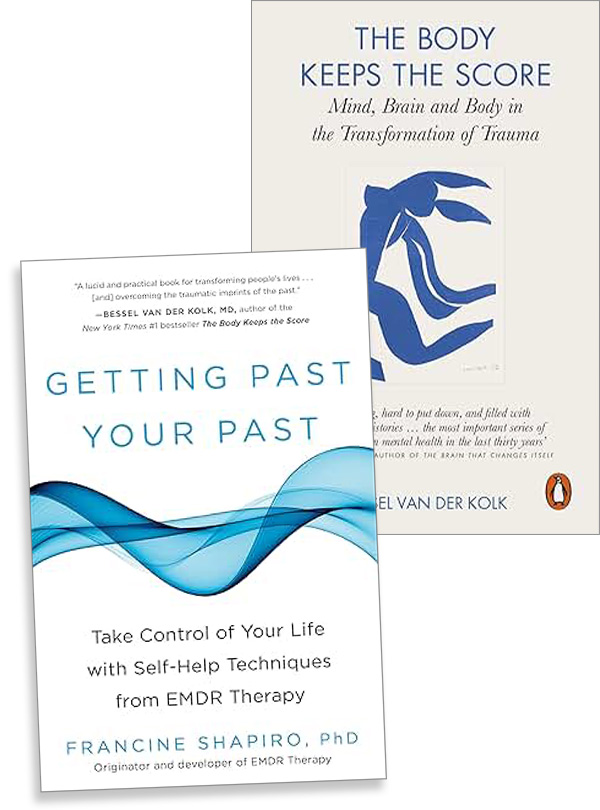
Francine Shapiro’s Getting Past Your Past introduces ideas and self-help exercises drawn from EMDR. Case examples explore how past experiences can influence present reactions.
It offers background from the therapy’s developer, but is not a substitute for assessment or treatment. You can leave an exercise aside if it brings up distressing memories.
Bessel van der Kolk’s The Body Keeps the Score examines trauma through clinical accounts and discussion of research and treatments, including EMDR.
It is broader reading about trauma rather than a guide to what your own treatment will involve. Some descriptions of traumatic experiences may be difficult to read.
Reference sources: NICE guidance · National Center for PTSD · EMDR Association UK