
You can carry tension for a while before noticing it: shoulders raised at the desk, a jaw held tight through a difficult conversation, breathing that never quite feels easy.
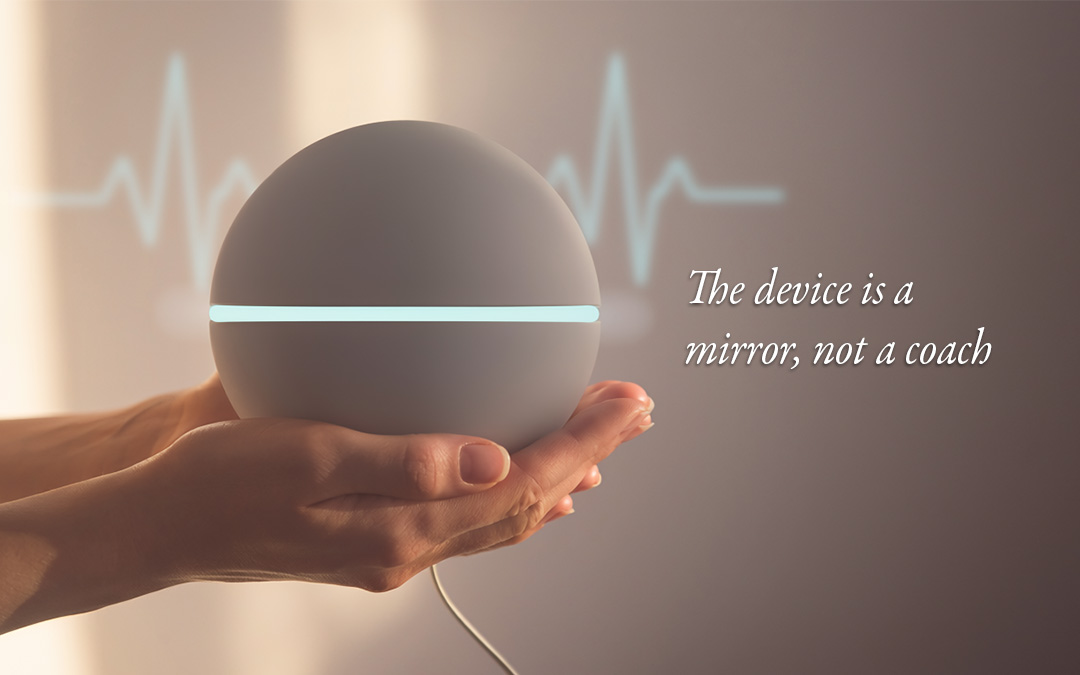
Sometimes a little feedback helps you recognise what is happening. Biofeedback uses sensors to turn bodily signals into something you can see or hear, then practise responding to.
You might watch a display change as you release a muscle, or follow guidance while observing the rhythm of your heartbeats. The information gives you something to explore, sometimes with help from a trained practitioner.
A watch’s daily stress or recovery score serves a different purpose. It may offer a summary, but checking it is not the same as learning a skill through biofeedback.
For some people, seeing a response makes an exercise easier to understand. For others, the numbers become one more thing to get right. Your experience of using the feedback matters alongside the reading itself.
Learning from the signal
Begin with a clear exercise and instructions you understand. Notice what the feedback helps you recognise, rather than treating every change as a score to improve.
- Find out what the device is measuring. Heart rate, muscle tension and a calculated stress score tell you different things. Check the instructions so you know what the display can reasonably help you understand.
- Give the feedback a particular job. Use it during a planned exercise, following the programme’s guidance. Watching or listening to a live signal can be part of learning.
- Keep the exercise comfortable. If breathing is involved, avoid forcing deeper or slower breaths to chase a number. Ask for guidance if you are unsure how to practise.
- Notice your own experience too. Can you recognise tension earlier, release a muscle more easily or follow the exercise with less effort? Those observations belong alongside anything on the screen.
- Choose when to put the device aside. Turn off unnecessary alerts and reduce checking if it adds pressure. You can continue practising familiar skills without recording every session.
A useful session may leave you with something quite ordinary: recognising how tightly you were holding your shoulders, or discovering what a comfortable breathing rhythm feels like.
You do not need to keep checking throughout the day to make use of that discovery. Try bringing the skill into a familiar moment, such as pausing after a call or settling down before bed.
Making a small change visible
Biofeedback has been used in research and clinical practice for decades. Its appeal is practical: information about a bodily process may help you learn to influence it.
Different approaches use different signals, including muscle activity, breathing, skin temperature and heart rhythms. The right choice depends on what you are practising and why.
If you are considering it for a health condition, a qualified practitioner can help you choose an appropriate approach. Home equipment does not necessarily provide the measurements or guidance used in a clinical programme.
What heart rhythm feedback tells you
Heart rate variability, usually shortened to HRV, describes the variation in time between heartbeats. It is one signal used in biofeedback, often alongside paced breathing.
Research suggests that HRV biofeedback can help reduce reported stress and anxiety. These findings concern training that combines feedback with practice, rather than simply wearing a watch or ring.
The rhythm changes as you breathe, which can make it useful to observe during an exercise. A higher reading does not, on its own, mean that you feel better or that your mental health has improved.
Consumer measurements also vary with the device and the conditions. Movement, sensor contact and processing can affect the result. Measuring heart rate reasonably well does not guarantee equal accuracy for HRV.
When the number becomes the main event
A score can colour the morning before anything has happened. You felt reasonably rested, then the watch announced poor recovery, and now you are wondering what you missed.
Daily stress and recovery scores are estimates based on selected signals and calculations. They cannot account for everything you feel, or tell you how the day will go.
If a reading interests you, consider the context: sleep, recent activity, illness and how the measurement was taken. It is one piece of information, rather than an explanation of your whole experience.
If checking repeatedly leaves you worried, take a break from the scores. Familiar breathing practices or progressive muscle relaxation can still be useful without a display.
For health concerns, seek appropriate advice rather than using a wearable score to diagnose a problem or decide whether you need care.
Recommended reading
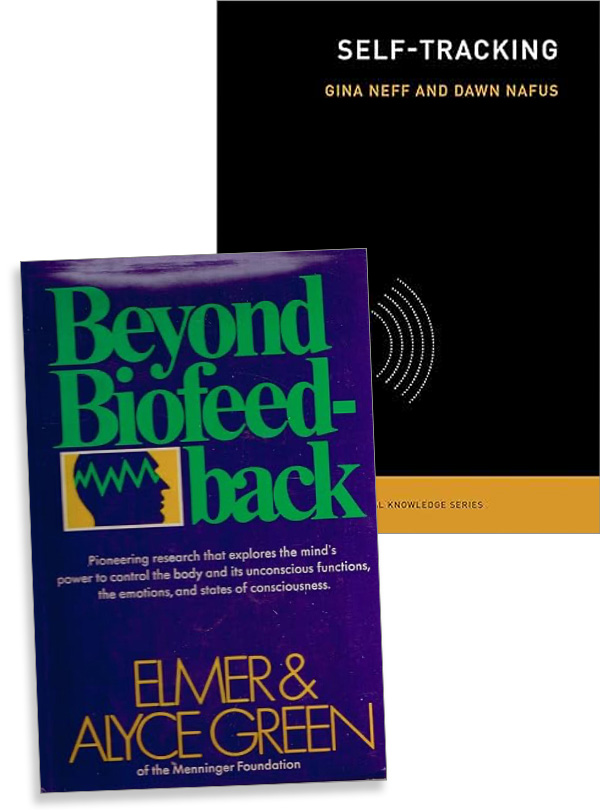
Elmer and Alyce Green’s Beyond Biofeedback offers a historical view of early research and the authors’ exploration of learning to influence bodily processes.
Gina Neff and Dawn Nafus’s Self-Tracking explores what happens when everyday experience becomes personal data, including its uses, limitations and privacy questions.