
A quick look at a message can turn into checking the news, answering an email and watching a video. The original reason for picking up the phone is easily lost along the way.
Phones bring useful things together: directions, company, work, entertainment. They also make all of those things available in moments that once had fewer demands — waiting for the kettle, walking somewhere, sitting down at the end of a day.
A break can reveal which parts are welcome and which have become tiring. It may leave more room for a conversation, a task or a few minutes with nothing arriving that needs a response.
“Digital detox” is a grand name for what can be a small adjustment: making some parts of the day less available to interruption. Silence, here, can simply mean a pause in the stream of messages and media.
Choosing a little uninterrupted time
Start with a part of the day where a break would be useful and practical. The aim is to make room for something, rather than turn time away from a screen into another target.
- Choose one part of the day to leave uninterrupted. A meal, a short walk or time with a book. Pick something that would benefit from having your attention.
- Make checking a little less convenient. Put the phone out of reach or in another room, if practical. Allow calls from anyone who may genuinely need to reach you.
- Turn off notifications that can wait. Keep the useful ones and check other messages at a time you choose. Start with the app that interrupts most often.
- Notice what prompts the next check. A sound, a pause in a task, boredom or a particular worry? Knowing the occasion makes it easier to decide what would help.
- Keep the changes that improve the day. More time for conversation, an easier evening or fewer interruptions while working. Adjust what does not fit, rather than aiming for a perfect record.
A break becomes easier to understand when there is something worth keeping from it: a meal without checking messages, a chapter read all the way through or an evening in which work stays finished.
The useful change may be quite specific. One app can be tiring while another provides valued contact with someone far away. Treating all screen use as the same thing can obscure that difference.
What fills the gaps
A phone gives almost every pause somewhere to go. Waiting, feeling stuck or reaching the end of a task can lead straight into another stream of information.
Without it, the first few minutes may feel uneventful or restless. There may also be things that are easier to notice: tiredness, a thought left unfinished, the room itself.
Quiet does not have to mean sitting in silence. Cooking, walking or talking with someone can offer time away from incoming messages while giving attention somewhere welcome to settle.
What the research can tell us
Some experiments have found benefits from reducing smartphone access. In a 2025 trial, blocking mobile internet on participants’ phones for two weeks led to improvements in reported wellbeing and performance on a sustained-attention task.
Calls and texts remained available, and participants could still use the internet on other devices. The experiment tested a break from constant access through a phone, rather than complete withdrawal from digital life.
It offers a useful finding, but not a promise that every kind of break will have the same effect. Participants had volunteered for the study, and maintaining the restriction was difficult for many of them.
What replaces the screen time matters too. A walk, more sleep or time with friends brings benefits of its own. Less time online may help partly by making those things easier to fit into the day.
A break that fits ordinary life
Being unreachable is not equally practical for everyone. Caring responsibilities, work, accessibility needs and important relationships may all depend on a phone.
Useful boundaries can allow for that: calls from particular people, agreed times for checking work messages or fewer alerts from apps that rarely need an immediate response.
A temporary break can also reveal something worth changing afterwards. If an evening feels easier without work email, the next step may be an agreement about availability rather than another weekend offline.
The language of “detox” suggests that a period away will cleanse or reset the mind. It is more helpful to think about the arrangements that follow: what remains available, what can wait and where uninterrupted time belongs.
A phone can keep its useful place in life while leaving some moments free from the expectation that something else might need attention.
Recommended reading
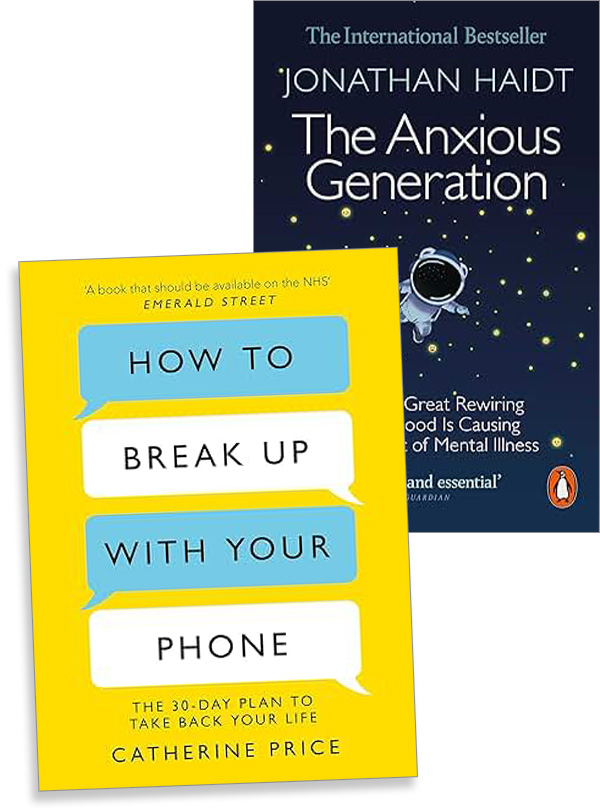
Catherine Price’s How to Break Up with Your Phone offers a practical 30-day plan for changing phone habits while keeping the parts that are useful and enjoyable.
Jonathan Haidt’s The Anxious Generation argues that smartphones and social media have reshaped childhood and adolescence, with consequences for mental health. Its focus is young people rather than adult phone habits.