
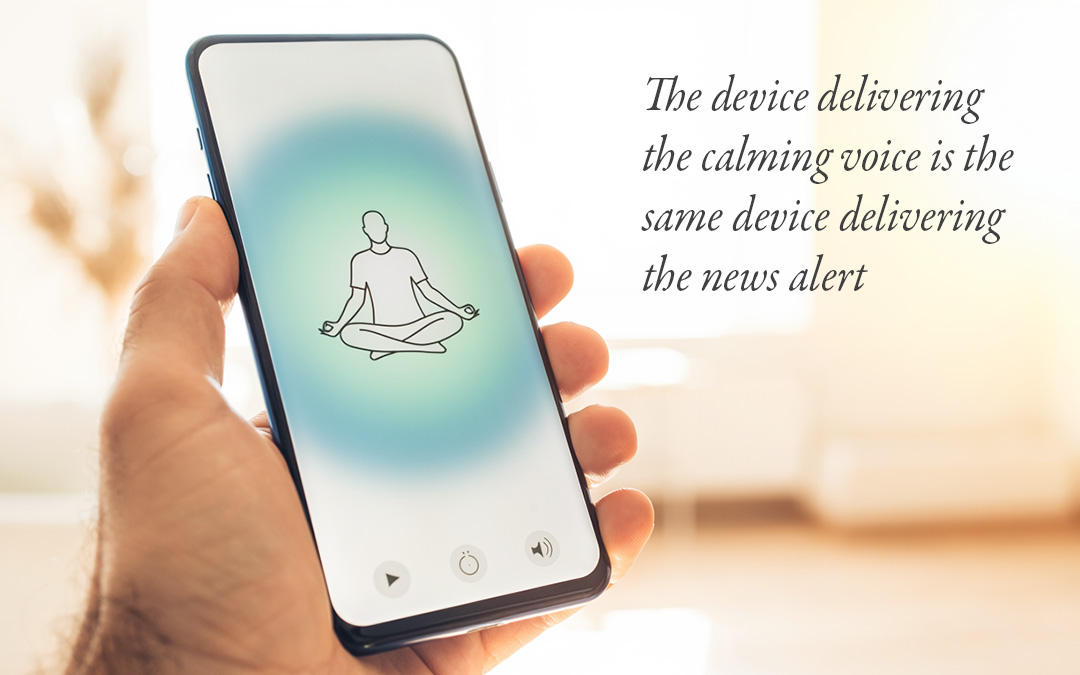
A decade and a half ago, meditation meant a cushion, a teacher, and years of unglamorous repetition. Now it means a phone, a subscription, and a soothing voice available the instant a bad moment strikes.
Something real got carried across in that translation – and something got quietly left behind too.
The convenience is genuine and shouldn’t be dismissed. A person who would never have found their way to a meditation class can now try guided practice from their own sofa, at midnight, with no instructor to feel self-conscious in front of.
The irony sitting underneath that convenience is just as real, though. The device delivering the calming voice is the same device delivering the news alert, the work email, and the endless scroll that made calm feel necessary in the first place.
None of this means the apps don’t work while they’re being used. The real question is whether a session becomes the practice, or stays the introduction to one. For most people, it seems to be the latter.
How to do it
None of it needs abandoning to get more from it, either. A short list of ways to use an app well rather than merely often.
- Notice whether the sessions are getting shorter and less frequent over time. That drop-off is extremely common and worth naming rather than ignoring.
- Use the app as a way into unguided sitting occasionally. Rather than only ever following the voice.
- Put the phone in another room once the session’s started, if it allows for that. A notification mid-meditation defeats the purpose entirely.
- Notice which specific voice or style genuinely settles you. Stick with it rather than endlessly sampling new ones.
- Treat a missed streak as neutral information, not a failure. The guilt mechanics built into some apps are a design choice, not a fact about your practice.
None of it needs to be daily to still be worth something. An occasional session on a genuinely hard day still does real work, even without the unbroken streak the app is quietly encouraging you to chase.
It’s the quality of attention during the session, more than the app itself, that seems to matter – which is why the same guided track can feel transformative once and forgettable the tenth time, with nothing about the recording having changed.
Where it comes from
The two apps that built this industry both trace to 2010-2012. Headspace began as an in-person meditation events company in London, founded by Andy Puddicombe, a former Buddhist monk, and Rich Pierson, an advertising executive who’d found meditation helped his own anxiety. When attendees asked to take the sessions home, the pair built an app, launching it in 2012.
Calm followed the same year, founded separately in San Francisco. Between them, the two companies turned a centuries-old, teacher-led practice into a subscription product used by tens of millions of people within a decade.
Worth knowing
Trials of app-based mindfulness do show real short-term reductions in reported stress and anxiety, particularly for people new to any kind of contemplative practice.
The effect sizes tend to be modest rather than dramatic, smaller than those found in studies of in-person, teacher-led training – though modest and real is still meaningfully different from no effect at all.
The bigger issue isn’t whether sessions work while they’re happening, but engagement over time – app usage drops sharply after the first few weeks for most users, limiting how much of the deeper, cumulative benefit sustained practice offers most people actually get.
Meditation apps are marketed with the confident promise of a fully-formed contemplative practice delivered entirely through a phone screen, sometimes implying that ten minutes a day will produce results comparable to years of dedicated practice.
The evidence doesn’t support that scale of claim – app-based mindfulness looks most like a genuinely useful introduction and occasional top-up, not a substitute for sustained practice or, where it’s needed, professional support.
What survives that correction is still worth having: for someone who would otherwise never have tried meditation at all, a good app is a real and accessible way in.
Treating it as a starting point rather than a finished destination gets more out of it than either dismissing it or expecting too much from it.
Recommended reading
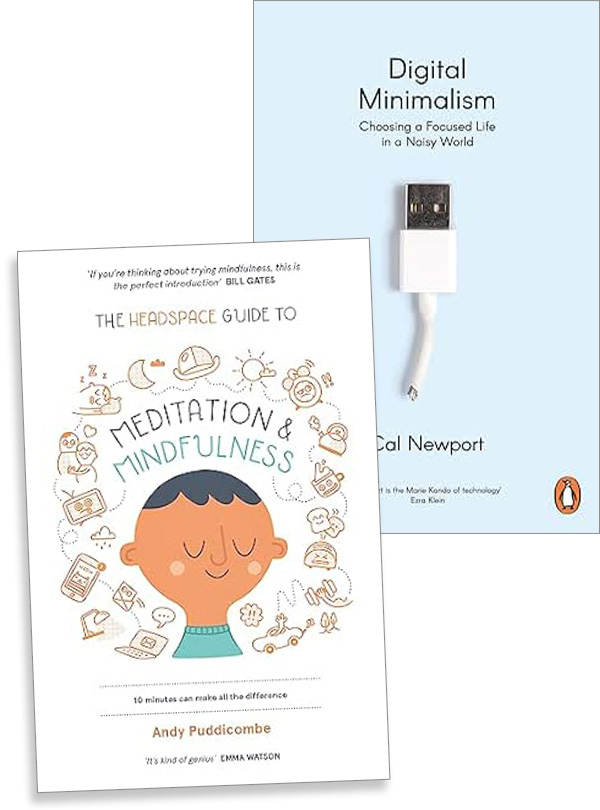
Andy Puddicombe’s own Get Some Headspace is the natural starting point – the book that preceded the app, from the founder himself.
For something more contemporary, Cal Newport’s Digital Minimalism takes on the exact tension this page describes, between the device offering calm and the device causing the need for it.